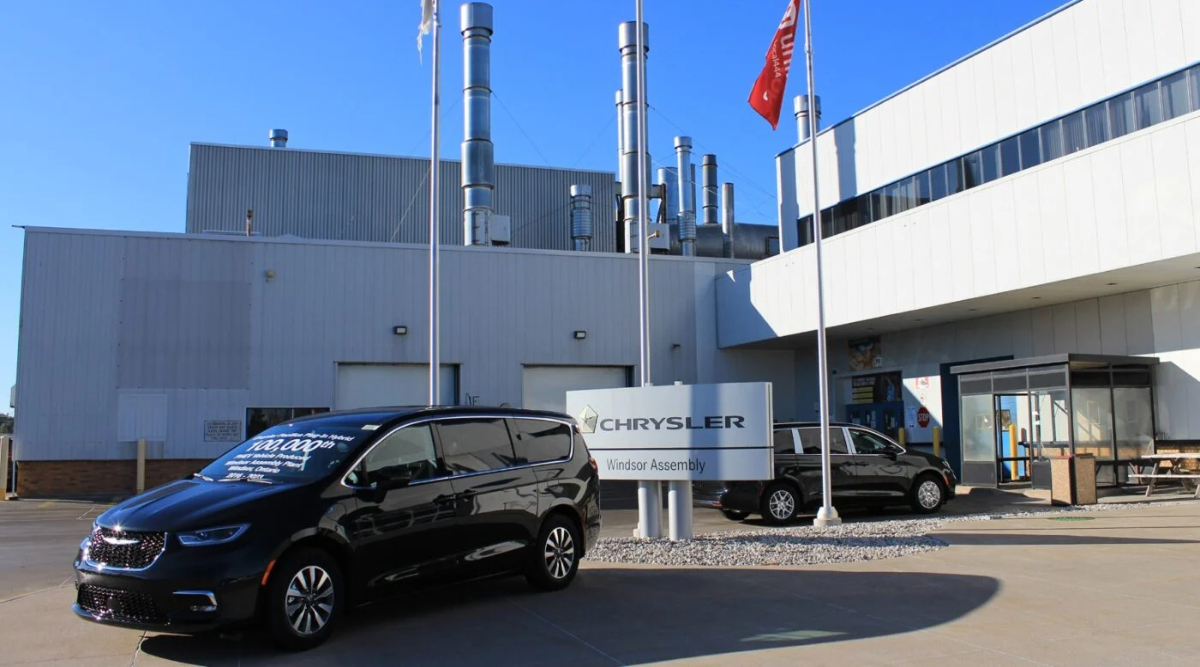
Canada and the European Union are backing away from vehicle emissions targets they established just years ago, reversing course on commitments that formed the backbone of their climate strategies.
Canada's federal government announced plans to delay its zero-emission vehicle mandate from 2035 to 2040. The policy required that 100 percent of new passenger vehicle sales be electric by 2035. The postponement, confirmed in late 2024, pushes compliance back five years despite scientific consensus that emissions reductions must accelerate through the 2020s to avoid the worst climate outcomes.
The EU faces similar retreat. European Commission officials signaled flexibility on the 2035 deadline for ending internal combustion engine sales across member states. The original regulation, finalized in 2023, required new cars sold after 2035 to produce zero tailpipe emissions. Automakers lobbied hard for extensions, citing manufacturing timelines and battery supply constraints. The EU has begun exploring options to weaken the rule, including potential exemptions for synthetic fuels and hybrid vehicles.
Both jurisdictions cite overlapping reasons for delay. Automakers argue that supply chains for batteries and critical minerals remain underdeveloped. Charging infrastructure lags behind vehicle availability. Production capacity for electric vehicles has not scaled as quickly as planned. Labor unions in Canada expressed concerns about job losses in traditional automotive manufacturing.
Yet the pattern repeats a familiar dynamic in climate policy. Governments set ambitious targets for decades ahead, then soften requirements when near-term costs become visible. The Intergovernmental Panel on Climate Change reported in 2023 that global greenhouse gas emissions from transport must drop 60 percent by 2050 to align with 1.5-degree warming limits. Road vehicles account for 72 percent of transport emissions.
Canada produced 165 megatons of carbon dioxide equivalent from transportation in 2022, with light-duty vehicles (cars and small trucks) responsible for roughly half that total. EU transport emissions hit 227 megatons in 2022. Both regions committed to vehicle electrification as a core mechanism for meeting 2030 and 2050 climate targets under the Paris Agreement.
The delays affect technology timelines and market signals. Automakers use regulatory deadlines to justify investment in battery factories and electric platform development. Five additional years extends the viability window for internal combustion engine production and delays infrastructure buildout. Norway, which maintains stricter EV adoption rules, now accounts for over 90 percent of new vehicle sales being electric. This demonstrates market transformation happens faster than delayed timelines suggest is necessary.
Consumer behavior, supply chain logistics, and manufacturing capacity matter. But delaying targets by five years does not solve those problems; it postpones their resolution. Battery costs continue dropping year over year. Manufacturers already operate profitable EV divisions in some markets.
The slippage undermines credibility with stakeholders who track climate commitment compliance. Environmental groups argue that pushing deadlines back reflects political pressure from industry rather than technical necessity. Workers in automotive sectors need clearer transition timelines to retrain, not extended uncertainty.
Canada and the EU framed original 2035 targets as achievable with proper policy support and investment. Retreating from those targets signals that support fell short or political will weakened. The next opportunity for course correction comes when these bodies revisit commitments in 2026 and 2027.