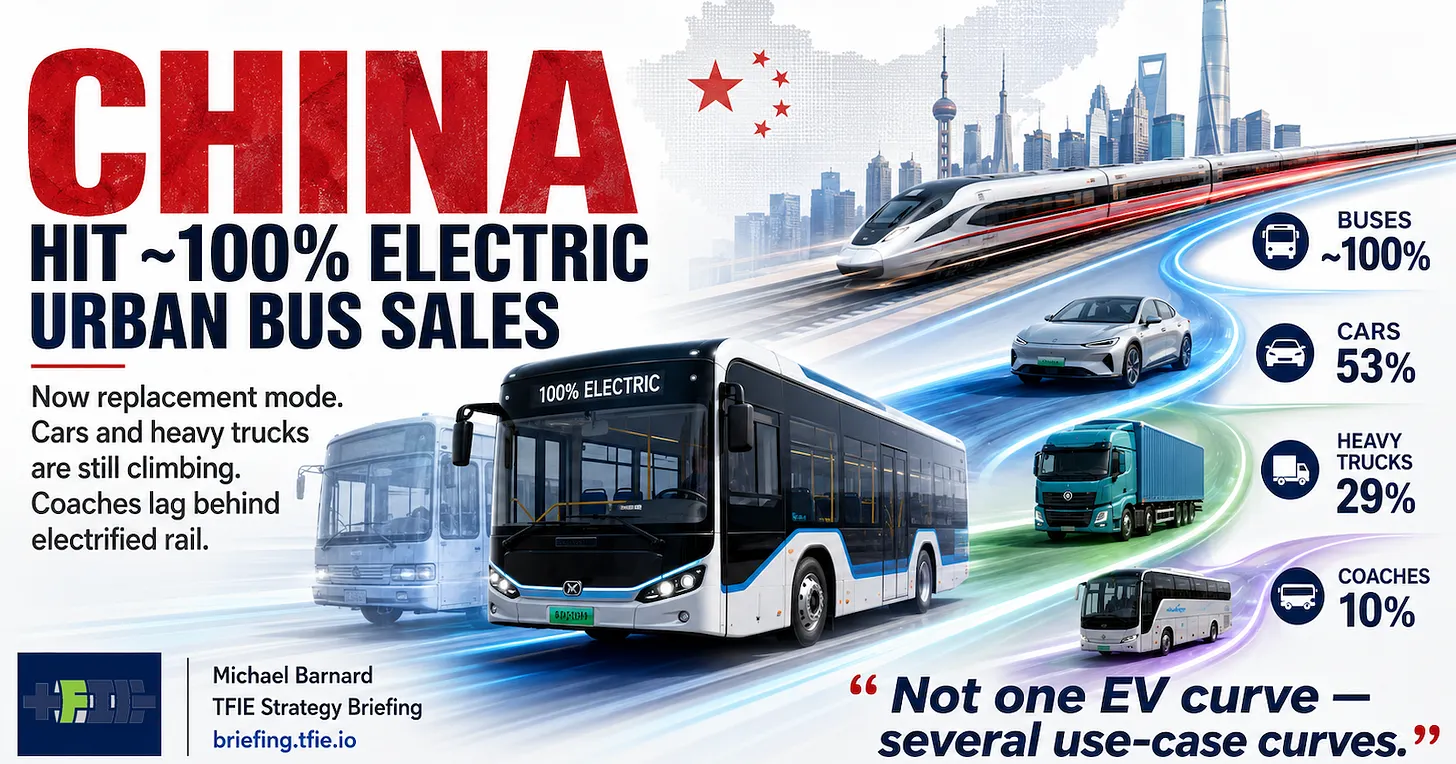
China's vehicle electrification follows four distinct pathways rather than a uniform transition across all transport sectors, according to reporting on the country's EV adoption patterns.
Urban buses have nearly completed their electrification. New bus purchases in Chinese cities are now essentially all electric, with procurement decisions focusing on which electric model to buy rather than whether to switch from diesel. This shift has already reshaped the transit landscape in many municipalities.
The disparity across vehicle categories reveals that national EV market share figures mask the actual pace of electrification in specific sectors. While overall EV penetration remains one metric for tracking progress, individual transportation categories experience transition at vastly different rates.
The four-pathway framework highlights how China's EV transition operates unevenly. Some vehicle classes have reached near-total electrification, while others lag significantly behind. This segmented approach reflects different adoption barriers, regulatory environments, and economic incentives across urban transit, personal vehicles, commercial fleets, and other transport categories.
Understanding these distinct transitions provides a more granular picture of China's transportation sector evolution than aggregate national statistics alone. The near-complete electrification of urban bus fleets demonstrates that full transition in specific categories is achievable, even as overall EV market share remains below 100 percent across all vehicle types combined.