# Incoming El Niño Event Exceeds Current Scientific Classification System
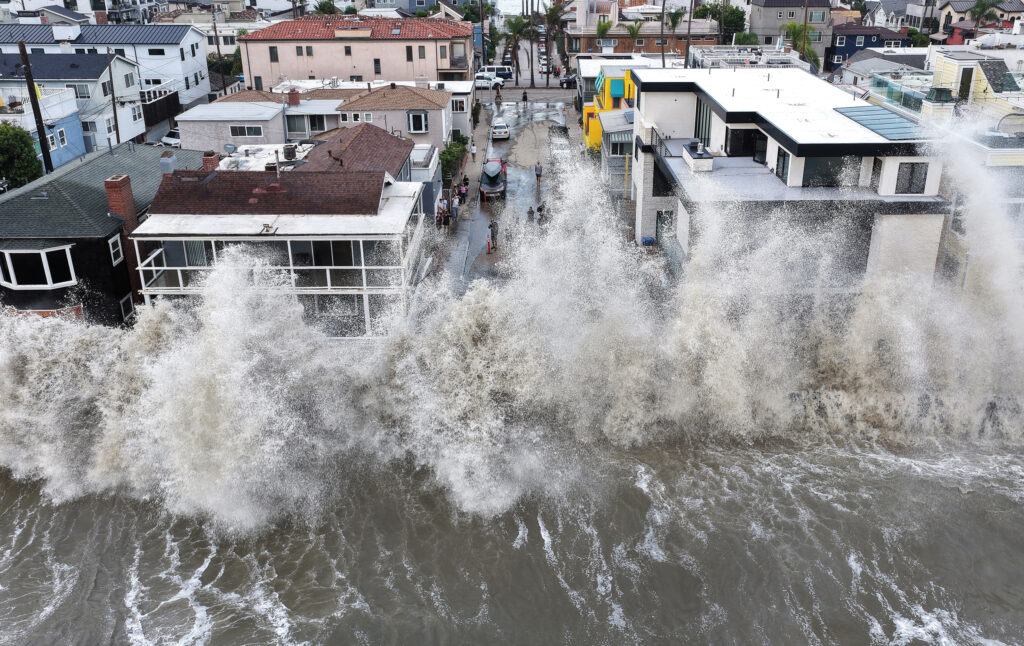
A developing El Niño pattern shows such extreme characteristics that existing scientific nomenclature cannot adequately classify it, according to Daniel Swain, a climate scientist at the California Institute for Water Resources within UC Agriculture and Natural Resources.
Swain has built his career analyzing climate extremes. Heat waves, wildfires, flooding events, droughts, and severe storms that break records consistently cross his desk. The current El Niño pattern diverges from standard categories in ways that pose new challenges for climate prediction and impact assessment.
El Niño, the periodic warming of equatorial Pacific Ocean waters, normally follows recognized intensity classifications. These range from weak to moderate to strong. Scientists have used these tiers for decades to forecast global weather patterns, ocean conditions, and downstream climate impacts. The incoming event transcends these boundaries.
This classification gap matters operationally. Weather agencies, agricultural departments, water resource managers, and disaster preparedness officials rely on El Niño classifications to anticipate regional consequences. A standard strong El Niño triggers specific planning protocols. An event without precedent or classification creates uncertainty in forecasting rainfall patterns, tropical cyclone activity, and temperature anomalies across the Pacific rim and beyond.
The Pacific Ocean's thermal state has warmed substantially under anthropogenic climate change. Background ocean temperatures now sit higher than during previous El Niño cycles. When El Niño develops in this warmer baseline, it produces amplified effects. Rainfall becomes more intense in some regions. Heat stress intensifies. Ocean heat content rises faster than historical precedent.
Swain's research has documented how climate warming compounds extreme weather events. Wildfire seasons extend. Heat domes persist longer. Atmospheric rivers deliver heavier precipitation. These patterns do not simply represent incremental increases from the past. They represent categorical shifts in what climate scientists consider normal variability.
The absence of a scientific name for this El Niño reflects a broader problem in climate science. As the climate system moves into regimes without historical analogs, traditional classification systems become obsolete. Scientists must either expand existing frameworks or create entirely new ones.
This event arrives amid global temperatures tracking toward 1.5 degrees Celsius above pre-industrial levels. Multiple studies indicate that crossing this threshold amplifies compound and cascading climate hazards. An extreme El Niño layered on top of elevated background temperatures creates risks that modeling systems trained on historical data may underestimate.
Forecasters at the National Oceanic and Atmospheric Administration and international meteorological centers track this pattern closely. Real-time observations from buoys, satellites, and oceanographic instruments feed into models that attempt predictions months in advance. But when conditions exceed historical bounds, model skill diminishes.
The practical implication reaches farmers, fisheries managers, coastal communities, and utilities. Agricultural regions dependent on monsoon rains face uncertain precipitation timing and volume. Pacific fisheries may experience dramatic stock redistributions. Coastal areas risk increased marine heat waves and altered storm tracks.
Swain's work signals that climate science increasingly confronts events that break the categories built for a different climate. Adaptation planning must account not just for stronger versions of familiar extremes, but for entirely novel hazard combinations. This El Niño exemplifies that transition.