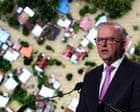
Global leaders gathered in New York for Climate Week as the planet endured its most intense El Niño episode on record, with prime ministers from Australia and Iceland pressing for urgent climate action while other nations deprioritized environmental concerns amid geopolitical tensions and economic pressures.
The 2023 Climate Week coincided with the UN General Assembly opening, drawing world political figures to address the accelerating climate emergency. Australian Prime Minister Anthony Albanese and Iceland's Katrín Jakobsdóttir spoke Monday about the distinct climate impacts ravaging their nations, using their platform to demand substantive commitments from the global community.
The timing reflected a climate system in crisis. The El Niño phenomenon, which peaked during these months, shattered historical temperature records. Scientists confirmed this episode as the strongest on record, amplifying heat waves across Europe and North America, triggering devastating wildfires across African nations, and unleashing flash floods throughout Asia. These weren't isolated weather events. They represented the collision between natural climate variability and anthropogenic warming, producing compounded impacts that exposed vulnerabilities across continents.
Australia's Albanese emphasized his nation's exposure to climate extremes. Australia experiences intensifying bushfire seasons, coral bleaching on the Great Barrier Reef, and shifting precipitation patterns that threaten agricultural productivity. The country depends on climate action both domestically and through international coordination. Iceland's Jakobsdóttir highlighted Arctic warming's effects on her nation, including rapid glacier retreat and ecosystem disruptions that ripple through fisheries and communities dependent on stable environmental conditions.
Not all attendees prioritized climate talk. Several leaders sidestepped climate discussions, citing immediate crises. War in Ukraine and ongoing Middle East tensions redirected political attention. Inflation and cost-of-living pressures consumed government bandwidth. Some nations portrayed climate action as secondary to short-term economic and security concerns. This fragmentation revealed a persistent global paradox: climate impacts accelerated while political will fractured.
The El Niño record mattered scientifically and politically. El Niño episodes naturally warm the planet by releasing stored heat from the Pacific Ocean, suppressing upwelling of cool water. This year's event compounded human-caused climate change, pushing global temperatures to unprecedented levels in the instrumental record. Scientists warned that future climate scenarios depend on whether societies treat this moment as a wake-up call or defer action to future administrations.
Climate Week events included corporate pledges, city-level commitments, and policy announcements intended to advance net-zero targets and renewable energy transition. Finance discussions centered on how developed nations would fund climate adaptation in vulnerable countries. These forums produced declarations and frameworks, though enforcement mechanisms remained weak and pledges often lacked binding timelines.
The contrast between climate urgency and political hesitation defined the moment. Physical evidence of warming intensified across ecosystems and human settlements. Yet geopolitical fragmentation, economic uncertainty, and competing priorities meant global climate diplomacy advanced incrementally rather than transformatively. Leaders from vulnerable nations like Australia and Iceland understood their stakes directly. Whether other nations would align their actions with scientific warnings remained an open question heading into UNGA negotiations.