# SsangYong's 1995 Electric Sports Car Reveals South Korea's Early EV Ambitions
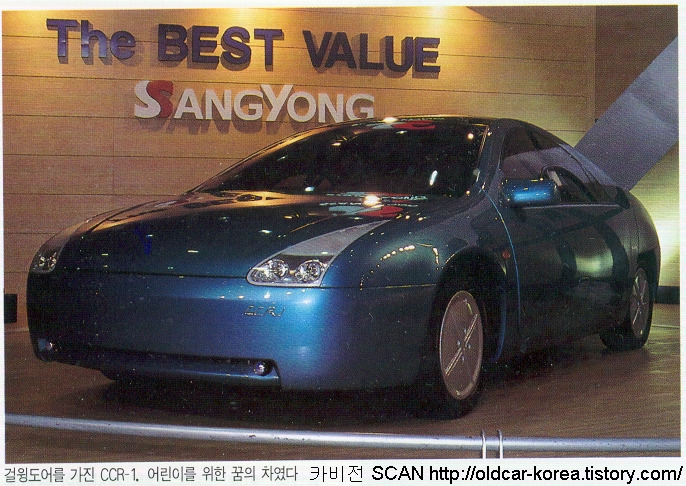
South Korea's automotive industry entered the electric vehicle race three decades earlier than most observers realize. SsangYong Motor unveiled the CCR-1, short for Clean Car 1, in 1995 as an electric sports car prototype that preceded modern EV development by decades.
The vehicle represented an experimental approach to zero-emission transportation during a period when battery technology remained primitive and market demand for electric cars barely existed. SsangYong engineered the CCR-1 with styling that departed sharply from the boxy SUV designs the company would become known for in later decades. The prototype's streamlined appearance reflected the designer's vision of what an electric future could look like, even as the underlying technology remained constrained by fundamental limitations in energy storage and motor efficiency.
The CCR-1 project occurred during a watershed moment for South Korea's manufacturing sector. The country was establishing itself as a serious automotive competitor on the global stage, with Hyundai and Kia beginning to export vehicles to North America and Europe. SsangYong, then operating independently before its acquisition by Daewoo, pursued electric vehicle research as part of broader diversification into new powertrains.
Context matters here. The 1990s EV landscape bore little resemblance to today's market. General Motors' EV1, launched in 1996, faced severe infrastructure limitations and consumer skepticism. Most automakers viewed electric vehicles as niche products rather than future mainstream technologies. South Korea's decision to invest in EV research during this period reflected optimism about electrification despite technological barriers that would take another two decades to overcome.
The CCR-1 never reached production. Like countless prototype vehicles from that era, it served primarily as a technological demonstration and a statement of engineering capability. The project generated minimal public attention outside South Korea and left no documented impact on the country's EV development trajectory.
What makes this prototype historically relevant becomes clearer when examining South Korea's current automotive landscape. Today, Hyundai and Kia operate as global EV leaders, delivering hundreds of thousands of battery electric vehicles annually. Hyundai's Ioniq 5 and Kia's EV6 rank among the world's most celebrated electric vehicles. This current success story emerged from decades of industrial policy, manufacturing expertise, and incremental technological advancement.
The CCR-1 represents an overlooked chapter in that longer narrative. It demonstrates that South Korean automakers recognized electrification's potential when most competitors dismissed it. The company's willingness to experiment with electric powertrains in 1995, however unsuccessfully, positioned the industry to move decisively when battery chemistry and market conditions finally converged.
SsangYong's subsequent acquisition by Daewoo and later financial difficulties redirected the company away from early EV innovation. The automaker has since struggled to maintain relevance against larger Korean competitors. Yet the CCR-1 experiment, now mostly forgotten, illustrates how South Korea's now-dominant EV manufacturers built their advantages through decades of sustained investment and technological exploration.