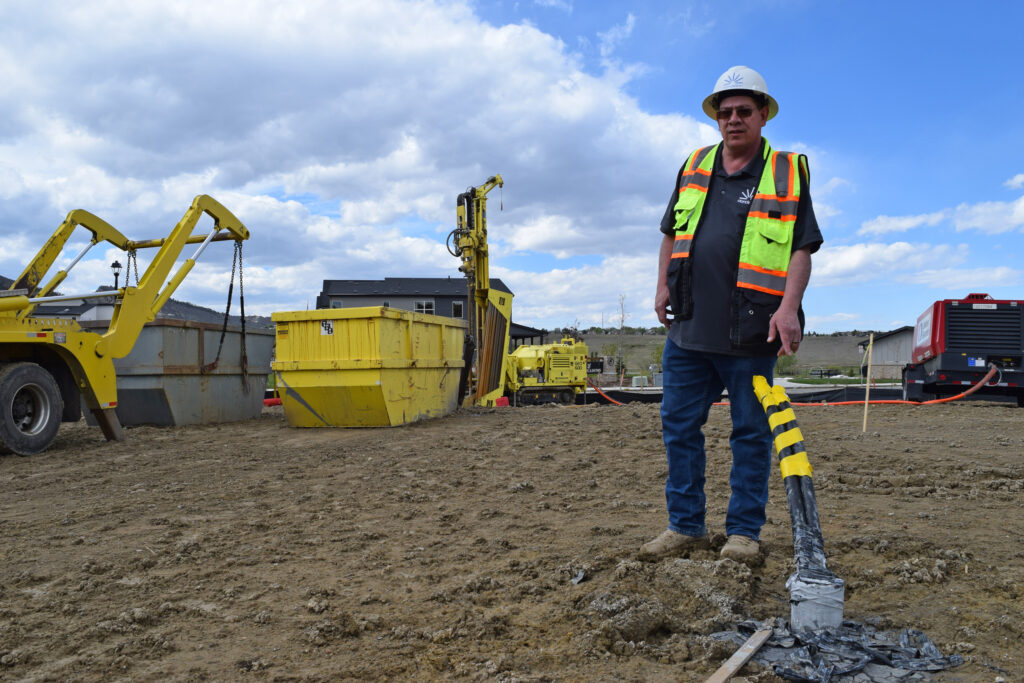
# New Colorado Neighborhood Tests Geothermal Heat at Scale
A 100-home residential development south of Denver represents one of the first large-scale tests of geothermal heating and cooling integrated into new construction. Dandelion Energy, a geothermal technology startup, partnered with Lennar, the nation's second-largest homebuilder, to equip homes in Ken Caryl with ground source heat pump systems that extract thermal energy from beneath the earth.
The project matters because residential heating and cooling accounts for roughly 10 percent of U.S. energy consumption and produces significant carbon emissions. Most American homes still rely on natural gas furnaces or air conditioners powered by the electrical grid. Ground source heat pumps operate differently. They circulate fluid through underground loops, leveraging the earth's constant subsurface temperature to heat homes in winter and cool them in summer. This approach uses 25 to 50 percent less energy than conventional HVAC systems, according to the Department of Energy.
Dandelion Energy entered the market specifically to scale geothermal installation for residential customers. The startup, backed by $120 million in funding, streamlined the drilling and system installation process to reduce costs. Conventional geothermal retrofits can cost $15,000 to $30,000 per home. Dandelion claims its approach reduces installation expenses by embedding the technology into new construction, where coordination costs drop and drilling logistics simplify.
The Ken Caryl partnership tests whether geothermal can move beyond niche projects. Lennar has the supply chain, permitting expertise, and construction networks to replicate this model across multiple developments. If successful, the partnership could establish a template for other homebuilders and geothermal companies nationwide.
Colorado presents favorable conditions for this test. The state sits atop stable geological formations suitable for ground loops. Colorado also offers tax credits and rebates for geothermal systems, reducing upfront costs for buyers. The Front Range's rapid suburban expansion creates demand for new housing and renewable energy infrastructure.
The homeowners in Ken Caryl receive geothermal systems as standard equipment. Monthly heating and cooling costs should drop compared to conventional systems, though long-term operational data from this specific development remain limited. Performance will depend on installer competency, system maintenance, and local utility rates.
Barriers to broader adoption persist. Geothermal requires specialized drilling contractors, and many regions lack trained labor pools. Building code compliance varies by jurisdiction. Some municipalities still lack experience permitting these systems. Upfront costs, even reduced ones, exceed conventional HVAC, which deters price-sensitive buyers despite long-term savings.
The Ken Caryl development serves as a commercial laboratory for scaling geothermal technology. Dandelion and Lennar will gather data on installation timelines, system reliability, and customer satisfaction. This information flows back into product refinement and cost reduction. Success here attracts other homebuilders and accelerates the market's trajectory.
A broader transition to geothermal heating could reduce residential emissions by 40 to 60 percent, according to geothermal industry analyses. If replicated across developments in Colorado, the Pacific Northwest, the Midwest, and other regions with suitable geology, large-scale deployment becomes plausible within the next decade. The Ken Caryl neighborhood represents an early commercial test of that possibility.