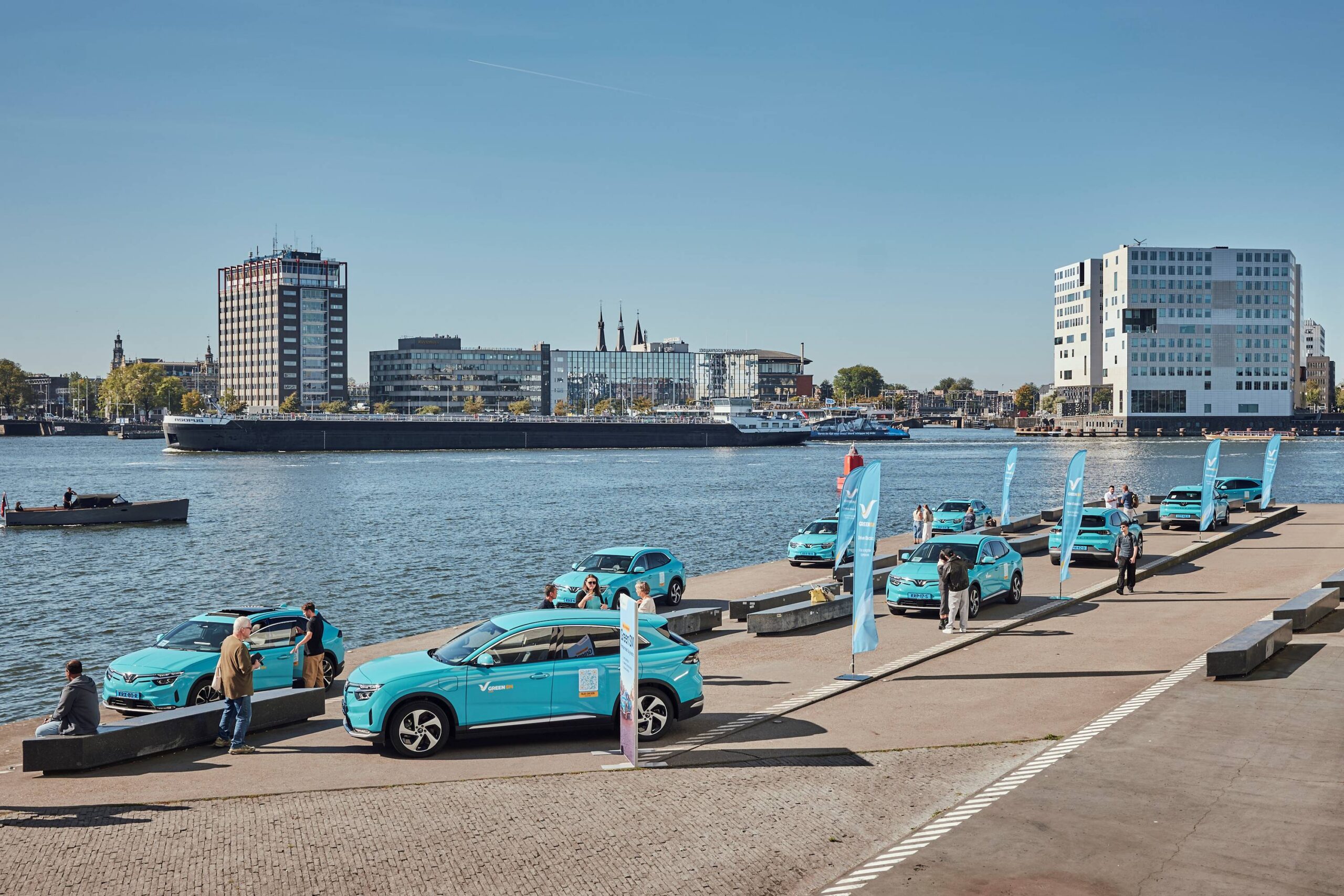
Vietnamese electric vehicle company Green SM launched a pilot taxi service in Amsterdam this week, deploying electric vehicles in one of Europe's most progressive urban mobility markets. The service marks Green SM's second European operation following an earlier pilot in Denmark and represents an expansion of VinFast vehicle deployment across the continent.
Green SM operates under the broader VinFast ecosystem, the Vietnamese automaker that established its European footprint four years ago. Amsterdam represents a strategic location for EV taxi pilots. The Dutch capital has aggressively pursued zero-emission vehicle adoption in its transport sector, with strict emissions standards for commercial vehicles and regulatory incentives favoring electric fleets. The city's compact geography and well-developed charging infrastructure create ideal conditions for electric taxi operations.
The pilot program tests VinFast vehicles in real-world commercial taxi service. This operational model generates crucial data on vehicle reliability, driver satisfaction, passenger acceptance, and fleet economics in European markets. Taxi services operate under demanding conditions: extended daily driving hours, frequent passenger turnover, and intense usage patterns. Success in this sector signals readiness for broader commercial deployment.
Amsterdam's taxi market offers competitive advantages for EV pilots. The city's municipal government has set aggressive targets for emission reductions in transportation. Taxi operators face regulatory pressure to transition from combustion engines, creating market demand for reliable electric alternatives. Additionally, Amsterdam's taxi regulatory framework permits licensing of newer fleet operators, opening market entry for companies like Green SM.
VinFast's earlier entry into the European market positioned the company ahead of other Vietnamese EV manufacturers in the region. The company established service centers and began building brand recognition among European consumers and fleet operators. The Amsterdam pilot builds on that foundation by demonstrating vehicle capability in demanding commercial applications.
The pilot's scope remains limited initially. Green SM will deploy a subset of vehicles to test operations, gather performance data, and train drivers on EV-specific procedures and maintenance requirements. Amsterdam's existing taxi licensing authorities will regulate the pilot, likely with specific performance metrics and operational constraints.
Success in Amsterdam could trigger broader expansion across Western Europe. The Netherlands sits at the center of European EV infrastructure and policy leadership. Demonstrated success in the Dutch market opens pathways to other northern European cities pursuing aggressive EV adoption. Cities including Copenhagen, Berlin, and Brussels have expressed interest in accelerating commercial EV deployment.
The pilot also reflects broader industry trends in electric vehicle commercialization. Traditional automakers and Chinese EV manufacturers increasingly target taxi and ride-hailing services as proving grounds for vehicle technology and durability. These sectors provide rapid feedback loops and visible proof-of-concept demonstrations that influence consumer purchasing decisions and fleet operator confidence.
VinFast and Green SM face competition from established EV manufacturers already operating taxi services in European cities. Tesla, BYD, and domestic European manufacturers have launched similar pilots. However, competitive pricing and maintenance costs position Vietnamese manufacturers as potential advantages in price-sensitive fleet markets.
The Amsterdam pilot operates against the backdrop of intensifying EV competition in European markets. EU regulations increasingly restrict combustion engine vehicle sales, pushing commercial operators toward electric alternatives. First-mover advantages in establishing reliable, cost-effective commercial EV services will influence market structure for the coming decade.