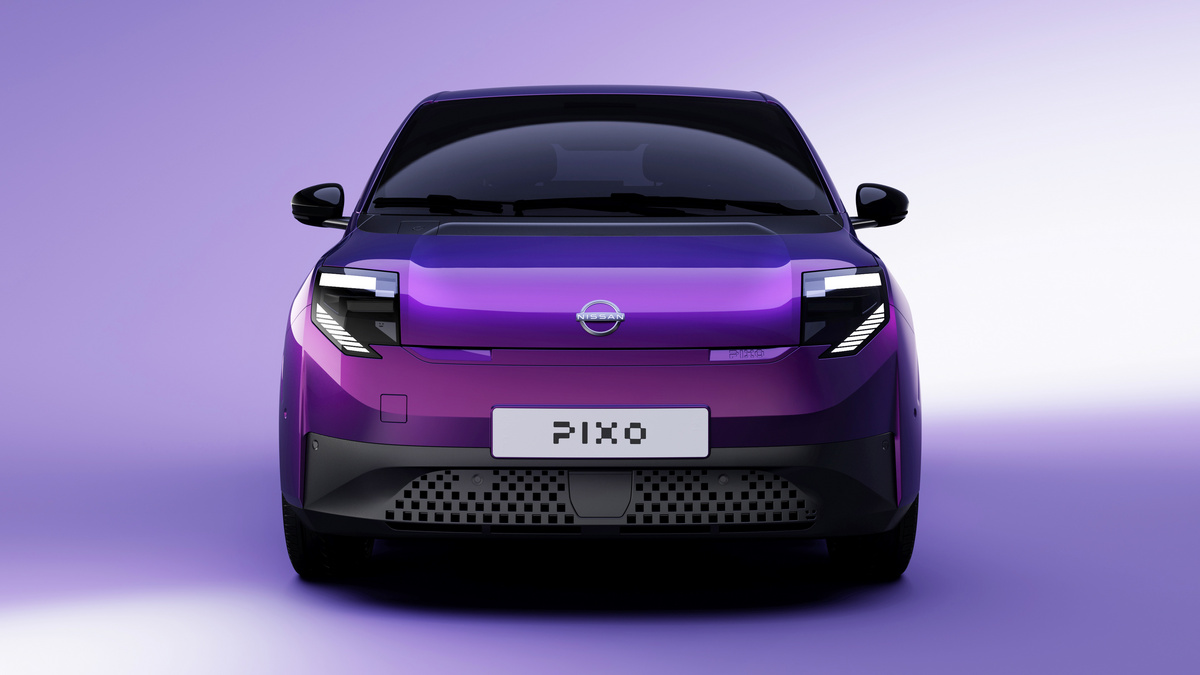
Nissan Motors announced the European launch of the Pixo, an all-electric city car designed to capture price-sensitive urban drivers in the A-segment market. The announcement came September 23, 2026, as part of the company's "Mobility Intelligence for Everyday Life" strategic roadmap.
The Pixo targets a market segment largely abandoned by major automakers over the past decade. European cities have seen demand for compact, affordable electric vehicles surge as congestion charges and low-emission zones tighten in capitals like London, Paris, and Berlin. The A-segment, historically dominated by vehicles like the Peugeot 107 and Fiat 500, represents an entry point for first-time EV buyers who cannot justify the cost of larger battery packs.
Nissan's decision to release the Pixo in Europe first, rather than Japan, reflects broader market dynamics. European Union regulations mandate average fleet emissions of 49.5 grams of carbon dioxide per kilometer by 2025, pushing manufacturers toward smaller, lighter vehicles with lower battery capacity requirements. Japan's market remains fragmented, with kei cars dominating the small vehicle category through domestic tax advantages that favor internal combustion engines under 660cc displacement.
The vehicle carries significant weight in Nissan's electrification strategy. The company has committed to battery electric vehicle sales reaching 50 percent of its annual volume by 2030 and 100 percent by 2050. The Pixo provides a pathway to capture cost-conscious buyers typically priced out of EV ownership. In Europe, the average new car price exceeded 45,000 euros in 2025, while A-segment vehicles historically sold between 12,000 and 18,000 euros before electrification premiums.
Battery technology appears central to the Pixo's competitive positioning. Modern lithium iron phosphate cells and simplified battery management systems have reduced manufacturing costs for small packs. A compact A-segment EV requires perhaps 30-45 kilowatt-hours of capacity, compared to 60-100 kWh in larger models. This constraint lowers both material costs and weight, improving range efficiency.
The timing aligns with European regulatory momentum. The Euro 7 emissions standard, expected by 2025, will penalize manufacturers for not meeting EV sales targets. Several European markets have also introduced purchase incentives for vehicles priced below 25,000 euros, directly benefiting the Pixo's target demographic.
Japan's market remains structurally different. Kei cars occupy the affordable small vehicle niche through tax and insurance breaks unavailable to standard A-segment models. Nissan's domestic lineup already includes the Sakura, a kei car electric vehicle launched in 2023 that captured market share through regulatory advantages rather than price competition. Releasing the Pixo in Japan would cannibalize Sakura sales without addressing the regulatory incentives that shape buyer behavior.
The Pixo launch indicates a widening geographic divergence in EV strategy. Manufacturers increasingly tailor electrification efforts to regional regulatory frameworks rather than pursuing global product platforms. Europe's regulatory environment creates immediate demand for affordable EVs. Japan's market structure favors different solutions. This segmentation will likely persist as long as regional policy frameworks remain unaligned.