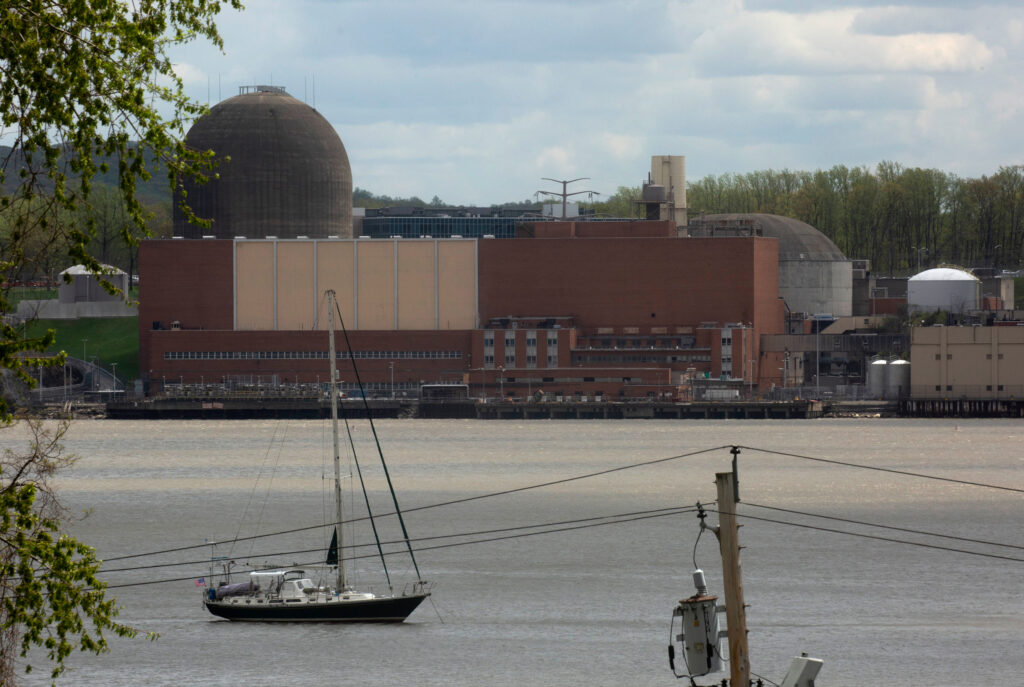
# Indian Point's Closure Leaves New York Nuclear Future in Political Limbo
New York's decision to shutter Indian Point Energy Center, the state's largest nuclear facility, has become a flashpoint in one of the nation's most competitive congressional races, with environmental advocates and energy policy experts divided over whether the shutdown advances or undermines climate goals.
The Buchanan-based plant, which generated roughly 2,000 megawatts of emission-free electricity serving the Hudson Valley and New York City region, ceased operations in 2021 after operating for four decades. Its closure removed approximately 2 million metric tons of annual carbon-free generation from the grid, a loss climate scientists warn could complicate New York's path to meeting its 2030 emissions reduction targets under the Climate Leadership and Community Protection Act.
The facility's decommissioning has divided environmentalists. Anti-nuclear advocates celebrated the plant's closure, citing concerns about aging reactor infrastructure and spent fuel storage. Proponents of decarbonization, however, contend that replacing nuclear baseload power with fossil fuels or intermittent renewables undercuts emissions reductions. Independent grid analyses show natural gas generation in the region increased following Indian Point's shutdown.
Nancy Vann, a 78-year-old Peekskill resident, has emerged as a focal point in New York's 17th Congressional District race, which encompasses parts of Westchester and Rockland counties. Her activism around the plant's closure and broader energy policy has spawned local organizing efforts, reflecting how nuclear policy threads through grassroots environmental politics in the lower Hudson region.
The congressional contest reflects deeper tensions within Democratic constituencies. Progressive climate organizations like the Sunrise Movement oppose new nuclear investment, while pragmatic climate advocates and economists increasingly support keeping existing reactors online and accelerating advanced reactor development to meet decarbonization timelines. New York's own energy agencies acknowledge the state will struggle to replace Indian Point's capacity without expanding grid storage, accelerating offshore wind development, or reconsidering existing reactor operations statewide.
Indian Point's spent fuel remains stored on-site in cooling pools and secure canisters, requiring ongoing federal oversight through the Nuclear Regulatory Commission. Entergy, the plant's operator, faces decommissioning costs exceeding $1.8 billion, raising questions about waste remediation timelines and groundwater contamination monitoring in one of the nation's densest metropolitan regions.
The facility's closure carries national implications. If New York cannot replace Indian Point's generation through rapid renewable deployment, the state risks increasing reliance on natural gas imports from Pennsylvania and Ohio. Grid modeling conducted by the New York Independent System Operator projects that without significant battery storage additions or new nuclear capacity, mid-Atlantic electricity system reliability could face pressure during peak demand periods, particularly as electrification expands across transportation and heating sectors.
The congressional race in NY-17 forces voters to weigh competing priorities: phasing out nuclear infrastructure against meeting climate commitments through zero-carbon energy sources. Candidates' positions on reopening shuttered reactors, investing in advanced nuclear technologies, and prioritizing solar and offshore wind deployment have become defining issues, revealing how local environmental decisions now anchor major political contests.