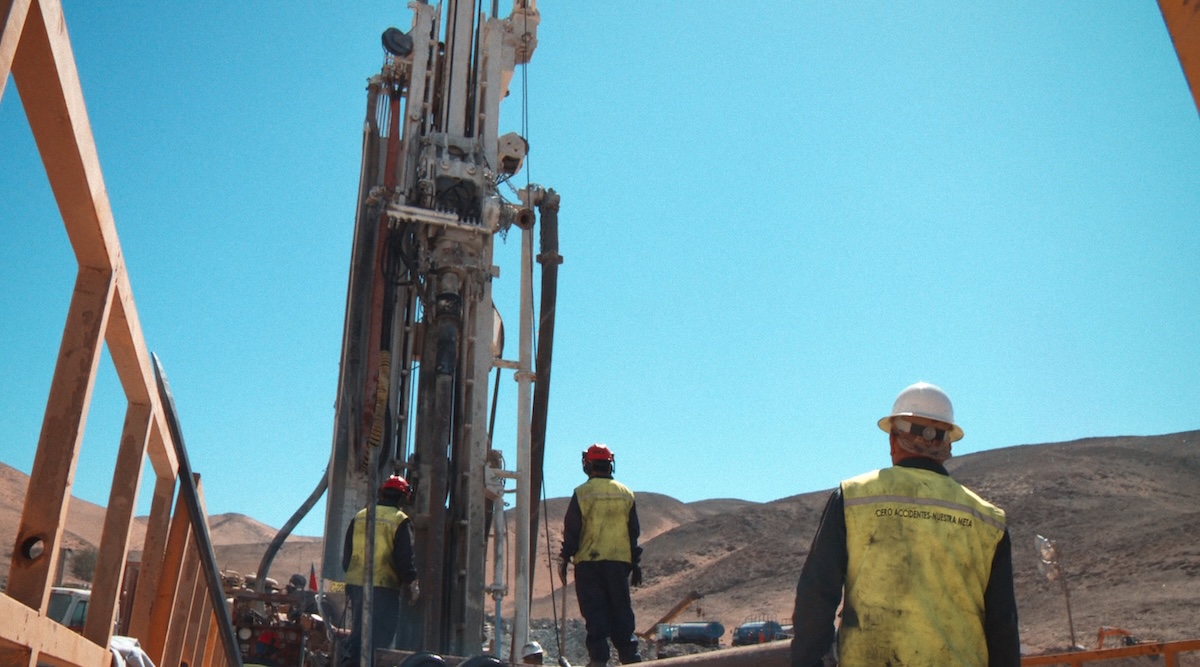
The 2010 Chilean San Jose mine collapse, which trapped 33 miners 2,300 feet underground for 69 days before a successful rescue operation captured global attention, has become a lens through which documentarians and industry observers examine the mining sector's ongoing transformation. A new National Geographic documentary series revisits that disaster as the broader extractive industries confront mounting pressure to modernize safety protocols and environmental practices.
The Chilean mining disaster killed no workers during rescue operations, a feat widely attributed to engineering innovation and international collaboration. That episode now serves as a historical anchor for conversations about how mining must evolve to support the clean energy transition. The irony persists: accelerating deployment of solar panels, wind turbines, electric vehicles, and battery storage requires dramatic expansion of mineral extraction. Lithium, cobalt, copper, and nickel mining must increase substantially over the next two decades to meet climate goals, according to the International Energy Agency.
The mining industry faces a legitimacy crisis. Environmental damage from extraction operations in Peru, Congo, Indonesia, and Australia has drawn scrutiny from climate advocates, Indigenous communities, and investors. Water contamination from tailings disposal, habitat destruction, and worker safety violations remain endemic across developing nations where regulatory oversight remains weak. The 2023 collapse of Brazil's Samarco dam killed 19 people and devastated the Doce River basin across 390 miles.
Mining companies now invest in real-time monitoring systems, autonomous vehicles, and advanced safety sensors to prevent disasters similar to the Chilean collapse. Rio Tinto, Barrick Gold, and BHP have deployed drone surveying, real-time seismic monitoring, and AI-powered predictive maintenance across major operations. These technologies reduce worker exposure to hazardous conditions while improving operational efficiency.
The energy transition creates paradox: meeting net-zero targets by 2050 requires roughly 3 billion tons of mineral extraction by 2050, nearly triple current production levels. Battery production for electric vehicles demands massive copper and lithium expansion. Wind turbine manufacture requires rare earth elements. Yet the mining sector contributes approximately 7 percent of global greenhouse gas emissions when accounting for fuel consumption, equipment operation, and processing facilities.
Circular economy strategies offer partial solutions. Recycling lithium-ion batteries from retired electric vehicles can recover 90 percent of lithium and cobalt content, reducing mining pressure. Companies including Redwood Materials and Li-Cycle now process spent batteries at scale. However, virgin mineral extraction remains necessary given accelerating EV adoption rates and current battery recycling capacity limitations.
Regulatory frameworks continue evolving unevenly. The European Union implements stricter due diligence requirements for companies sourcing conflict minerals. Chile and Peru, major copper producers, face domestic pressure to enforce environmental compliance. However, countries including the Democratic Republic of Congo, which supplies 70 percent of global cobalt, maintain minimal environmental or labor protections.
The Chilean mine rescue narrative holds enduring power because it demonstrates human resilience while raising uncomfortable questions about extractive industries operating at the edge of safety and sustainability. The documentary's emergence amid accelerating clean energy deployment presents mining companies with an opportunity to reckon with historical failures and invest genuinely in safer, less destructive operations. Technology and regulation offer pathways forward, but execution remains uncertain.