# Unconventional Fundraising Powers Wildlife Research in the Digital Age
Emily Renkey's marmot research project has discovered an unlikely funding stream. The Marmot Project, which tracks alpine rodent populations across the Rocky Mountains, recently leveraged internet culture and digital assets to generate revenue for field biology.
The project tapped into Fat Bear Week, an annual public voting competition hosted by the National Park Service at Katmai National Park. The contest invites Americans to vote on which bear has accumulated the most body mass before hibernation. This seemingly frivolous exercise in internet democracy has become a proven mechanism for drawing attention to wildlife research and conservation efforts.
Building on that model, the Marmot Project expanded its approach. The team created social media content centered on marmot behavior and ecology, then monetized engagement through platforms like OnlyFans, typically associated with entertainment content. They also experimented with cryptocurrency-based fundraising, including a meme coin linked to their research.
The strategy works because it meets donors where attention naturally pools. Traditional grant funding through the National Science Foundation or the U.S. Fish and Wildlife Service remains critical for field biology, but those mechanisms move slowly and fund fewer projects than exist. By contrast, internet-native fundraising reaches younger audiences and generates immediate capital for seasonal field work.
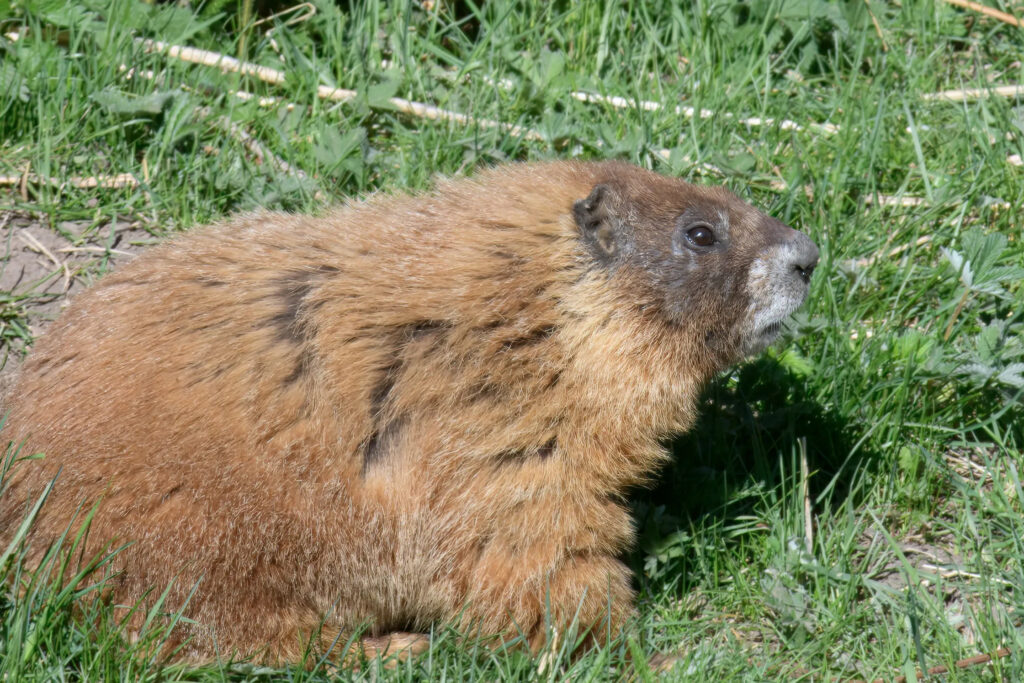
Renkey and her team track yellow-bellied marmots in Colorado. These ground squirrels serve as indicators of climate change effects on mountain ecosystems. Rising spring temperatures alter the timing of snowmelt and plant phenology, forcing marmots to adjust hibernation schedules and breeding cycles. The research has documented population-level responses to warming across three decades, providing baseline data on how alpine mammals adapt to rapid environmental change.
The Marmot Project operates under the Rocky Mountain Biological Laboratory in Gothic, Colorado. Annual field seasons require funding for graduate students, equipment, and logistical support. Federal grants cover core operations, but supplemental revenue enables expanded data collection and longer field seasons.
The unconventional fundraising approach reflects broader shifts in how scientific institutions engage publics. Citizen science platforms, crowdfunding campaigns, and social media outreach have become standard tools alongside peer-reviewed publishing. Emily Renkey's willingness to experiment with OnlyFans and meme coins signals that wildlife biologists recognize the entertainment economy as a legitimate channel for research support.
The Marmot Project's success offers a template for other field research programs facing budget constraints. Fat Bear Week demonstrates that the public retains appetite for wildlife content when presented accessibly. The marmot team's extension into digital platforms suggests that researchers can maintain scientific rigor while participating in internet culture.
Regulatory and institutional questions remain unresolved. Universities and funding agencies have not established clear guidelines for cryptocurrency-based donations or revenue from subscription platforms. The IRS treats donations to 501(c)(3) nonprofits consistently regardless of origin, but some institutions express hesitation about reputational risk.
Ultimately, the Marmot Project's fundraising innovations reflect a practical response to underfunded field biology. Long-term climate monitoring requires sustained resources and generational commitment. When traditional funding pathways prove insufficient, researchers pursue alternatives. In this case, marmots, memes, and digital currency converged to keep fieldwork in the Colorado high country running.