# Pennsylvania Expands EV Charging Network While Adoption Remains Uncertain
Pennsylvania is racing to build electric vehicle charging infrastructure across the state, betting that stations will attract drivers to switch from gasoline-powered cars. The gamble rests on a simple premise: build chargers and drivers will come. Reality proves more complicated.
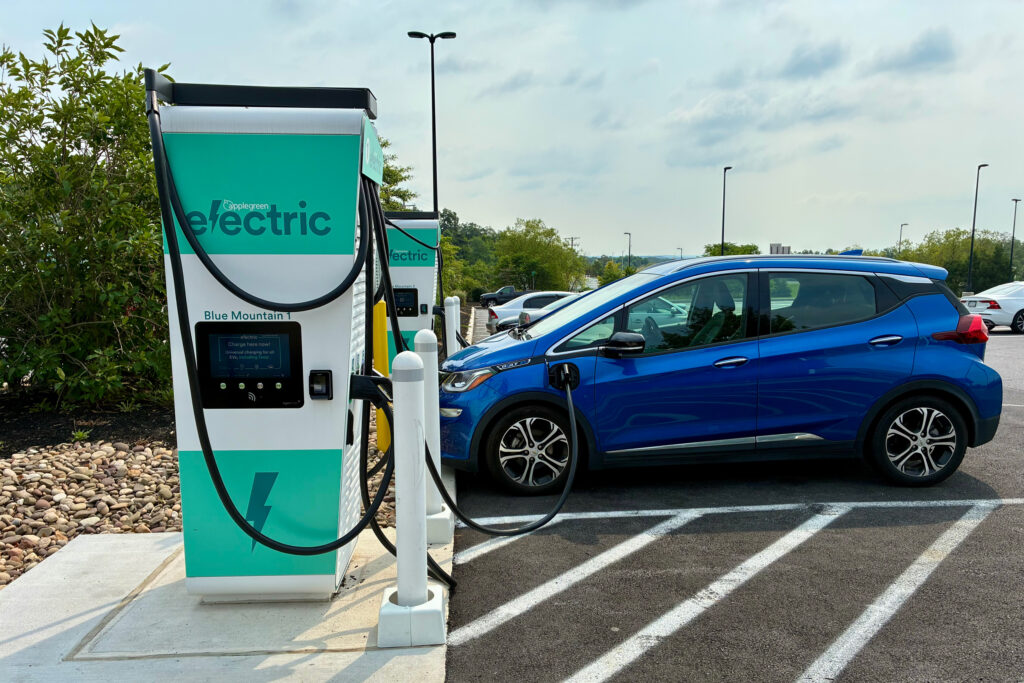
A 500-mile test drive across Pennsylvania in a Chevrolet Bolt EV revealed the current state of the charging landscape. One charging stop at a Pizza Hut parking lot, tucked near a dumpster, offered convenient access but highlighted the fragmented, unglamorous nature of many charger locations. The experience underscored a paradox facing state policymakers: infrastructure is expanding, yet drivers remain uncertain whether to abandon traditional vehicles.
Pennsylvania's EV charger rollout follows federal investment channeled through the Biden administration's Bipartisan Infrastructure Law. The state received federal dollars designated for electric vehicle charging networks, part of a broader effort to establish a national backbone of stations along highways and in communities. The investment reflects a nationwide strategy to remove one of the primary barriers to EV adoption: anxiety over finding reliable places to charge.
The state currently operates chargers distributed across urban centers, suburban areas, and rural regions. However, placement strategy varies widely. Some stations occupy premium locations with nearby restaurants and retail options. Others occupy functional but uninviting spots behind businesses or in industrial parking areas. This patchwork approach mirrors broader deployment challenges across the country, where charger networks developed without centralized planning often result in inconsistent user experiences.
Adoption numbers tell a cautionary tale. Pennsylvania's EV market share remains well below the national average. Drivers cite several persistent concerns: charging time relative to refueling, price premiums on electric vehicles themselves, and lingering doubt about charger reliability and coverage. The presence of chargers does not automatically convert hesitant drivers into EV owners.
State transportation officials acknowledge the chicken-and-egg problem. Drivers want chargers before buying electric vehicles. Utilities and private operators hesitate to install chargers without sufficient demand. Pennsylvania's approach attempts to break this cycle through proactive deployment funded by federal grants, betting that visible infrastructure will build confidence.
The state targets roughly 7,400 public chargers statewide by 2030, including both fast-chargers suitable for highway travel and Level 2 chargers that require several hours. This aligns with projections that electric vehicles will comprise 50 percent of new passenger vehicle sales by 2035. Meeting that sales target depends partly on charger availability.
Operator partnerships complicate expansion. ChargePoint, Electrify America, EVgo, and Tesla operate separate proprietary networks. Drivers must download multiple apps and maintain accounts across systems. Recent moves toward standardized connector plugs and payment systems offer some relief, but fragmentation persists.
Pennsylvania's Pizza Hut charging station experience encapsulates the challenge. The charger functioned reliably, addressing one concern. Yet the location lacked amenities that would make the two-hour charging session comfortable or productive. This gap between infrastructure existence and user satisfaction remains a critical obstacle. Policymakers can install chargers, but ensuring the charging experience rivals the convenience of traditional refueling requires attention to placement, amenities, and network reliability. Pennsylvania's expansion will be judged ultimately not by charger count, but by whether drivers trust the network enough to trade combustion engines for batteries.