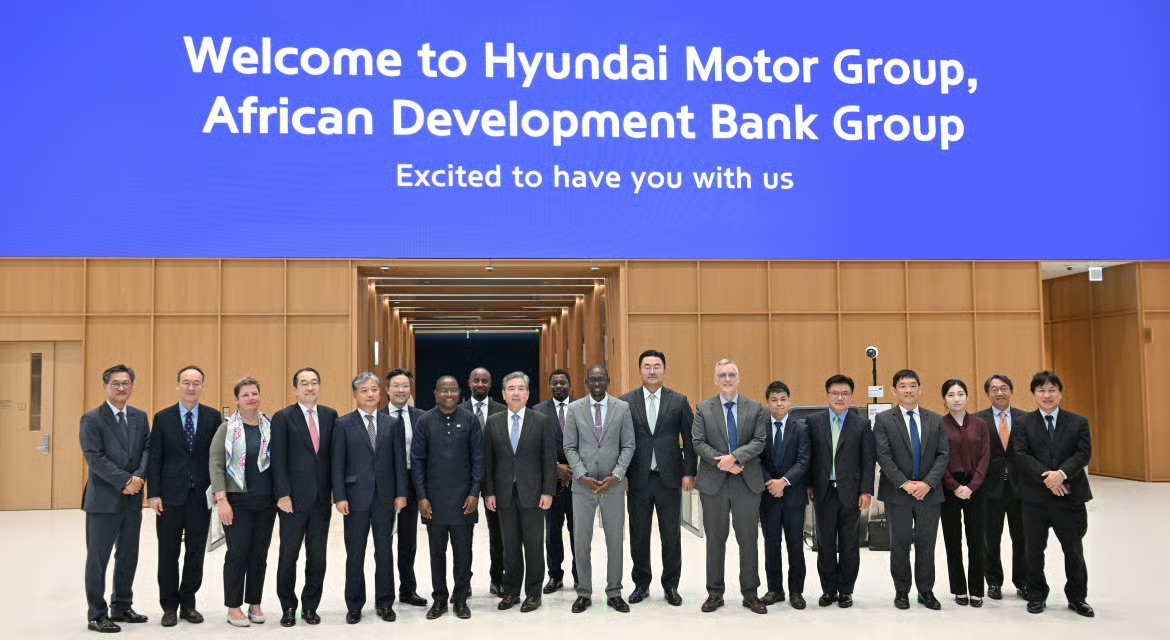
Hyundai Motor Group and the African Development Bank signed a Letter of Intent to pursue long-term strategic collaboration across the African continent, targeting clean energy transition, transport infrastructure, and electric vehicle value chain development.
The partnership merges Hyundai's manufacturing and technology capabilities with AfDB's development financing apparatus. AfDB, headquartered in Abidjan and serving 54 African member states, channels billions annually into infrastructure and economic projects. Hyundai Motor Group, which includes Hyundai Motor Company and Kia, operates manufacturing facilities across multiple continents and has committed to selling only battery electric and hydrogen fuel cell vehicles by 2040.
Six collaboration areas frame the agreement. Clean energy transition ranks first, addressing Africa's energy access gap. The continent hosts 16 percent of global population but consumes just 4 percent of electricity, with roughly 770 million people lacking reliable power access. Hyundai's renewable energy expertise and AfDB's financing channels could accelerate solar, wind, and hybrid projects across member states.
Transport infrastructure represents the second pillar. Africa's road networks remain underdeveloped compared to other continents. AfDB estimates transport infrastructure investment needs exceed $130 billion annually. Hyundai's fleet vehicles and bus manufacturing align with AfDB priorities for urban mobility and logistics corridors that connect regional economies.
Electric vehicle value chain development constitutes the third focus. Currently, Africa produces fewer than 1,000 EVs annually despite hosting 30 percent of global mineral reserves used in battery production, particularly lithium and cobalt. Developing local EV assembly, battery recycling, and charging infrastructure keeps value within African economies rather than exporting raw materials.
The three remaining collaboration areas remain less detailed in available statements but likely cover industrial development, skills training, and regulatory frameworks supporting the energy and transport transitions.
This partnership reflects broader patterns in African climate finance. Multilateral development banks increasingly partner with private sector players to unlock capital that government budgets alone cannot provide. AfDB's 2023 annual report identified just 17 percent of needed climate adaptation funding reaching Africa. Strategic partnerships with manufacturers reduce dependency on public coffers.
Hyundai's interest in African markets extends beyond corporate responsibility. The continent's median age sits at 19 years, creating emerging consumer demand. Vehicle sales in Africa totaled 3.8 million units in 2022, growing at rates exceeding developed markets. Establishing EV ecosystems now positions Hyundai for market share as regulations tighten and consumer preferences shift.
AfDB's involvement signals institutional commitment to just transition principles. Industrial development cannot occur without energy security. Transport networks require vehicles. Manufacturing creates employment. The bank balances climate goals with poverty reduction in a region where 433 million people live on less than $1.90 daily.
Implementation timelines and specific funding commitments remain unannounced. Letters of Intent typically precede binding agreements by months or years. Actual results depend on navigating regulatory frameworks across dozens of countries, sourcing supply chains amid global market volatility, and sustaining political commitment as administrations change.
The partnership addresses real gaps in African infrastructure and energy access. Success would reshape the continent's industrial capacity and emissions trajectory. Failure leaves underlying investment needs unmet while green-washing efforts proliferate.