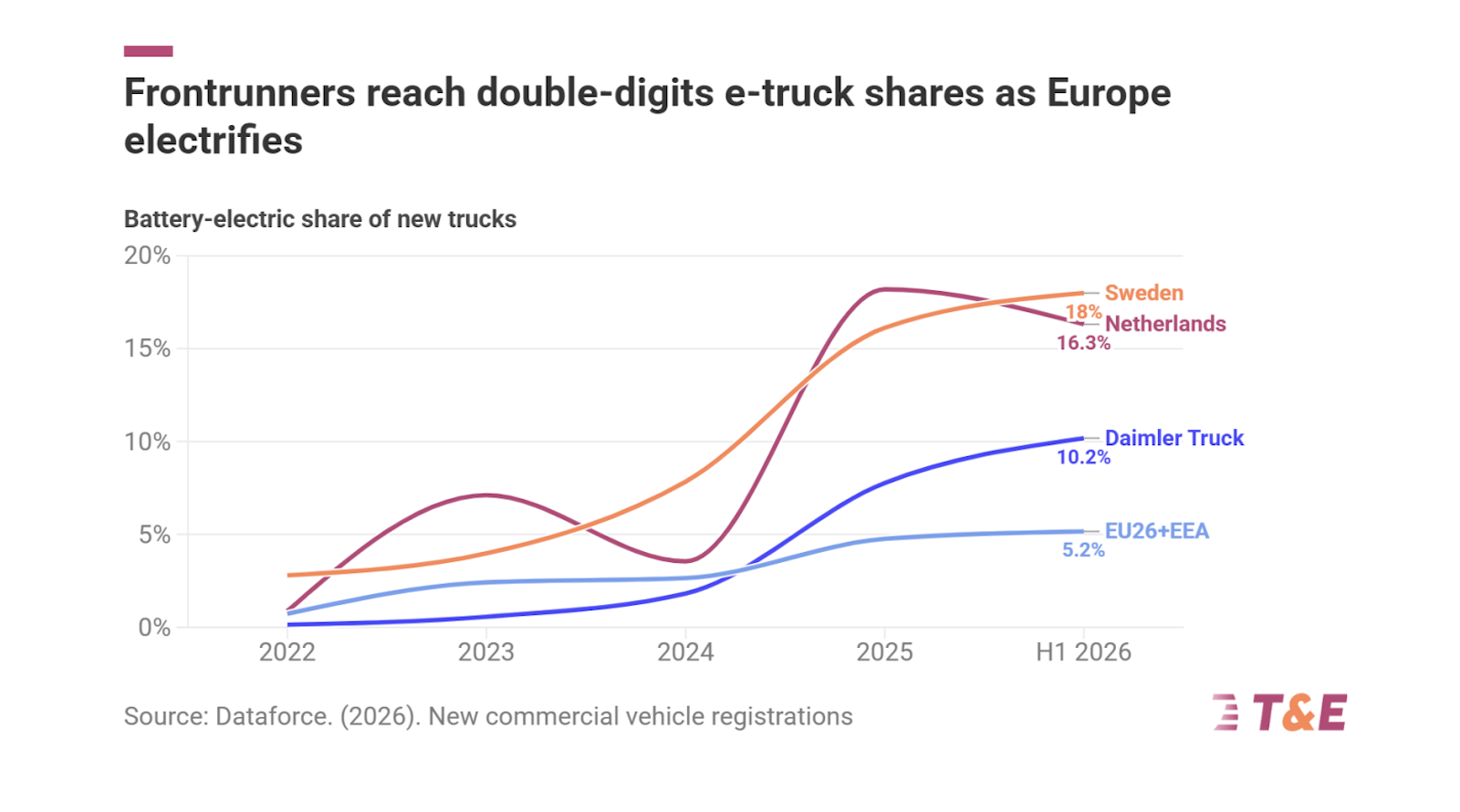
European truckmakers confront a new competitive threat as Tesla, BYD, SuperPanther, and other manufacturers bring electric heavy-duty vehicles to market at lower price points than established players. The dynamics reshaping the continent's commercial vehicle sector signal a potential disruption in an industry historically dominated by Volvo, Scania, Daimler, and MAN.
New entrants are undercutting traditional manufacturers on cost while matching or exceeding performance specifications. Tesla's Semi and BYD's electric truck offerings deliver comparable range, payload capacity, and charging speed to European alternatives, yet at prices that create margin pressure on incumbents. SuperPanther and emerging Chinese manufacturers bring aggressive pricing strategies backed by subsidies and manufacturing advantages in their home markets.
The stakes extend beyond commercial competition. Heavy-duty trucking accounts for roughly 25 percent of transport-related carbon emissions in Europe. Accelerating the shift from diesel to battery-electric powertrains directly affects the EU's 2030 emissions reduction targets and the bloc's 55 percent reduction goal by 2050. Each truck manufacturer's ability to scale electric fleets determines whether Europe meets decarbonization commitments in freight logistics.
Established European truckmakers invested heavily in diesel technology over decades. Transitioning production capacity, retraining workforces, and developing competitive battery-electric platforms requires capital investment and operational restructuring. Volvo has launched its Volvo FH Electric and FM Electric models. Scania produces the R and S series electric trucks. Daimler offers the eActros line. These products exist, but their price tags remain elevated compared to emerging competitors.
Chinese manufacturers possess structural advantages. BYD manufactures its own batteries, reducing component costs by 30 to 40 percent compared to European makers who source cells externally. Production economies of scale in China and government support through subsidies and procurement preferences lower vehicle prices. Tesla's vertical integration strategy parallels this model, controlling battery production, software architecture, and manufacturing processes.
European regulators introduced CO2 emissions standards for heavy-duty vehicles in 2019, requiring manufacturers to reduce average emissions by 30 percent from 2005 levels by 2030. These mandates accelerate truck electrification across the continent. Fleet operators facing tightening emissions regulations and rising diesel costs show openness to electric alternatives if total cost of ownership favors battery-electric powertrains.
Logistics companies including DB Schenker, DPD, and Rhenus have ordered electric trucks from both established and new manufacturers. Their purchasing decisions depend on vehicle reliability, charging infrastructure availability, and service network density. Established European makers maintain advantage in dealer networks and after-sales support across the continent, a factor new entrants must overcome.
The competitive pressure carries employment implications. Traditional truckmaker plants employ thousands across Germany, Sweden, and other European nations. Failure to compete effectively with lower-cost entrants risks production cuts and workforce reductions. Conversely, accelerated electrification and competition may spur innovation and efficiency gains that strengthen European manufacturers long-term.
Market consolidation or partnership models may emerge. European truckmakers could acquire technology, form joint ventures with battery suppliers, or license electric platforms from competitors. Regulatory support through tariffs on imported vehicles or procurement incentives for European manufacturers remains possible but conflicts with EU free-trade commitments.
The outcome over the next three to five years will clarify whether European truckmakers retain market leadership in electrified heavy-duty transport or cede significant share to Tesla, BYD, and other entrants reshaping the global vehicle market.