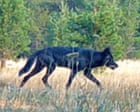
California's Department of Fish and Wildlife confirmed a gray wolf sighting in Mendocino National Forest in late August, marking the first documented presence of the species in that area since wolves returned to the state in 2011. County officials in Lake County, located roughly 100 miles north of San Francisco, announced the verification after receiving multiple reports from the forest.
The sighting represents a significant range expansion for California's recovering wolf population. Gray wolves were completely eradicated from California by the early 1900s through systematic hunting and trapping. The species remained absent for over a century until the first wild wolf pack, the Lassen Pack, naturally recolonized the state from Oregon in 2011. Since then, the population has grown modestly, with most wolves concentrated in the northeastern regions near the Oregon border.
Mendocino National Forest sits in the northern Sierra Nevada range, roughly 150 miles south of Oregon. The forest's rugged terrain and diverse ungulate populations provide suitable habitat for wolf recovery. The confirmed sighting indicates that dispersing wolves have expanded beyond their traditional stronghold in the far northeast, gradually reclaiming historical territory across northern California.
Gray wolves function as keystone species in forest ecosystems. Their predation regulates ungulate populations like deer and elk, reducing browsing pressure on vegetation. This trophic cascade strengthens forest health and biodiversity. The species also affects scavenger communities, as wolves leave carcasses that feed ravens, bears, and other animals.
California's wolf recovery remains contentious. Ranchers in the region have expressed concerns about livestock predation, though documented cases remain rare. State wildlife officials employ nonlethal deterrent methods like range riders, livestock guardian dogs, and fladry to minimize conflicts. CDFW has also implemented a compensation program to reimburse ranchers for verified wolf-caused losses.
The Mendocino sighting may reflect natural population growth rather than a single dispersing individual. CDFW currently monitors multiple packs across northeastern California. The agency uses GPS collars, camera traps, and field surveys to track population dynamics. As of 2023, California hosted at least three established packs, with additional individual wolves moving through the landscape.
Federal protection under the Endangered Species Act safeguards California wolves, prohibiting hunting or trapping except in rare lethal-removal cases approved by state and federal agencies. Delisting remains unlikely given the population's small size and geographic concentration. Conservation biologists recommend maintaining connectivity between California's wolf population and those in Oregon, Idaho, and Yellowstone to ensure genetic diversity and population resilience.
The Mendocino confirmation demonstrates that wolf recovery proceeds through gradual, measurable steps. Each documented sighting provides CDFW with data on population expansion, habitat use, and potential human-wildlife conflicts. Wildlife managers use this information to refine management strategies and educate communities about coexistence. Long-term recovery requires sustained commitment from state agencies, landowners, and the public to tolerate wolves' presence in shared landscapes.