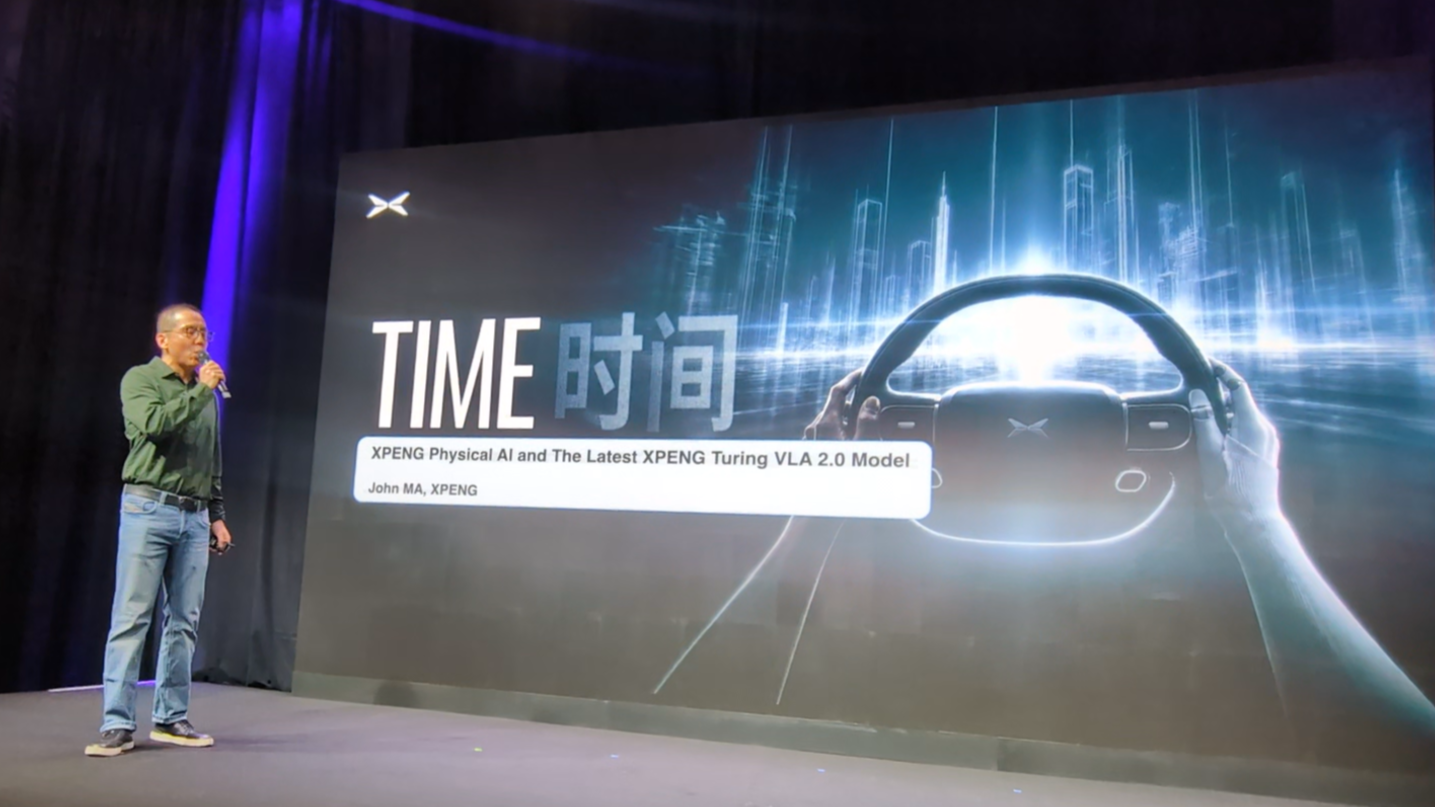
XPENG demonstrated autonomous driving technology and AI integration at IFA Berlin this week, positioning the Chinese electric vehicle manufacturer as a technical leader in the emerging "physical AI" sector. Dr. John Ma, Senior Director and Head of Advanced Driver Assistance Systems (ADAS) at XPENG, presented technical specifications for autonomous capabilities set to launch in European markets.
Physical AI differs from conventional large language models by combining neural networks with robotic systems and real-world sensor data. XPENG's approach embeds AI directly into vehicle hardware, enabling autonomous navigation, obstacle avoidance, and decision-making without constant cloud connectivity. The company detailed how these systems process camera feeds, lidar data, and radar inputs to model driving scenarios in real time.
XPENG currently operates the world's largest autonomous driving dataset, accumulated from over 1 million vehicles deployed across China since 2015. This dataset trains neural networks to recognize road conditions, pedestrian behavior, and vehicle dynamics. The automaker has expanded testing to over 300 cities, generating petabytes of training material annually.
The Berlin demonstration occurred as European regulators tighten autonomous vehicle standards. The EU's proposed liability framework for AI systems requires manufacturers to demonstrate explainability, safety validation, and fail-safe mechanisms. XPENG's presentation addressed these requirements by showing how its systems handle edge cases, communicate uncertainty, and default to human control when confidence thresholds drop below acceptable levels.
European expansion represents a critical market test for XPENG. The company entered Europe in 2023 and now operates in Germany, the Netherlands, Sweden, and Portugal. IFA Berlin provided a venue to showcase technical depth rather than marketing rhetoric. While many automakers mention AI generically, XPENG discussed specific neural network architectures, training methodologies, and validation protocols.
The physical AI focus addresses a market reality: autonomous driving requires embodied intelligence that understands physics, not just pattern recognition. XPENG's systems must predict vehicle dynamics, calculate braking distances, and model pedestrian trajectories. These computations happen milliseconds after sensor data arrives, demanding specialized hardware acceleration and optimized algorithms.
Competition in autonomous systems intensifies globally. Tesla deploys its Full Self-Driving beta to select owners, though without full autonomy despite the name. Waymo operates robotaxi services in Phoenix and San Francisco using fleet-specific lidar arrays and massive server farms. XPENG targets a middle path, embedding intelligence directly into mass-market vehicles without requiring ground-based infrastructure investment.
The timing coincides with XPENG's Xiaomi partnership announced in 2024. The collaboration combines XPENG's autonomous driving expertise with Xiaomi's consumer electronics manufacturing. This partnership could accelerate deployment of physical AI systems beyond automotive applications into robotics and smart home devices.
European customers will assess XPENG's technology claims against actual performance over the coming years. IFA Berlin represented a technical credibility statement, moving beyond hype to engineering specifics. The company's willingness to discuss safety architecture, validation procedures, and computational requirements suggests confidence in its approach. European regulators will scrutinize whether that confidence proves justified through long-term deployment data.