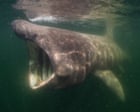
Dutch cinematographer Peter van Rodijnen has documented the North Sea's hidden ecological wealth in a new film that challenges decades of public indifference toward Europe's murkiest waters.
The North Sea suffers from a branding problem. Its turbid surface and sediment-laden waters have long discouraged scientific and popular interest. Most Europeans dismiss it as a grey, lifeless expanse. Van Rodijnen, inspired by Jacques Cousteau's underwater documentaries from tropical regions, spent years diving beneath North Sea waves to prove otherwise.
His persistence paid off. The resulting documentary reveals a thriving marine ecosystem that rivals more celebrated ocean habitats. Seals, sharks, tuna, orcas, and shorthorn sculpins inhabit these cold northern waters. Epic plankton blooms create visual obstacles for cinematographers, making the region technically challenging to film. Yet these blooms signal biological productivity. Phytoplankton blooms drive entire food webs, supporting larger predators and commercial fish stocks.
The North Sea remains economically vital. It supports major fisheries across multiple nations including the United Kingdom, Germany, Denmark, and the Netherlands. Oil and gas extraction continues despite climate transition pressures. Offshore wind farms now occupy portions of the seabed. These competing interests complicate conservation efforts.
Van Rodijnen's documentary serves an overlooked function: building public connection to a marine ecosystem most citizens have never truly seen. Conservation succeeds when people understand what they stand to lose. The North Sea generates roughly 90 billion euros annually from fisheries, energy, and tourism combined. Yet its biodiversity remains poorly documented compared to tropical reefs or open ocean systems.
Recent research has documented declining fish populations and shifting species distributions linked to warming waters and overfishing. The North Atlantic Fisheries Organization reported reduced cod stocks in 2023. Climate models project continued warming will push warm-water species northward while cold-water specialists face compression. Orcas appear with increasing frequency in North Sea waters, likely following prey migrations driven by temperature change.
The European Union's Marine Strategy Framework Directive requires member states bordering the North Sea to achieve "good environmental status" by 2020, a deadline that passed without full compliance. Implementation gaps persist across national boundaries. Coordinated management remains difficult when six nations share fishing rights and energy interests.
Van Rodijnen's filmmaking approach emphasizes what marine biologists call "ecosystem representation." By showing sharks, seals, and tuna coexisting in North Sea habitat, the documentary communicates ecological complexity that scientific papers reach only specialists. Public engagement translates to political will. Governments respond to voter interest.
The North Sea faces mounting pressures from climate warming, pollution, noise from shipping and pile-driving for offshore wind, and continued fishing pressure. The seals, sharks, and orcas visible in van Rodijnen's lens depend on ecosystem stability that current policies do not guarantee.
His decades of underwater work validate Cousteau's original insight: the ocean merits attention regardless of water clarity or geographic prominence. The North Sea's grey surface conceals biological processes sustaining millions of people economically and ecologically. Documentation creates the first step toward protection.