# Photographer Documents New York's Plastic Crisis and Community Responses
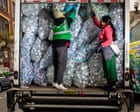
Photographer Bryan Anselm spent months documenting the plastic waste saturating New York City and the region stretching into Quebec, capturing both the scale of the problem and the grassroots efforts underway to address it.
New York City's dense urban grid creates conditions uniquely visible for plastic proliferation. The city's notorious clear recycling bags expose their contents to public view. Lightweight plastic wrappers, bags, and bottles overflow from street bins and scatter across sidewalks, collecting in gutters and corners before wind carries them further. Unlike cities with hidden alleys and traditional waste disposal infrastructure, New York's vertical density and grid layout leave plastic refuse on permanent display.
This visibility transforms garbage from an invisible problem into a layer of the urban landscape. Plastic debris mingles with familiar city fixtures like subway grates and fire escapes, becoming normalized through constant presence. The documentary work frames waste not as something discarded and forgotten, but as a persistent feature of daily urban life.
Anselm's photographic investigation extends beyond mere documentation of the problem. His project captures the human response, featuring individuals and community organizations actively working to reduce plastic consumption and waste. These efforts range from neighborhood cleanup initiatives to broader advocacy campaigns aimed at changing consumption patterns and municipal policy.
The scope of New York's plastic waste reflects patterns across North America's densest urban centers. Studies from the U.S. Environmental Protection Agency consistently rank plastic among the fastest-growing waste streams. Single-use plastics account for roughly 40 percent of all plastic produced annually, with packaging representing the largest category. New York City generates approximately 14,000 tons of waste daily, with plastics constituting a growing proportion despite municipal recycling programs.
The city has implemented several interventions. A ban on single-use plastic bags took effect in 2020, though enforcement remains inconsistent. Proposed legislation would expand restrictions to other single-use plastics including straws, utensils, and foam containers. However, critics argue these measures address only the most visible items while overlooking the industrial packaging that comprises the bulk of plastic waste entering the system.
Community-led solutions have emerged alongside policy approaches. Neighborhood cleanups, zero-waste shops that eliminate packaging, and educational campaigns targeting consumer behavior demonstrate grassroots commitment to reduction. These initiatives often operate with minimal funding and volunteer labor, filling gaps where municipal infrastructure proves inadequate.
The problem extends beyond aesthetics. Plastic waste enters waterways feeding into the Hudson River and surrounding coastal ecosystems. Microplastics have been detected in New York City's water system, though treatment plants filter most particles. Landfills receiving unrecycled plastic represent another endpoint, with decomposition timelines extending centuries.
Anselm's documentation arrives amid growing recognition that waste management alone cannot solve the plastic crisis. Environmental analysts emphasize that production reduction, not better disposal, represents the necessary long-term response. Cities like San Francisco and Seattle have implemented more aggressive waste reduction targets, though progress remains uneven.
The photographed spaces reveal the contradiction between consumer convenience and environmental consequence. They show plastic not as an abstract global problem, but as a tangible presence reshaping urban space and public health. The documented community responses suggest awareness extends beyond policy discussions into neighborhood action, yet structural change requires intervention at manufacturing and retail levels, not merely at consumption's end point.