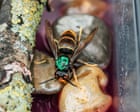
Asian hornets are advancing across the UK, and beekeepers say the government must launch a national awareness campaign before the invasive predator decimates honeybee colonies and undermines food production.
The yellow-legged hornet, native to south-east Asia, arrived in Europe around 2004 and has steadily expanded its range northward. Warming springs and summers have accelerated this spread, creating conditions that favor hornet survival and reproduction across the continent. The species now poses a direct threat to British beekeeping operations and wild pollinator populations.
These hornets hunt honeybees with brutal efficiency. A single hornet can decapitate multiple bees in minutes, and a hornet nest can devastate an entire apiary during peak foraging season. The predation removes worker bees essential for pollination of crops and wild plants. This dynamic transforms productive ecosystems into what beekeepers term "pollinator deserts" where flowering plants go unfertilized and fruit and seed production collapses.
The stakes extend far beyond the beekeeping industry. Honeybees and other wild pollinators provide pollination services worth billions annually to global agriculture. In the UK, one-third of food crops depend partly or wholly on animal pollination. Crops including apples, almonds, cucumbers, and numerous berries require bee visits for viable fruit set. Without sufficient pollinator populations, food security becomes genuinely threatened. Yields drop. Food imports increase. Prices rise. Consumer choice shrinks.
The UK currently has no established hornet nests, but sightings have occurred in recent years, particularly along the southern coast where continental trade routes make entry points vulnerable. The species spreads through human commerce, hitchhiking in shipments of goods and produce. Early detection remains the only practical containment strategy available. Once a nest becomes established in a new region, eradication becomes nearly impossible.
Beekeeping organizations have repeatedly requested formal government action. They want public education programs teaching people to identify hornets, report sightings promptly to relevant authorities, and understand why rapid response matters. They also seek funding for monitoring programs and rapid-response teams trained to locate and destroy nests before colonies expand. France and Spain, where hornets arrived earlier, have implemented such strategies with variable success.
The UK government's Department for Environment, Food and Rural Affairs (DEFRA) currently relies on voluntary reporting through local beekeeping associations and the public. This passive surveillance system leaves significant blind spots. Many people cannot distinguish Asian hornets from native hornet and wasp species. Reporting gaps delay detection. By the time a nest is discovered, populations have often grown substantially.
Beekeepers argue that waiting for establishment invites disaster. Prevention costs far less than managing an entrenched hornet population. A national campaign would increase public awareness, improve early detection odds, and demonstrate government commitment to protecting pollinator populations and food security.
The hornet threat arrives alongside other stressors already weakening bee colonies. Disease, pesticides, habitat loss, and climate disruption already strain populations. Adding an aggressive invasive predator could push vulnerable colonies past recovery thresholds. Beekeepers warn the window for prevention remains open but narrows each year as hornet populations in continental Europe grow larger and more numerous.