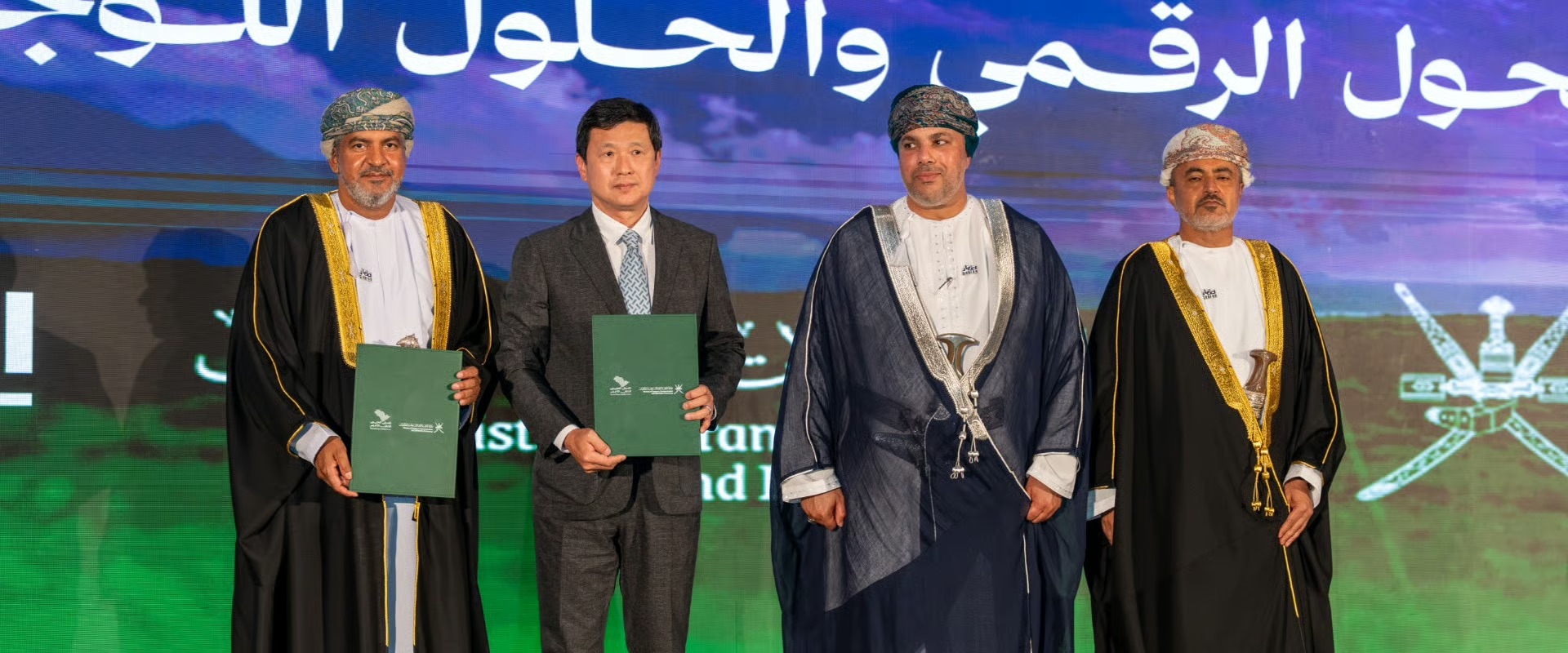
Hyundai Motor Group has signed partnership agreements with Oman's Ministry of Transport, Communications and Information Technology to accelerate the country's shift toward zero-emission vehicles under Oman Vision 2040, the sultanate's long-term development strategy.
The multipart agreement addresses three pillars of green mobility. Hyundai will work with Mwasalat, Oman's public transportation operator, to deploy the nation's first hydrogen fuel cell city buses in Muscat. This marks the first commercial deployment of hydrogen buses in the Arabian Peninsula, positioning Oman as a regional leader in alternative fuel technology.
The group also partnered with Oman Oil Marketing Company and EVO, a fast-charging brand, to construct ultra-fast electric vehicle charging infrastructure. The initial deployment includes a 240 kilowatt charger, capable of substantially reducing charging times compared to standard Level 2 chargers. EVO currently operates charging networks across multiple Middle Eastern countries, providing Hyundai access to established regional expertise.
The timing reflects broader momentum in the Gulf Cooperation Council states toward transportation electrification. While Saudi Arabia and the United Arab Emirates have invested heavily in EV infrastructure over the past five years, Oman has moved more cautiously. This partnership represents a shift in policy, aligning Oman Vision 2040 objectives with transport decarbonization targets.
Hydrogen buses offer particular advantages in hot, arid climates. Unlike battery electric buses, fuel cell vehicles produce only water vapor as exhaust and generate waste heat that can be managed more efficiently in desert conditions. Hyundai's Elec City hydrogen bus has demonstrated reliability in similar climates across South Korea and Europe. The vehicles operate at 60 percent thermal efficiency compared to 30-35 percent for conventional diesel buses.
For Mwasalat, the transition addresses both environmental and operational costs. Diesel fuel subsidies represent a substantial government expense across GCC states. While hydrogen production infrastructure remains underdeveloped in Oman, the partnership signals intent to build supply chains. Green hydrogen, produced through electrolysis powered by solar or wind energy, represents a pathway toward genuinely zero-carbon transport.
The EV charging component targets private vehicle adoption. Oman's total vehicle fleet exceeds 1.5 million units, with annual new vehicle sales around 100,000 units. Current EV penetration remains below 1 percent, well behind regional peers. Ultra-fast charging addresses range anxiety, the primary barrier cited by potential buyers in markets with limited charging infrastructure.
Hyundai's strategy extends beyond individual sales. The company positioned hydrogen and battery electric vehicles as complementary technologies for different use cases. Heavy-duty transport, bus fleets, and long-haul logistics favor fuel cells. Light-duty vehicles and urban commuting favor batteries. This segmentation reflects the company's broader portfolio, which includes the Nexo hydrogen SUV and the Ioniq 5 and Ioniq 6 electric models.
The partnership also carries geopolitical dimensions. Oman maintains diplomatic independence within the GCC and has positioned itself as a potential hydrogen export hub, leveraging abundant renewable energy potential and strategic port access. Supporting hydrogen infrastructure development now establishes market presence ahead of larger regional commitments.
Implementation timelines remain unspecified. Hyundai will work with local partners on regulatory approval, pilot deployment, and workforce training. The hydrogen bus rollout requires coordination with Mwasalat's maintenance facilities and driver certification programs. Charging infrastructure development depends on grid capacity assessments and power purchase agreements.