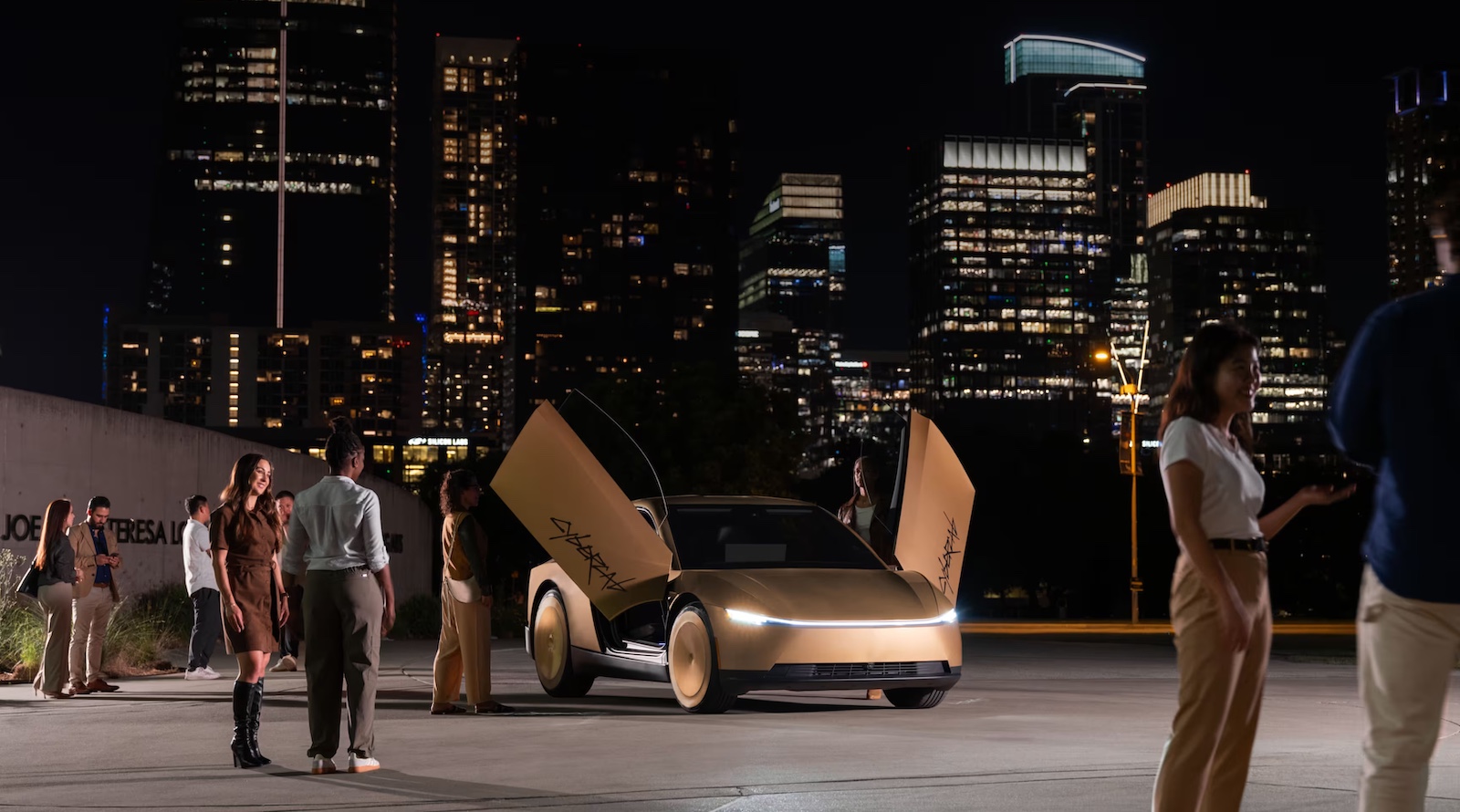
# Tesla Cybercab Launch Raises Questions About Autonomous Vehicle Readiness and Market Viability
Tesla has officially launched the Cybercab, its long-anticipated autonomous vehicle designed to operate without a steering wheel or pedals. The launch marks a pivotal moment in the company's bet on full self-driving technology, though the practical implications remain uncertain as regulatory pathways remain unsettled and consumer adoption patterns stay unpredictable.
The Cybercab represents Tesla's most aggressive push into autonomous robotaxi services. The vehicle eliminates conventional driving controls entirely, relying instead on the company's full self-driving software stack to navigate urban environments. This design choice signals Tesla's confidence in its autonomous capabilities, but it also raises immediate questions about safety validation, insurance liability, and regulatory approval across different jurisdictions.
The timing of the launch matters considerably. Autonomous vehicle development has faced repeated delays from multiple manufacturers over the past five years. Waymo operates limited robotaxi services in select markets. Cruise, General Motors' autonomous subsidiary, paused operations in 2023 following a pedestrian injury incident. Broader regulatory scrutiny of autonomous systems has intensified as state and federal agencies develop safety standards and accountability frameworks. Tesla's decision to launch at this moment positions the company either as an industry leader or as a company operating ahead of regulatory readiness.
Several technical and commercial questions emerge from the launch. First, the Cybercab's actual deployment timeline remains vague. Tesla has not specified which cities will receive vehicles first or what volume production will reach in 2026. Second, insurance frameworks for fully autonomous vehicles remain underdeveloped. Liability questions persist about who bears responsibility when crashes occur in driverless vehicles. Third, the pricing structure and business model are not yet detailed. Will Tesla sell Cyberabs or operate them as a fleet? What price point will consumers accept?
The vehicle's environmental profile shapes its relevance to climate transition planning. As an electric vehicle, the Cybercab produces zero direct emissions. If deployed at scale in robotaxi fleets, autonomous electric vehicles could reduce per-mile transportation emissions significantly compared to conventional ride-hailing. However, environmental benefits depend entirely on grid decarbonization rates. Robotaxis charged with electricity from coal-heavy grids would deliver fewer emissions reductions than vehicles charged in regions with substantial renewable energy penetration.
Manufacturing capacity presents another constraint. Tesla's existing plants operate near capacity. Scaling Cybercab production to meaningful fleet sizes would require facility expansions or retooling of existing lines. These decisions involve capital expenditure commitments that Tesla has not publicly detailed.
Regulatory approval constitutes the most critical unknown. Federal regulators have not yet granted widespread approval for vehicles without traditional driving controls. Individual states maintain different autonomous vehicle policies. Some states prohibit fully autonomous operation on public roads. Others require continuous human monitoring. Tesla's launch appears to outpace regulatory frameworks in most markets, suggesting the company may face legal challenges to deployment.
The Cybercab launch reflects Tesla's strategic bet that autonomous technology maturation and regulatory adaptation will proceed quickly enough to support profitable robotaxi operations. Whether this timeline aligns with actual technical and regulatory progress remains the defining question for the vehicle's commercial viability and climate impact.