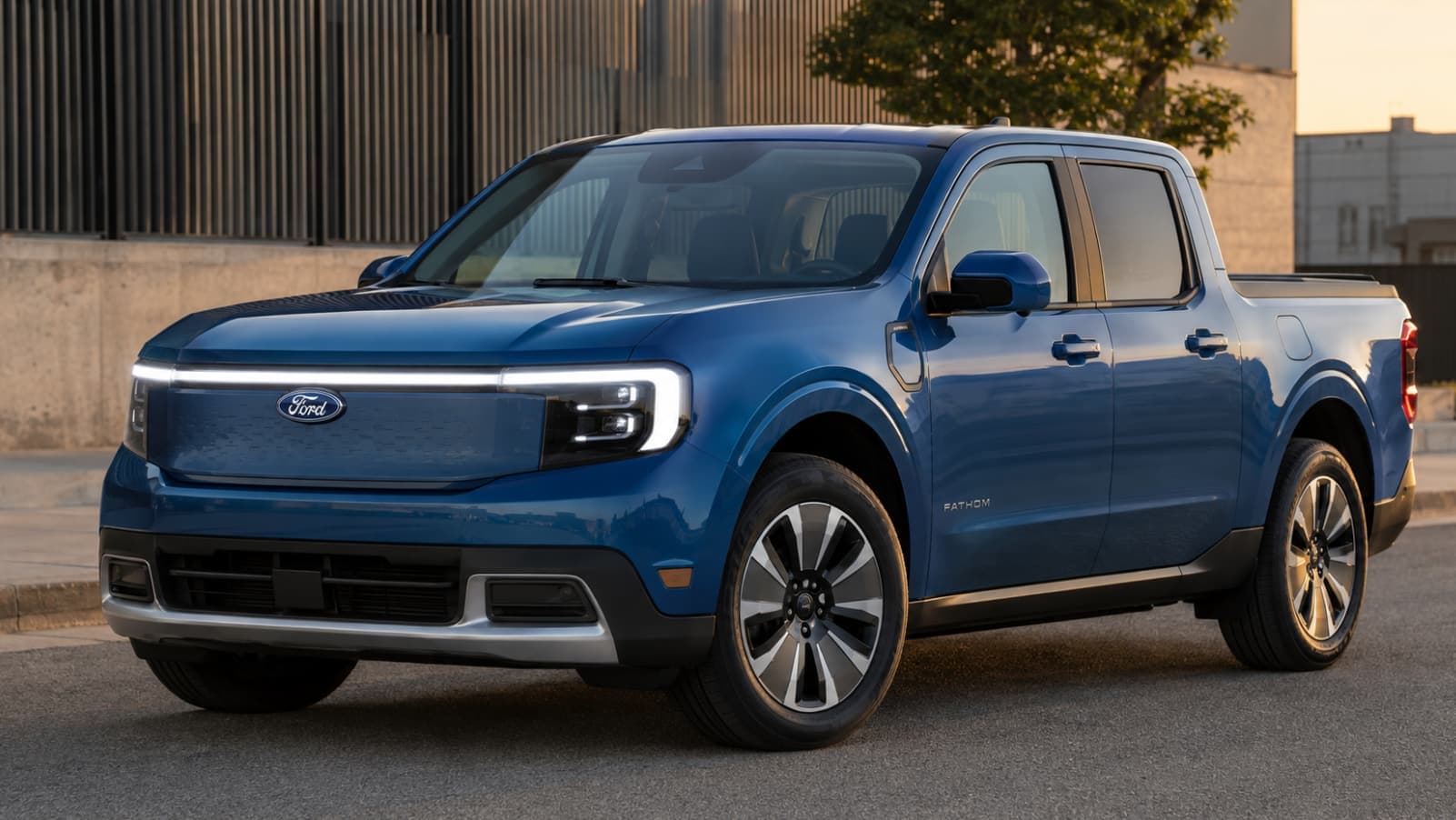
Ford has launched an aggressive marketing campaign for its forthcoming Fathom electric pickup truck, deliberately timing promotional efforts to coincide with Tesla's major Cybercab unveiling event in Texas. The coordinated push represents an escalating competitive battle between legacy automakers and Tesla over the electric vehicle market's most contested segment: affordable EVs.
The timing reveals Ford's strategic calculation. Tesla's Cybercab event commands significant media attention and investor interest. By promoting Fathom simultaneously, Ford positions its offering as a direct alternative while capturing spillover coverage from Tesla's announcement. This approach reflects broader industry dynamics where traditional manufacturers increasingly challenge Tesla's market dominance through aggressive publicity and product launches.
Fathom enters a pickup truck category that Tesla has dominated through Cybertruck, which has faced production delays and pricing controversies since its late 2023 launch. Ford's electric F-Series legacy gives the company deep roots in truck buyers' preferences and dealer networks. The Fathom campaign leverages these advantages while positioning affordability as a differentiator against premium-priced competitors.
Tesla's Cybercab event represents the company's autonomous taxi initiative, expanding beyond personal vehicles into robotaxi services. The unveiling carries implications for autonomous driving technology development and Tesla's valuation expectations among investors. Ford's counterprogramming dilutes focus from Tesla's robotaxi narrative by refocusing attention on traditional vehicle categories where Ford maintains established credibility.
The PR war reflects intensifying competition in the EV market. Ford invested $5.6 billion in EV development through its Ford Model e division. The company targets 2 million EV production capacity annually by 2026. General Motors, Volkswagen, and other legacy manufacturers simultaneously accelerate EV rollouts, creating crowded market conditions where brand messaging and launch timing determine competitive positioning.
Affordability emerges as the central battleground. Tesla's price reductions and demand concerns suggest the $25,000 EV market segment faces tightening margins. Ford's Fathom positioning directly addresses middle-market buyers priced out by Cybertruck's starting price near $60,000. Industry analysts predict affordable EV segments will drive volume growth through decade's end, making Fathom's market window critical for Ford's EV transition.
The simultaneous announcements also signal shifting industry confidence. Ford's willingness to challenge Tesla publicly indicates the company believes it can compete effectively in EV categories historically dominated by Tesla. Cybertruck production challenges and range concerns have opened competitive opportunities that traditional manufacturers exploit through established manufacturing expertise and supply chain relationships.
Marketing intensity reflects financial stakes. EV transitions require massive capital investments and profitability timelines measured in years. Each percentage point of market share in the affordable truck segment translates to millions in revenue and determines success of company-wide electrification strategies. Ford's aggressive positioning against Tesla's Cybercab reflects this high-stakes competition for market position in categories essential to long-term business viability.
The competition ultimately benefits consumers through expanded choices and price competition. Ford's entry into affordable electric pickups forces Tesla to address market segments beyond premium positioning. Legacy automakers' simultaneous EV pushes accelerate market transition away from gasoline vehicles while creating performance pressures that drive innovation across the industry.