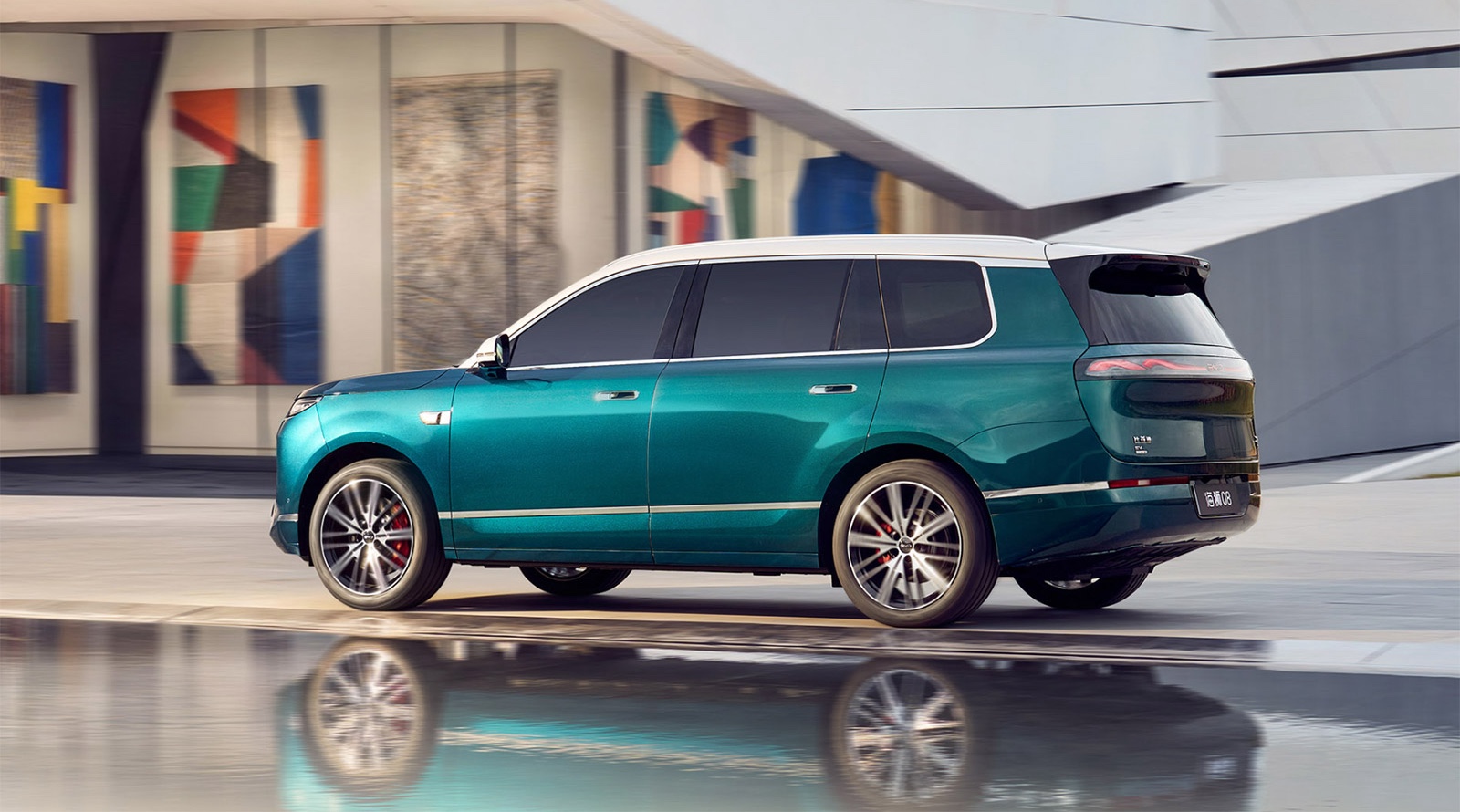
BYD unveiled the Sealion 08 vehicle and launched mass production of its proprietary 4D radar chip, marking the Chinese automaker's push to recover from sales declines and compete in autonomous driving technology.
The moves arrive as BYD rebounds from weakness earlier in 2026. August battery-electric vehicle sales showed substantial gains, signaling momentum entering the final quarter. The new model and in-house radar chip represent BYD's dual strategy: expanding its SUV lineup while reducing dependence on external suppliers for autonomous driving components.
The Sealion 08 joins BYD's growing portfolio of electrified SUVs under the Sealion brand. Details on powertrain options and pricing remain limited from available information, but the launch timing coincides with intensifying competition in China's electric vehicle market, where BYD competes against Tesla, Li Auto, XPeng, and NIO. The vehicle enters a segment where consumers increasingly demand advanced driver assistance systems and autonomous capabilities.
More strategically significant is BYD's internal production of 4D radar technology. Traditional automotive radar operates in 2D or 3D; 4D radar adds velocity measurement alongside spatial positioning, enabling more precise object detection and classification at highway speeds. This capability proves essential for autonomous driving systems and advanced safety features. By manufacturing the chip in-house, BYD avoids supply chain vulnerabilities and licensing fees typically paid to companies like Bosch, Velodyne, or Arbe Robotics.
The chip production reflects BYD's broader vertical integration strategy. Already controlling battery manufacturing through its BYD Battery division, the company expanded into semiconductors with its Semiconductor Company, established to produce power management chips, silicon carbide components, and now radar processors. This approach mirrors Tesla's strategy of developing proprietary autonomous driving hardware rather than licensing third-party solutions.
The 4D radar represents a critical layer in BYD's autonomous driving stack. While the company has invested in Level 2+ assisted driving features through partnerships and internal R&D, mass-producing the radar chip domestically positions BYD to offer these systems at lower cost than competitors reliant on imported components. Particularly given U.S. and Western sanctions pressures on Chinese tech exports, domestic semiconductor production reduces regulatory and supply risks.
BYD's sales recovery in August held significance because the company faced year-over-year comparisons that reflected a challenging first half. By September, market observers tracked whether the Sealion 08 and other new model launches could sustain momentum through year-end. China's EV market grows increasingly crowded, with price competition intense and consumer preferences shifting toward larger battery packs and longer ranges.
The radar chip production also signals BYD's intent to compete in the autonomous driving race without relying on Tesla's industry-leading Autopilot/FSD systems or Chinese competitors' vision-only approaches. Most autonomous systems combine multiple sensor types. 4D radar excels in adverse weather and poor visibility conditions where cameras struggle, making it valuable for vehicles operating across China's diverse climate zones.
This announcement underscores how BYD leverages its battery manufacturing heritage and capital resources to become a full-stack EV company. Rather than assembling vehicles with purchased components, BYD increasingly makes semiconductors, batteries, and vehicles under one corporate structure. That integration, combined with recovering sales momentum, positions the company to challenge global automakers in both traditional markets and emerging autonomous vehicle segments.