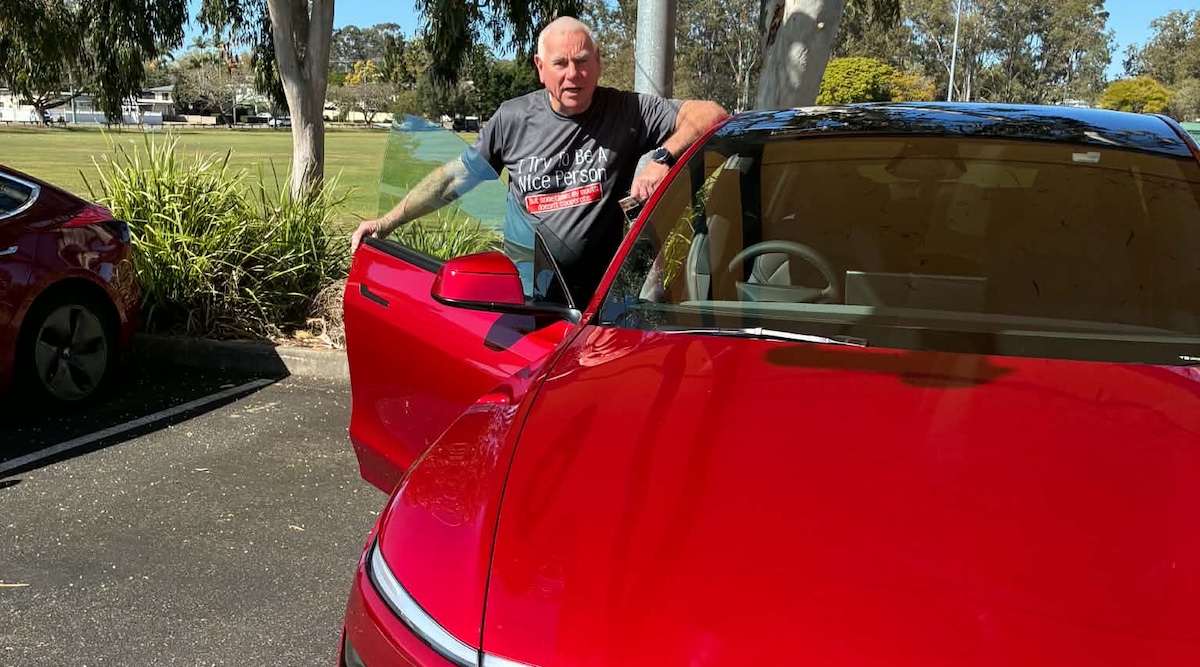
A consumer named Bill has purchased a Tesla Model Y, selecting the electric vehicle despite personal disagreement with company founder Elon Musk. The decision reflects a growing tension in the EV market: consumers increasingly prioritize vehicle performance and environmental benefits over CEO behavior or public statements.
Bill's choice illustrates a practical reality facing potential electric vehicle buyers. The Tesla Model Y ranks among the most affordable mass-market EVs available in the United States, with starting prices near $44,000 before federal tax credits. Its 330-mile range on a full charge meets typical daily driving needs. Competing models from traditional automakers, including the Chevrolet Equinox EV and Hyundai Ioniq 5, offer similar capabilities. Yet many consumers still default to Tesla when evaluating their options.
The decision to separate product quality from corporate leadership reflects broader consumer patterns. Musk has become a polarizing figure among environmental advocates and progressive consumers, particularly following his acquisition of X (formerly Twitter) and subsequent public statements on climate and political issues. His leadership style generates substantial online criticism. Despite this, Tesla maintains market dominance in EV sales, commanding roughly 50 percent of the U.S. electric vehicle market as of 2025.
Bill's experience offers insight into EV adoption barriers and motivations. The post references "experiential information" from conversations among people transitioning from gasoline vehicles to electric options. These discussions reveal common concerns: charging infrastructure accessibility, total cost of ownership, vehicle reliability, and practical range requirements. For consumers evaluating their first EV purchase, hands-on accounts from early adopters carry significant weight.
The Tesla Model Y itself has become the best-selling vehicle globally in 2023 and 2024, according to industry tracking data. Its dominance stems from established charging networks through the Supercharger system, manufacturing scale that reduces production costs, and performance metrics that rival traditional luxury vehicles. The vehicle produces zero tailpipe emissions, eliminating a source of nitrogen oxides and particulate matter that contributes to urban air pollution and respiratory disease.
Purchasing decisions like Bill's reflect a maturation in the EV market. Early adopters often prioritized environmental ideology alongside product choice. Current consumers increasingly evaluate electric vehicles through conventional automotive criteria: price, performance, warranty, and dealer networks. This shift expands the potential customer base beyond environmentally motivated buyers to pragmatic consumers focused on operational efficiency and long-term savings.
The gap between personal values and purchasing behavior remains common across consumer markets. Individuals frequently buy products from companies they criticize for ethical reasons when no adequate alternatives exist or when alternatives cost significantly more. In the EV space, this tension grows as traditional automakers release competitive electric models with different corporate cultures and leadership.
Bill's decision ultimately reflects the state of transportation electrification: the technology has reached sufficient maturity and affordability that environmental and practical benefits now outweigh concerns about corporate alignment with personal values for many consumers. As EV prices continue declining and model variety expands, this pattern will likely accelerate.