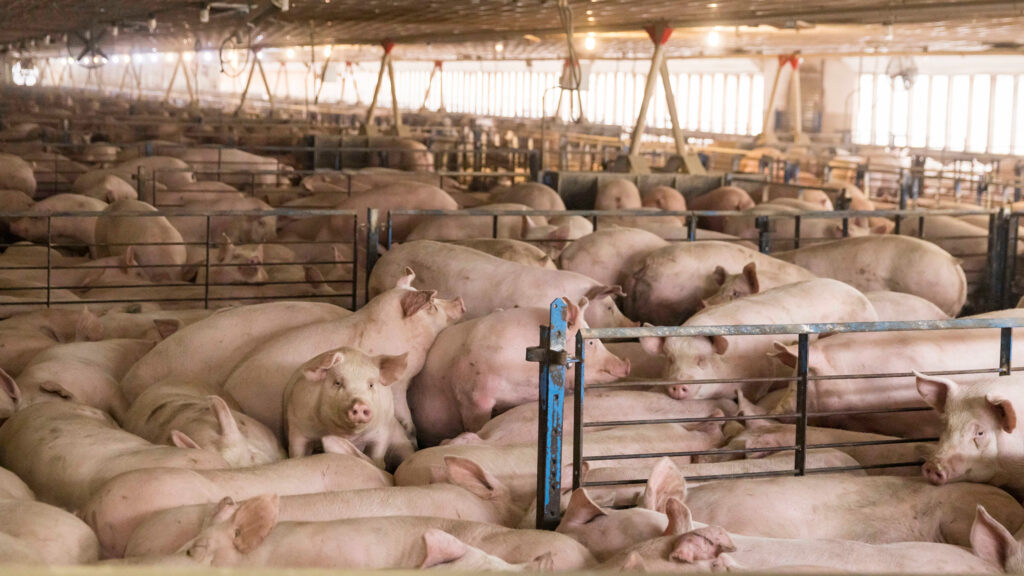
North Carolina failed to enact meaningful regulations on industrial hog farming despite decades of documented pollution, allowing the state's $30 billion pork industry to operate with minimal environmental oversight.
The state's regulatory failure became stark after Hurricane Florence in 2018, when catastrophic flooding breached hog waste lagoons across eastern North Carolina. The deluge released an estimated 110 million gallons of pig manure and urine into waterways, killed thousands of animals, and contaminated drinking water supplies. The disaster offered a clear moment for reform. Instead, North Carolina largely maintained the status quo.
The state hosts approximately 9 million hogs in industrial confinement operations, second only to Iowa nationally. These facilities operate under a system of lagoon-and-sprayfield waste management that has persisted largely unchanged since the 1990s. Hog waste lagoons, open earthen ponds that store millions of gallons of feces and urine, sit in proximity to groundwater aquifers and coastal communities. The Environmental Protection Agency has documented that this system poses chronic contamination risks even during normal weather, poisoning groundwater with nitrogen and phosphalate compounds and creating dead zones in coastal estuaries.
North Carolina's Division of Environmental Quality oversees hog farm permits, but the agency faces severe resource constraints and political pressure from Smithfield Foods, the multinational corporation that controls roughly one-third of hog production in the state. Between 2000 and 2020, Smithfield spent millions on political donations and lobbying to block stricter waste management standards. The company's regulatory influence has been documented through campaign contributions to state legislators and close relationships with the Department of Environmental Quality.
Research from the University of North Carolina School of Public Health linked exposure to hog farm pollution with elevated asthma rates, antibiotic-resistant bacteria infections, and other respiratory illnesses in neighboring communities. Low-income and predominantly Black neighborhoods bear disproportionate exposure to hog farms. A 2014 study found that zip codes with high concentrations of industrial hog operations reported asthma hospitalization rates 40 percent higher than state averages.
Proposed reforms have stalled repeatedly. A 2019 bill that would have required hog farms to upgrade from lagoon systems to closed-loop waste treatment technologies died in committee despite bipartisan support from coastal legislators. The measure faced opposition from industry groups and conservative lawmakers who claimed compliance costs would threaten farm profitability. Smithfield argued that new technologies remained unproven at scale.
Environmental advocates note that other states have implemented stricter standards. Iowa requires nutrient management plans. North Carolina's neighboring state Virginia passed regulations requiring hog farms to transition away from lagoon systems by 2026. These jurisdictions demonstrate that regulation remains technically and economically feasible.
The state's inaction leaves eastern North Carolina exposed to repeated contamination cycles. Climate models project intensifying coastal storms over the next decades. Without lagoon upgrades or alternative waste systems, future hurricanes will likely trigger additional spills affecting millions of residents.