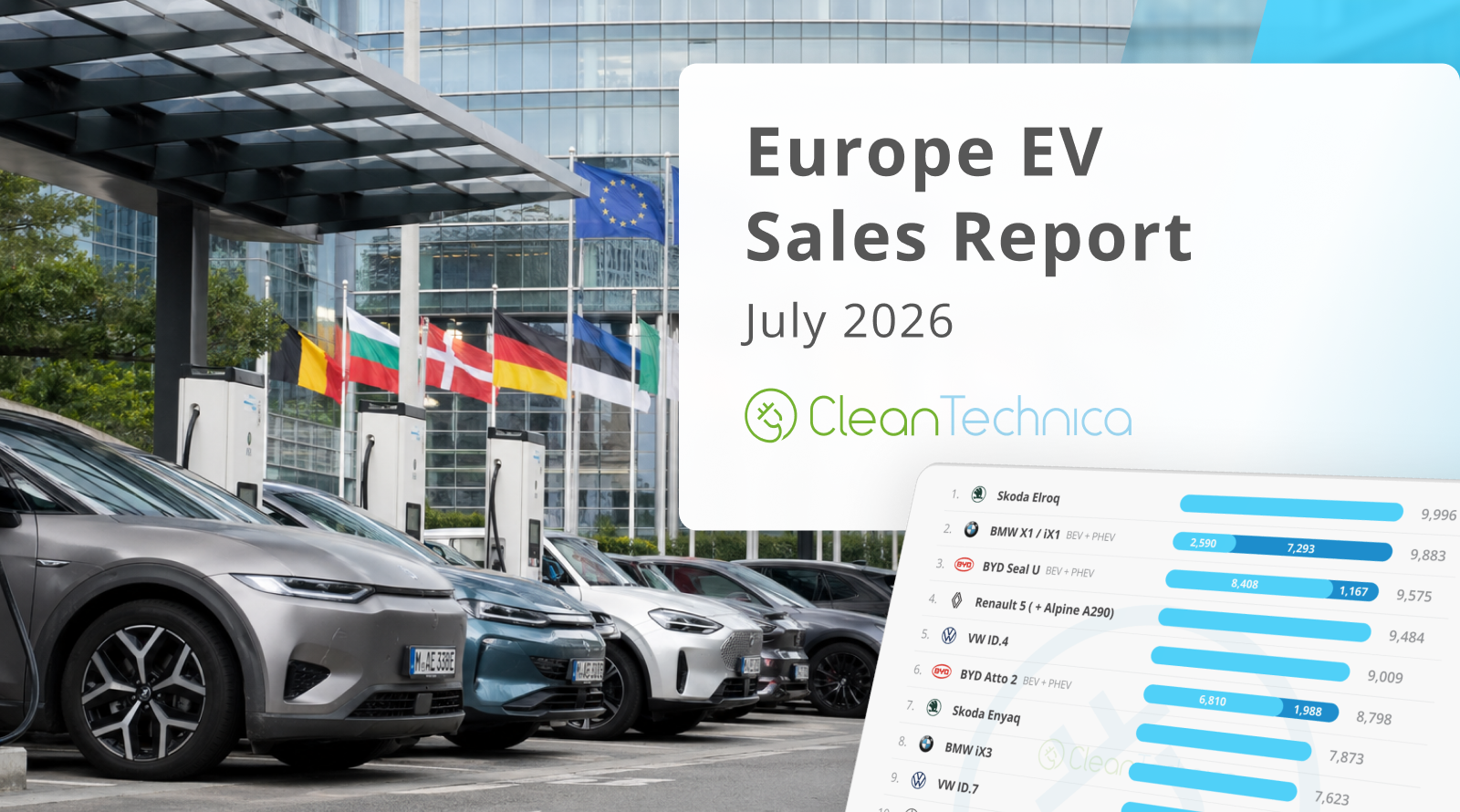
Battery electric vehicles captured 26 percent of Europe's new car market, marking a decisive shift away from combustion engines and spreading adoption across multiple manufacturers. The milestone came as BEV sales surged 51 percent year-over-year, driven by expanding model lineups at lower price points, sustained gasoline prices, and aggressive competition from Chinese automakers entering the continent.
Tesla's market position weakened considerably. The American manufacturer experienced a 36 percent year-over-year sales decline, signaling that European buyers now have genuine alternatives rather than a single dominant player. This fragmentation strengthens the overall transition. Traditional automakers including Volkswagen, BMW, and Stellantis have deployed affordable electric options that compete directly on price and availability. Renault's electric offerings and vehicles from BYD and other Chinese brands captured customers who previously had limited choices.
Market conditions accelerated the shift. Petrol and diesel prices remained elevated across European Union member states, pushing operating cost comparisons in EVs' favor. Battery manufacturing capacity expanded domestically and regionally, reducing supply chain constraints that previously limited production. Charging infrastructure networks grew denser in major markets, addressing range anxiety that historically deterred purchases.
The 26 percent figure reflects performance across major economies. Germany, France, and Scandinavia showed particularly robust adoption. Smaller European markets registered lower percentages but positive momentum. Norway and Sweden exceeded 80 percent EV market share, driven by tax incentives and well-established charging networks. Southern Europe lagged slightly, partly due to infrastructure gaps and lower purchasing power.
Fleet composition changes carry emissions implications. Transportation accounts for approximately 25 percent of Europe's carbon dioxide emissions, with light-duty vehicles responsible for roughly half that total. Each percentage point gained by zero-tailpipe-emission vehicles reduces transport sector emissions proportionally. At 26 percent market share, new BEVs now displace conventional powertrains that would have generated approximately 40 to 50 million tons of CO2 annually across the continent, based on typical driving patterns and European grid carbon intensity.
Battery technology improvements reduced prices substantially. Lithium-ion pack costs declined to roughly 100 to 120 dollars per kilowatt-hour, down from over 300 dollars a decade earlier. Entry-level models now price within reach of mass-market consumers. Companies offered variants with smaller batteries suited to urban driving, expanding addressable customer segments.
Regulatory pressure sustained momentum. European Union directives targeting 55 percent emissions reductions by 2030 created manufacturer obligations. Fines for exceeding fleet average CO2 limits pushed traditional automakers toward rapid EV rollouts. This regulatory architecture converted policy targets into market incentives.
Supply chain resilience emerged as secondary benefit. Diversified EV sourcing across European and Asian suppliers reduced single-point dependencies. Geopolitical tensions with traditional energy exporters emphasized energy security benefits of domestic electricity generation paired with electrified transportation.
The trajectory raises infrastructure demands. Charging networks require expansion proportional to fleet growth. Grid operators must integrate increased evening demand from vehicle charging. Battery recycling infrastructure development became commercially viable as volumes increased.
BEV penetration reaching 26 percent represents a crossing point where electric vehicles transitioned from niche premium segment to mainstream transportation. Continued expansion depends on maintaining price competitiveness, expanding charging accessibility, and sustained grid decarbonization through renewable energy deployment.