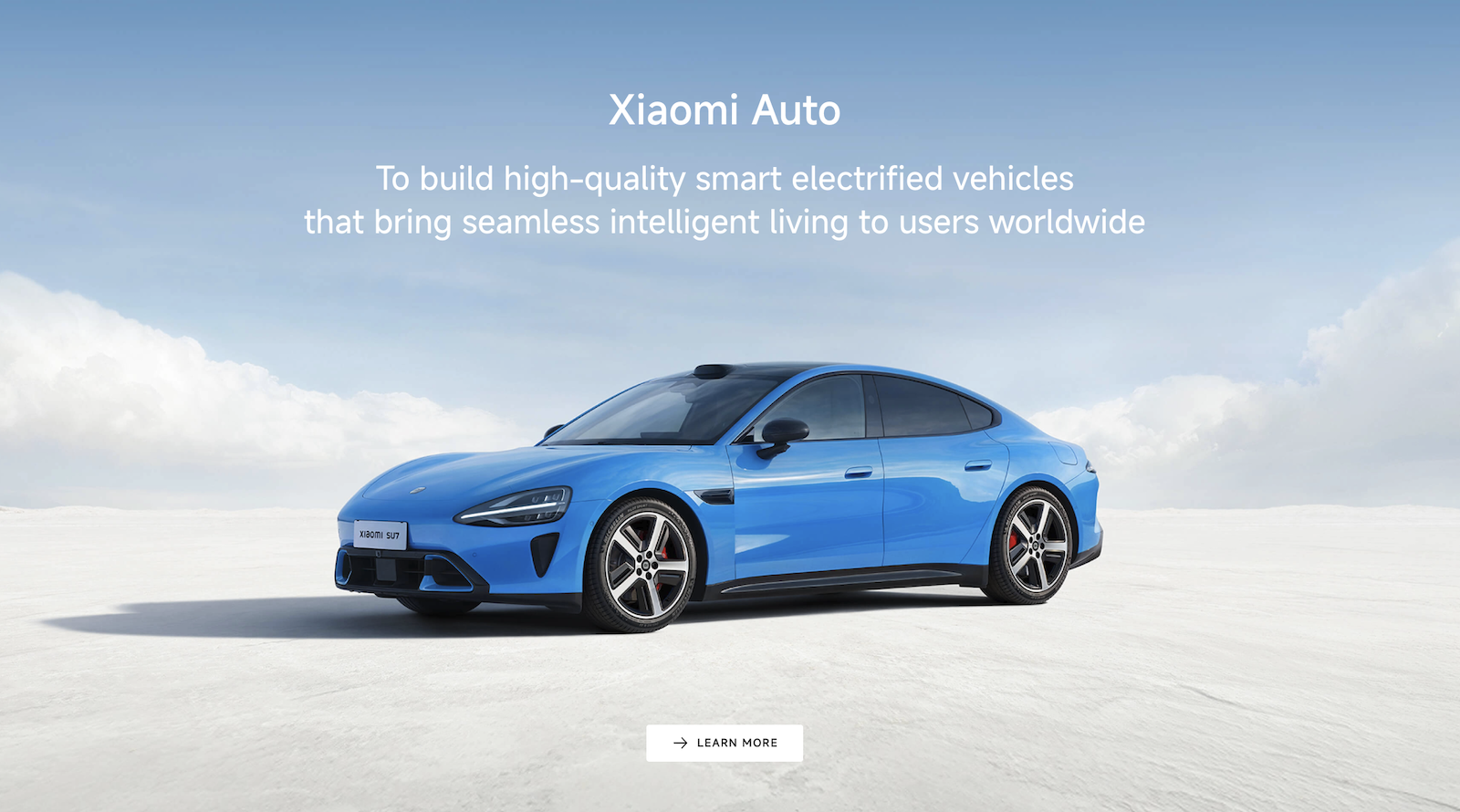
Xiaomi has established itself as a formidable player in the global electric vehicle market by launching a dedicated worldwide website for its automotive division. The move signals the Chinese technology manufacturer's aggressive expansion beyond smartphones and consumer electronics into the competitive EV sector.
Xiaomi's entry into electric vehicle production marks a significant strategic pivot for the company. Unlike major competitors such as Apple, Sony, Samsung, and Google, which have abandoned or deprioritized EV development programs, Xiaomi accelerated its automotive ambitions with decisive speed. The company entered the market with a focus on high-technology vehicles that incorporate its existing expertise in software, artificial intelligence, and consumer electronics integration.
The global website launch represents a critical infrastructure investment for Xiaomi's EV business. A centralized digital platform allows the manufacturer to showcase vehicle specifications, pricing, availability, and purchasing options to international audiences simultaneously. This approach differs from traditional automakers that typically manage regional sales through separate dealership networks and localized websites.
Xiaomi's automotive strategy leverages its core competencies. The company designs vehicles with advanced infotainment systems, autonomous driving capabilities powered by proprietary software, and seamless smartphone integration. These features appeal to technology-focused consumers who prioritize connectivity and digital ecosystems. The company's manufacturing partnerships and supply chain management experience enable rapid scaling compared to traditional automakers establishing EV production from scratch.
The timing of the global website launch reflects expanding demand for premium electric vehicles in key markets. European Union regulations continue tightening internal combustion engine standards, while China leads global EV sales volumes. The United States market remains divided between Tesla's market dominance and emerging Chinese manufacturers competing for market share. Xiaomi's global expansion targets all three regions simultaneously.
Industry observers note that Xiaomi's success contrasts sharply with failed EV programs at established technology companies. Apple's decade-long project reportedly consumed billions of dollars before cancellation in 2024. Sony and Honda's partnership produced the Afeela sedan but faced production delays and market uncertainty. Samsung abandoned autonomous vehicle research. Google's Waymo focuses exclusively on autonomous ride-hailing rather than consumer vehicle sales. Xiaomi's focused approach on delivering functional products to market differentiates its strategy.
The company's manufacturing capacity expansion supports global sales ambitions. Xiaomi operates production facilities in China with capacity for hundreds of thousands of units annually. The company has announced plans for additional manufacturing partnerships in potential export markets. Supply chain diversification reduces dependency on single-region production and mitigates geopolitical trade risks.
Pricing strategy represents another competitive advantage. Xiaomi positions vehicles at the premium end of the EV market but below luxury marques like Tesla, Mercedes-Benz EQS, and BMW iX. This positioning targets affluent consumers seeking technology-forward vehicles without paying ultra-luxury premiums. The company offers multiple models addressing different market segments, from sedans to crossovers.
Xiaomi's global website reflects confidence in the company's ability to compete internationally. The digital platform consolidates marketing, sales, and customer service functions across markets. This infrastructure positions the manufacturer for rapid market penetration as production capacity increases and brand recognition grows beyond China's borders. The company's track record launching consumer electronics globally suggests operational competency for managing complex international EV sales operations.