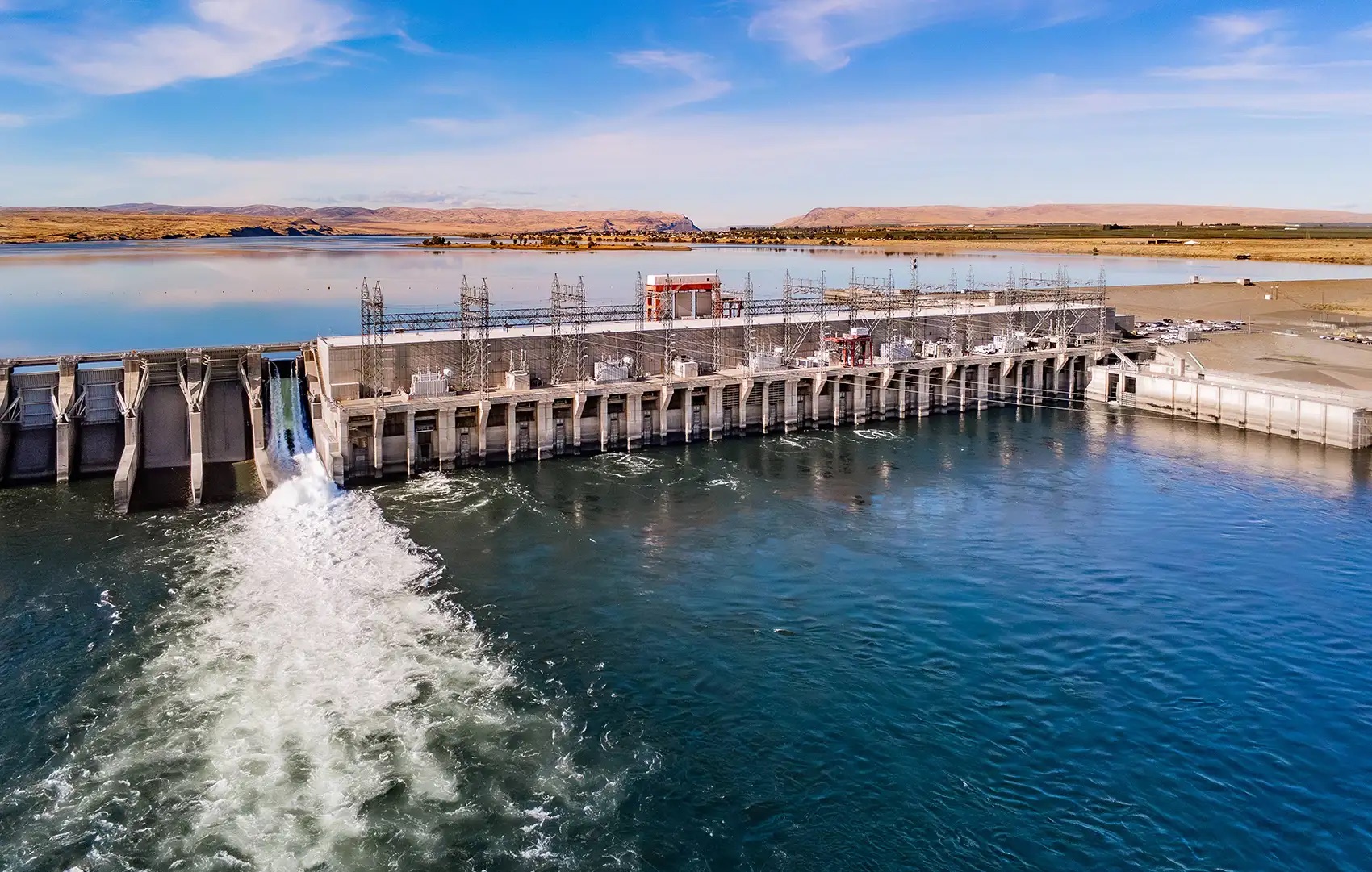
# Coordinated Operation of Mid-Columbia Dams Could Unlock Efficiency Gains, Modeling Shows
Multiple operators managing cascading hydropower facilities along the Mid-Columbia River could unlock substantial efficiency gains by coordinating their operations, according to modeling conducted by the Northwest Hydraulic Laboratory (NLR). The analysis reveals that current siloed management of individual dams leaves energy production and system performance on the table.
The Mid-Columbia region hosts a series of interconnected hydropower installations where water released from one facility flows downstream into the next. Each dam operates under separate corporate or agency management, each with distinct operational priorities ranging from flood control to irrigation scheduling to power generation. This fragmentation creates suboptimal outcomes across the entire cascade.
NLR's modeling demonstrated that when operators coordinate water release timing and reservoir levels across multiple plants, system-wide efficiency improves. The approach essentially treats the cascade as an integrated whole rather than isolated units. Better coordination allows operators to optimize timing of water flows, reduce spillage losses, and match generation capacity to actual electricity demand more precisely.
The stakes matter for renewable energy infrastructure. The Pacific Northwest derives roughly 70 percent of its electricity from hydropower. The Mid-Columbia system, which includes facilities like Grand Coulee and Priest Rapids dams, generates roughly 10,000 megawatts of capacity. Even marginal efficiency improvements translate into measurable increases in clean electricity production without building new infrastructure.
Current operators face institutional and contractual barriers to closer coordination. Each dam serves distinct water management agreements with agricultural users, municipalities, Native American tribes, and federal agencies. Irrigation demands peak at different times than power generation needs. Flood control protocols prioritize certain reservoir levels during specific seasons. These competing mandates have historically made unified operation difficult.
The NLR analysis suggests collaborative frameworks could resolve these conflicts through structured agreements. Rather than requiring wholesale consolidation of dam management, operators could establish protocols governing water release schedules at key decision points throughout the cascade. Modeling suggests even modest coordination delivers measurable gains.
Previous pilot programs demonstrated feasibility. The Integrated Columbia River Operations Center worked with multiple facility operators on coordinated scheduling during specific periods, capturing efficiency benefits without requiring permanent consolidation. Success in those trials suggests broader implementation remains possible.
Hydropower operators face growing pressure to maximize output as the grid transitions away from coal and natural gas. Efficiency improvements from better cascade management offer low-cost alternatives to dam construction, which faces environmental opposition and high capital costs. Improved coordination also enhances system flexibility to accommodate variable wind and solar generation, since hydropower's ability to quickly ramp output up or down provides grid stability as intermittent renewables expand.
Implementation requires negotiation among multiple stakeholders. Federal hydropower licensing processes overseen by the Federal Energy Regulatory Commission (FERC) establish operating parameters. Individual operators hold contracts with power purchasers and water users. Tribal agreements protect ancestral fishing rights and water access. Resolving these overlapping claims demands structured dialogue, but the efficiency gains justify the effort.
The NLR findings land as the Pacific Northwest faces pressure to reduce regional transmission constraints and increase renewable electricity exports to California and other western states. Extracting more generation from existing infrastructure through operational coordination represents a practical pathway forward.