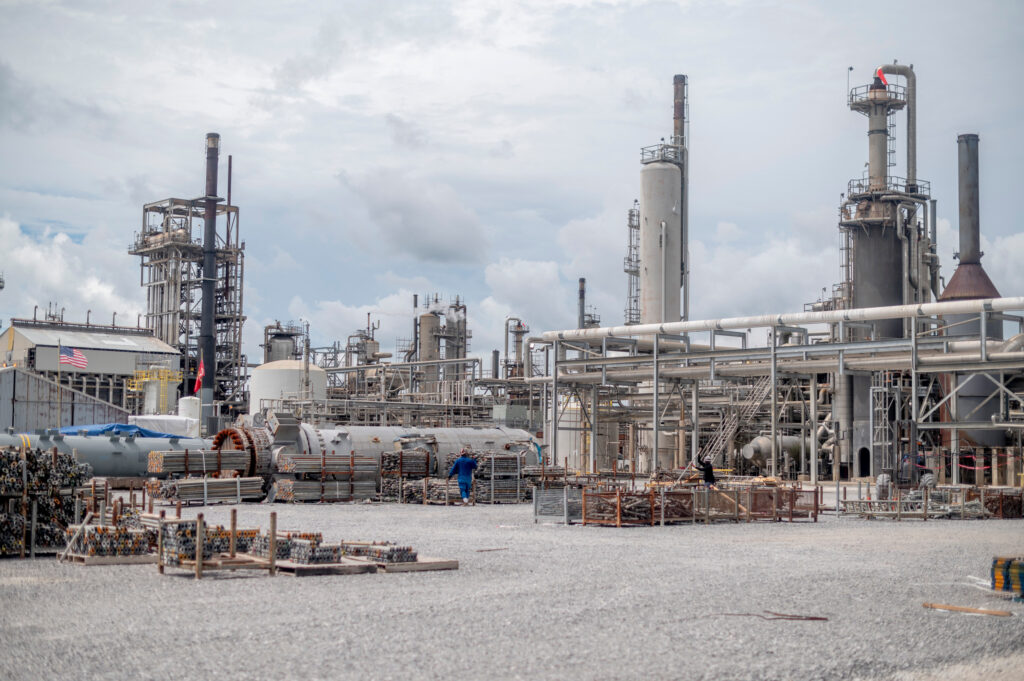
Fertilizer manufacturers are posting record profits while Iowa confronts mounting water contamination tied directly to agricultural nitrogen runoff. The paradox underscores a fundamental market failure in U.S. agriculture: producers extracting maximum value from crop inputs while bearing none of the costs of pollution cleanup.
CF Industries, based in Illinois, and Nutrien, headquartered in Canada, control 55 percent of U.S. fertilizer production. Both companies have expanded revenues substantially in recent years, capitalizing on global supply constraints and farmer demand despite domestic price volatility. These two corporations function as de facto gatekeepers in the nitrogen fertilizer market, giving them outsized influence over farming economics and, indirectly, over water quality across the Corn Belt.
Iowa faces acute water pollution from nitrogen runoff. Excess nitrogen from fertilizer leaches into groundwater and flows into surface waterways, including the Mississippi River. The Des Moines Water Works, which supplies 500,000 residents, has invested millions in nitrate removal infrastructure. Testing consistently documents nitrogen concentrations exceeding EPA safety thresholds. The contamination persists despite decades of voluntary conservation programs and best-management practice initiatives.
Farmers shoulder fertilizer costs directly. When nitrogen prices spike, profit margins compress immediately. A farmer applying 150 pounds of nitrogen per acre faces fluctuating input expenses that reshape annual economics. The financial pressure to maximize yields intensifies reliance on chemical inputs, creating a self-reinforcing cycle. Higher application rates promise higher short-term returns but guarantee continued downstream pollution.
The fertilizer industry captures profits while taxpayers and water utilities absorb cleanup expenses. This arrangement violates basic cost-accounting principles. Companies manufacturing and selling the product face no regulatory or financial penalty for water damage. Farmers, despite their role in application, act within legal frameworks that permit widespread nitrogen use. Only downstream communities pay through elevated water treatment costs and potential health risks from prolonged nitrate exposure.
Iowa's situation reflects a broader pattern across intensive agricultural regions. The Upper Mississippi River basin, the Chesapeake Bay watershed, and the Gulf of Mexico dead zone all connect to fertilizer runoff. Each summer, algal blooms fueled by nitrogen excess choke waterways. The economic logic remains unchanged everywhere: agricultural producers and fertilizer companies externalize environmental damage.
Policy responses remain fragmented. The EPA established drinking water standards for nitrate but lacks direct authority over agricultural practices in most cases. State regulations vary widely. Iowa has implemented nutrient reduction strategies targeting 45 percent nitrogen cuts by 2030, but enforcement mechanisms remain weak. Voluntary participation dominates. Farmers receive modest incentive payments for cover cropping and wetland restoration, insufficient to offset profit losses from reduced fertilizer application.
CF Industries and Nutrien generate shareholder value by selling more product at higher prices. Market competition between the two firms does little to address underlying pollution incentives. Neither manufacturer bears responsibility for water treatment infrastructure or health outcomes. Both companies lobby against regulations that would limit fertilizer sales or mandate environmental liability.
Solving this requires policy intervention that directly penalizes nitrogen runoff or subsidizes alternatives that reduce reliance on synthetic fertilizers. Precision agriculture technologies, organic soil management, and legume-based crop rotation offer lower-pollution pathways. None compete economically with current nitrogen-based systems absent regulatory change or direct financial intervention.
Iowa's water crisis will deepen without structural reform. Continued fertilizer company profits signal market failure, not success.