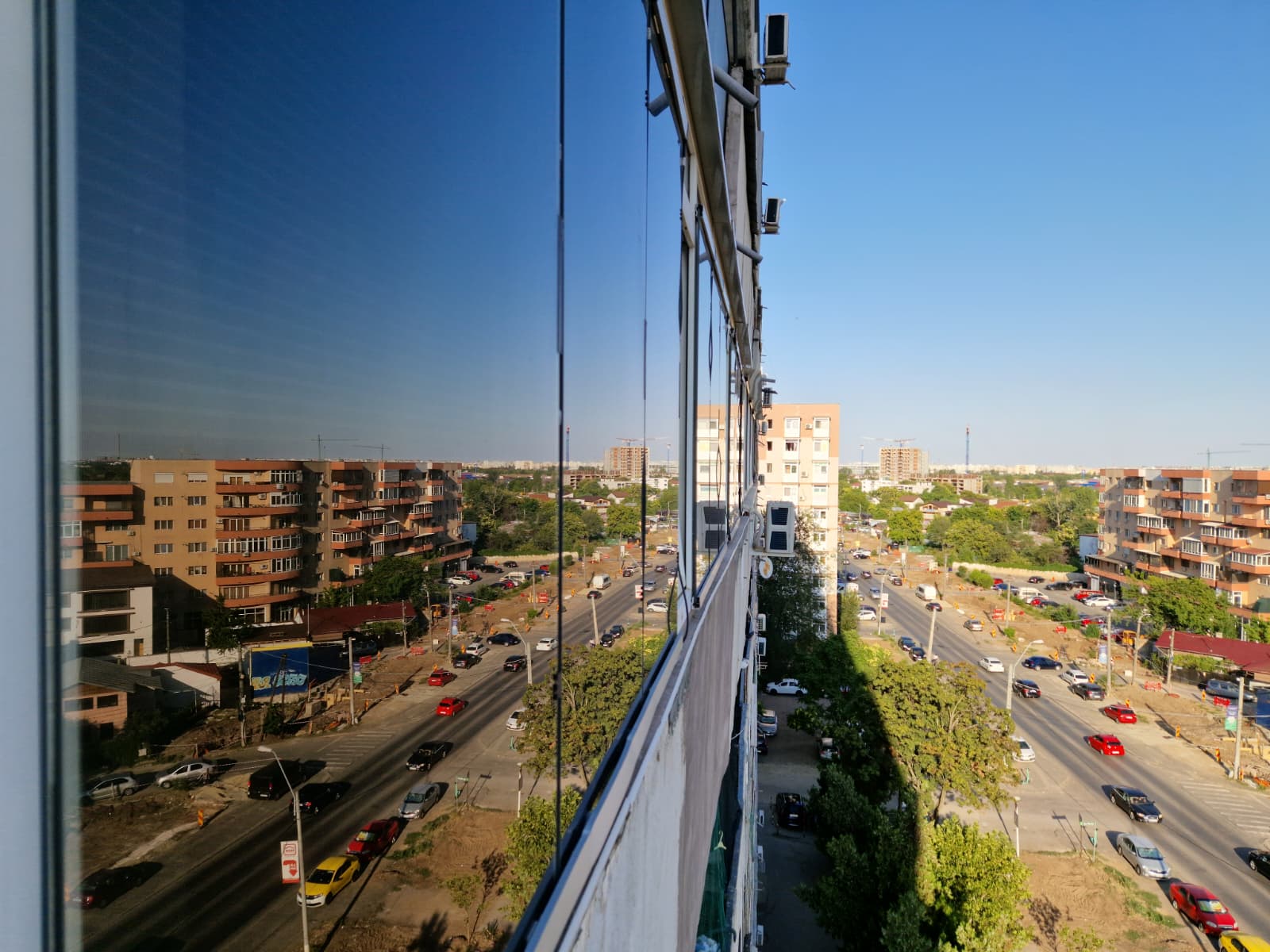
# Photovoltaic Windows Heat Water Directly in Bucharest Apartment Test
A two-year operational test in Bucharest proves that semi-transparent photovoltaic windows can generate electricity to heat domestic water without inverters or battery storage. PhotoVoltaic Windows SRL deployed the system in an apartment, converting window glass itself into a power source that feeds DC current directly to a water heating element in a thermal storage tank.
The pilot addresses a specific barrier to rooftop solar adoption. Apartment residents in multistory buildings face constraints that single-family homeowners do not. Roof space belongs to building corporations or multiple owners. Exterior walls offer limited installation area. Ground-mounted arrays sit impractical for urban dwellings. Semi-transparent photovoltaic windows solve this by integrating generation into the building envelope itself, using facade area that already exists and requires no additional space.
The Bucharest installation strips away system complexity. Traditional solar water heating involves multiple components: photovoltaic panels, DC-to-AC inverters to match grid electricity standards, battery banks or grid-tied storage, and control electronics. Each adds cost and maintenance requirements. The direct DC approach eliminates inverter losses, which typically consume 3 to 5 percent of generated power. The water tank functions as thermal storage, holding heat for hours or overnight without active battery management.
How it works: photovoltaic window panes generate electricity when sunlight strikes them. Current flows directly to a heating element submerged in the water tank. When water reaches target temperature, current ceases or diverts. The tank retains thermal energy through insulation. Residents access hot water independent of immediate sun availability. On cloudy days or nights, stored heat covers demand. Summer overproduction heats water to higher temperatures for future use.
Semi-transparent photovoltaic windows transmit 10 to 50 percent of visible light depending on cell density. This maintains daylighting in rooms while generating power. Aesthetic considerations matter in residential settings. Window installations preserve functionality and interior lighting quality that traditional opaque roof panels would not.
The two-year performance record matters. Pilot projects often show promise in controlled conditions but fail at scale or under real-world variability. A 24-month track record in Bucharest spans seasonal variations from winter ice and snow to summer heat peaks. Data on durability, water heating consistency, and thermal performance across seasons provides evidence that the technology sustains operation over years.
Romania receives approximately 1,400 to 1,500 kilowatt-hours of solar radiation per square meter annually, typical for Central European locations. The system adapted to this resource base. Colder climates with lower winter irradiance present greater challenges, though thermal storage buffers inconsistency to some degree.
Scaling this model requires standardization. Building codes across Europe do not yet accommodate integrated photovoltaic windows for electrical heating. Building safety regulations, electrical codes, and thermal building standards must align. Manufacturers need certification pathways. Installers require training protocols.
The Bucharest test demonstrates that apartment residents possess a viable solar option beyond awaiting rooftop access or shared solar installations. Photovoltaic windows eliminate inverter expense and battery complexity while using building surface area already present. If certification and regulatory pathways open, urban populations could tap solar energy directly through the spaces where daylight already enters their homes.