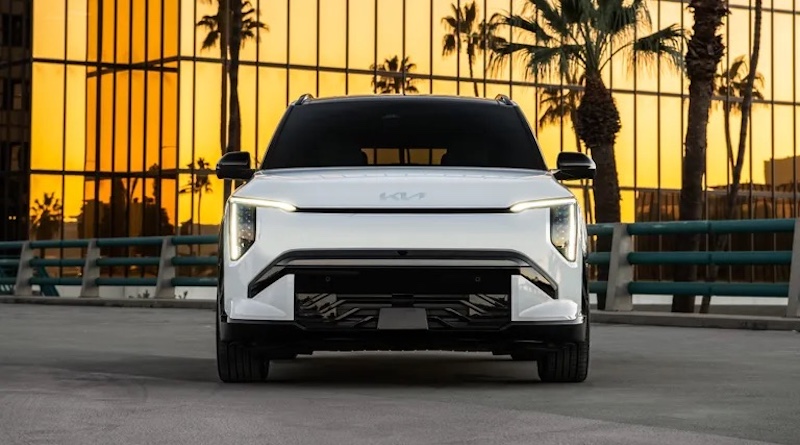
Kia plans to launch the EV3 in the United States, positioning the vehicle as an affordable entry point to electric car ownership at a time when most new EVs command premium prices. The South Korean automaker's compact electric crossover arrives as the domestic EV market faces regulatory headwinds under the Trump administration, which has rolled back Obama-era clean air standards and fuel economy regulations.
The EV3 undercuts the price floor of most American EV offerings. In international markets, the model starts below $40,000, well below the median price of new electric vehicles sold in the U.S., which currently hovers around $55,000 according to Cox Automotive data. This pricing strategy targets middle-income buyers who have remained on the sidelines of EV adoption, deterred by high sticker prices despite federal tax credits that reduce effective costs by up to $7,500.
The regulatory environment creates both opportunity and uncertainty for this launch. The Biden administration imposed strict tailpipe emissions standards requiring automakers to increase EV and plug-in hybrid sales annually. The EPA's 2024 rule demanded that electric vehicles represent 35 percent of new car sales by 2035. However, Trump's return to office brought rapid reversals. His administration froze EV tax credits, suspended Advanced Clean Car rules in multiple states, and signaled openness to weakening federal fuel economy standards that previously incentivized EV development.
Despite this hostile policy landscape, industry analysts observe that automakers cannot simply abandon electric vehicle production. California, which controls roughly 14 percent of the U.S. auto market through its stringent state emissions standards, continues enforcing EV mandates. Several other states follow California's lead under the Clean Air Act's Section 209 waiver. This creates pressure for manufacturers to maintain EV portfolios even as federal support erodes.
Kia's approach reflects broader industry strategy. The company has invested heavily in battery manufacturing and EV platforms through its parent company Hyundai Motor Group. A cheap, practical EV like the EV3 serves multiple functions: it addresses persistent affordability barriers, generates production scale for battery economics, and maintains compliance with remaining state-level regulations.
The EV3 offers approximately 300 miles of range on the EPA cycle, adequate for daily commuting and weekend trips. The vehicle's compact footprint appeals to urban and suburban drivers navigating congested areas. Kia bundles fast charging capability and seven-year battery warranties, addressing consumer concerns about long-term reliability.
Market timing matters considerably. With federal EV tax credits frozen and no sign of reinstatement under current administration policy, the EV3's affordability becomes its primary selling advantage. Traditional manufacturers like Ford and General Motors have quietly scaled back EV production targets following Trump's deregulation signals, creating opportunity for companies like Kia to capture price-sensitive buyers before the market fully consolidates.
The EV3's arrival tests whether consumers will adopt electric vehicles based on practical economics rather than policy incentives. Success would demonstrate that EV technology has matured sufficiently to compete without subsidies, while failure might suggest the regulatory environment remains the primary driver of electric vehicle adoption in America.