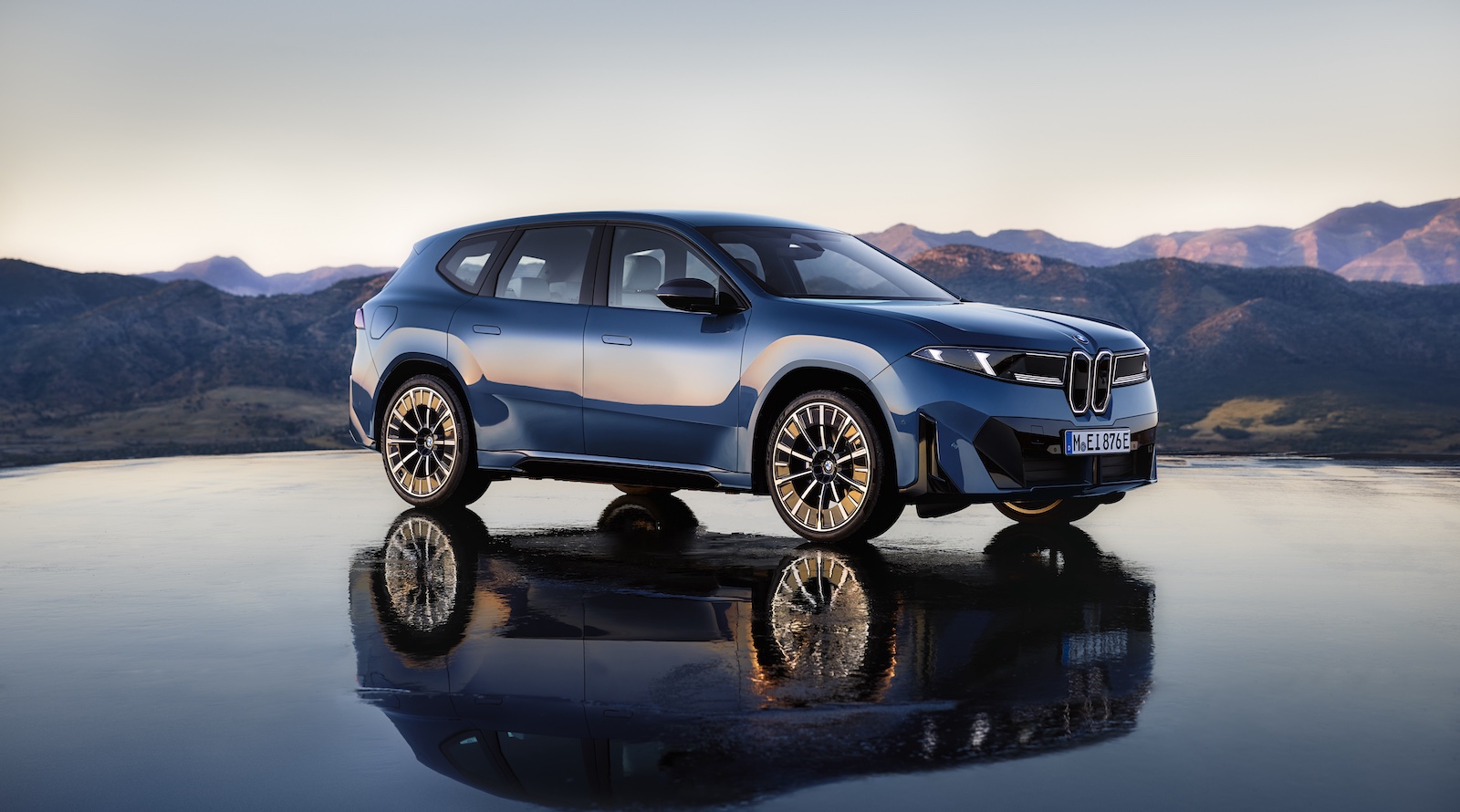
BMW faces a hemorrhaging market share in China as electric vehicle adoption accelerates beyond the reach of traditional automakers. The German luxury manufacturer confronts a structural challenge: Chinese consumers increasingly prefer homegrown EV producers over legacy Western brands, a preference driven by both technological confidence and price competitiveness.
China's automotive electrification has outpaced global transitions dramatically. The country sold over 10 million new energy vehicles in 2023, representing roughly 35 percent of total vehicle sales. This shift accelerated further through 2024 and 2025, with Chinese EV makers like BYD, NIO, and XPeng capturing dominant market positions. These companies offer electric SUVs and sedans with competitive ranges, advanced autonomous features, and battery technology that rivals or exceeds legacy automakers' offerings. Most critically, they price products substantially below comparable BMW electric vehicles.
BMW's response centers on releasing new electric SUVs and sedans designed specifically for Chinese market preferences. The strategy aims to recapture lost volume through product alignment rather than brand repositioning. The company previously relied on premium pricing and heritage appeal, but that advantage erodes when consumers view Chinese EVs as technologically equivalent or superior. BMW's new models enter a market where price sensitivity now trumps luxury cachet for many buyers.
The broader competitive context deepens BMW's challenge. Tesla once dominated China's premium EV segment but lost ground to local competitors. BYD's premium subsidiary Denza now competes directly in luxury segments. XPeng targets affluent buyers with autonomous driving capabilities. These manufacturers invested heavily in battery chemistry, manufacturing scale, and software development from the ground up, whereas BMW adapted existing luxury brand architecture to electric platforms.
China represents roughly one-quarter of BMW's global sales. Losing significant market share there directly impacts corporate profitability and EV transition targets. Most legacy automakers committed to eliminating internal combustion engine production by 2035 or 2040. Falling behind in the world's largest EV market jeopardizes their ability to meet those commitments while maintaining financial stability.
BMW's new electric lineup must overcome specific obstacles. Chinese consumers increasingly expect over-the-air software updates, integration with local digital ecosystems, and autonomous driving features beyond what BMW traditionally offered. Pricing strategy presents another hurdle. The company resists competing on volume through aggressive discounting, yet Chinese producers undercut premium positions through superior manufacturing efficiency and lower labor costs.
The company also confronts supply chain dynamics. Chinese battery producers now dominate global lithium-ion production. Foreign automakers depend on Chinese partners for components and assembly capacity. This dependency shapes negotiating power and production timelines.
Success requires BMW to demonstrate that its engineering heritage, safety standards, and customer service justify premium positioning in an EV market where technology has commoditized. The company must execute rapid product development cycles, invest aggressively in local software teams, and potentially accept lower margins than traditional luxury business models permitted. Without substantial market share recovery, BMW risks falling behind competitors in EV scale and profitability during the energy transition's most critical decade.