# Farmer's Hands-Off Approach Transforms Barren Field Into Haven for 150 Plant Species
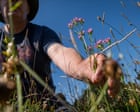
A Norfolk farmer has documented one of England's most striking examples of ecological recovery through deliberate non-intervention. Derek Sayer stopped cultivating a boggy field two decades ago, allowing it to seed itself naturally. The result: a wildflower meadow now hosting over 150 plant species, from common centaury and yellow rattle to marsh and common spotted orchids.
The transformation of Sayer's Old Meadow began in 2003 when Sayer ceased intensive agricultural management. The field, which once grew only oilseed rape monoculture, now requires just one annual hay-cut to maintain its ecological health. This minimal intervention approach has produced measurable results. Quail and whitethroats nest in the restored hedges. Hoverflies and butterflies colonize the flowering plants. The field demonstrates what agricultural land can become when herbicide spraying stops and soil seed banks get space to germinate.
The meadow's success reflects a broader shift in land management practice across the United Kingdom. Defra's Environmental Stewardship schemes and successor programs increasingly reward farmers for creating and maintaining "semi-natural habitats" rather than maximizing yields. Sayer's experience adds empirical weight to decades of botanical research showing that even depleted soils retain dormant seeds capable of restoring plant diversity when conditions permit.
The mechanism behind this recovery operates at the soil level. Intensive agriculture suppresses seed banks through repeated plowing and herbicide application. When Sayer stopped these interventions, existing seeds from previous land uses and wind-dispersed colonizers from neighboring habitat found suitable conditions to establish. The single annual hay-cut prevents woody encroachment while allowing flowering plants to complete their reproductive cycles. This management regime mimics traditional haymaking practices that shaped England's flower meadows before industrial agriculture.
Ecologists recognize Sayer's meadow as a practical demonstration of "rewilding lite," a middle path between preservation and restoration. Unlike large-scale rewilding projects that reintroduce extinct species or radically alter landscapes, this approach accepts the current ecological baseline while removing the most destructive human pressures. The results often surprise landowners and policymakers accustomed to thinking that nature requires active restoration.
The meadow's botanical diversity carries implications for pollinator populations. Studies from the UK Center for Ecology and Hydrology show direct correlations between wildflower abundance and pollinator abundance. A field supporting 150 plant species creates far more consistent nectar and pollen availability than monocultures, sustaining diverse bee and butterfly populations through the growing season.
Sayer's documented experience provides local data that conservation groups can use when negotiating with other farmers considering similar conversions. The tangible proof that abandoned agricultural land can recover rapidly and dramatically addresses a common landowner concern: that rewilding requires expensive active restoration or creates ecological wastelands during transition periods.
The Norfolk meadow also illustrates limits to what self-willed regeneration can achieve. Soil nutrient depletion, though favorable for wildflower meadows, takes years to develop. Some species require active introduction or translocation. Connectivity to other wildflower habitat determines which plants and animals eventually colonize. Sayer's location near established hedgerows and semi-natural habitat provided source populations that isolated fields may lack.
As England's environmental targets increasingly depend on landowner participation in agri-environment schemes, examples like Sayer's Old Meadow offer both inspiration and practical templates. The field proves that ecological abundance does not always require sophisticated interventions or substantial financial investment. Sometimes, Sayer's experience suggests, the most powerful action a farmer can take involves stepping back and letting dormant potential flourish.