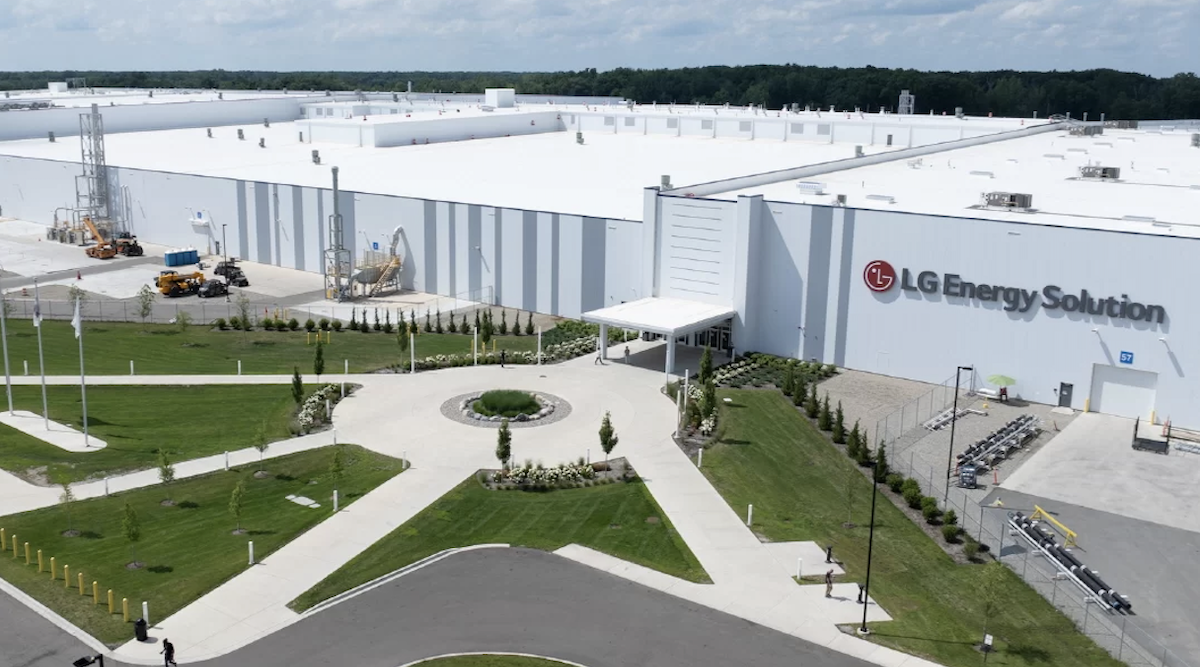
US Interior Secretary Doug Burgum has acknowledged energy storage as a legitimate technology priority, appearing at the launch of a new battery manufacturing facility. The announcement marks a shift in federal recognition of storage systems as essential infrastructure for grid reliability and renewable energy deployment.
Energy storage technology converts electrical power into stored chemical or mechanical energy for later use, enabling grids to balance supply and demand across hours or days. Battery systems have become critical to integrating variable renewable sources like wind and solar, which generate power intermittently. Without storage, renewable generators cannot reliably meet baseload electricity demands.
The new factory represents federal investment in domestic battery manufacturing capacity. The US currently lags behind China and South Korea in battery production, importing significant volumes of cells and modules. Domestically manufactured batteries reduce supply chain vulnerability and support workforce development in manufacturing sectors.
Federal policy has increasingly recognized storage deployment. The 2022 Inflation Reduction Act included investment tax credits for standalone energy storage systems, separate from solar or wind installations. These credits target battery systems paired with renewable generation or deployed on their own. The Biden administration's infrastructure initiatives allocated billions toward grid modernization, including storage deployment targets.
Lithium-ion batteries dominate current storage installations, representing approximately 96 percent of US battery storage capacity as of 2024. Sodium-ion and long-duration technologies remain in earlier commercialization phases. Grid operators deploy storage across frequency regulation, peak shaving, renewable smoothing, and transmission deferral applications.
The Department of Interior oversees federal lands hosting renewable and battery projects. Burgum's statement reflects growing consensus within federal agencies that storage deployment directly impacts renewable energy economics and grid stability. Storage costs have declined approximately 65 percent since 2015, according to BloombergNEF analysis, improving project economics.
Challenges remain. Battery manufacturing requires specialized supply chains for critical minerals including lithium, cobalt, and nickel. Environmental regulations for mining and processing vary internationally. End-of-life battery recycling infrastructure remains underdeveloped in the US, though companies like Redwood Materials and Northvolt are scaling recovery operations.
Grid operators face interconnection bottlenecks preventing rapid storage deployment. Projects queue for years awaiting transmission access permits and interconnection studies. Permitting timelines extend storage project development cycles, limiting deployment velocity despite falling costs and improving technology performance.
The factory launch signals federal commitment to storage as energy infrastructure, not experimental technology. Manufacturing capacity expansion supports deployment targets outlined in state renewable portfolio standards and utility procurement programs. Multiple states including California, Texas, and New York have enacted energy storage mandates requiring specified capacity additions through 2030.
Storage deployment accelerates. Utility-scale battery additions reached 14.2 gigawatts in 2023, more than doubling 2022 installations. Residential battery systems paired with rooftop solar grew substantially as technology costs declined and product reliability improved.
This acknowledgment from Interior Department leadership reflects recognition that renewable energy penetration depends directly on storage infrastructure development. Federal manufacturing investment, tax policy support, and permitting reform all factor into deployment trajectories. The factory represents tangible commitment to domestic capacity building within this energy infrastructure category.