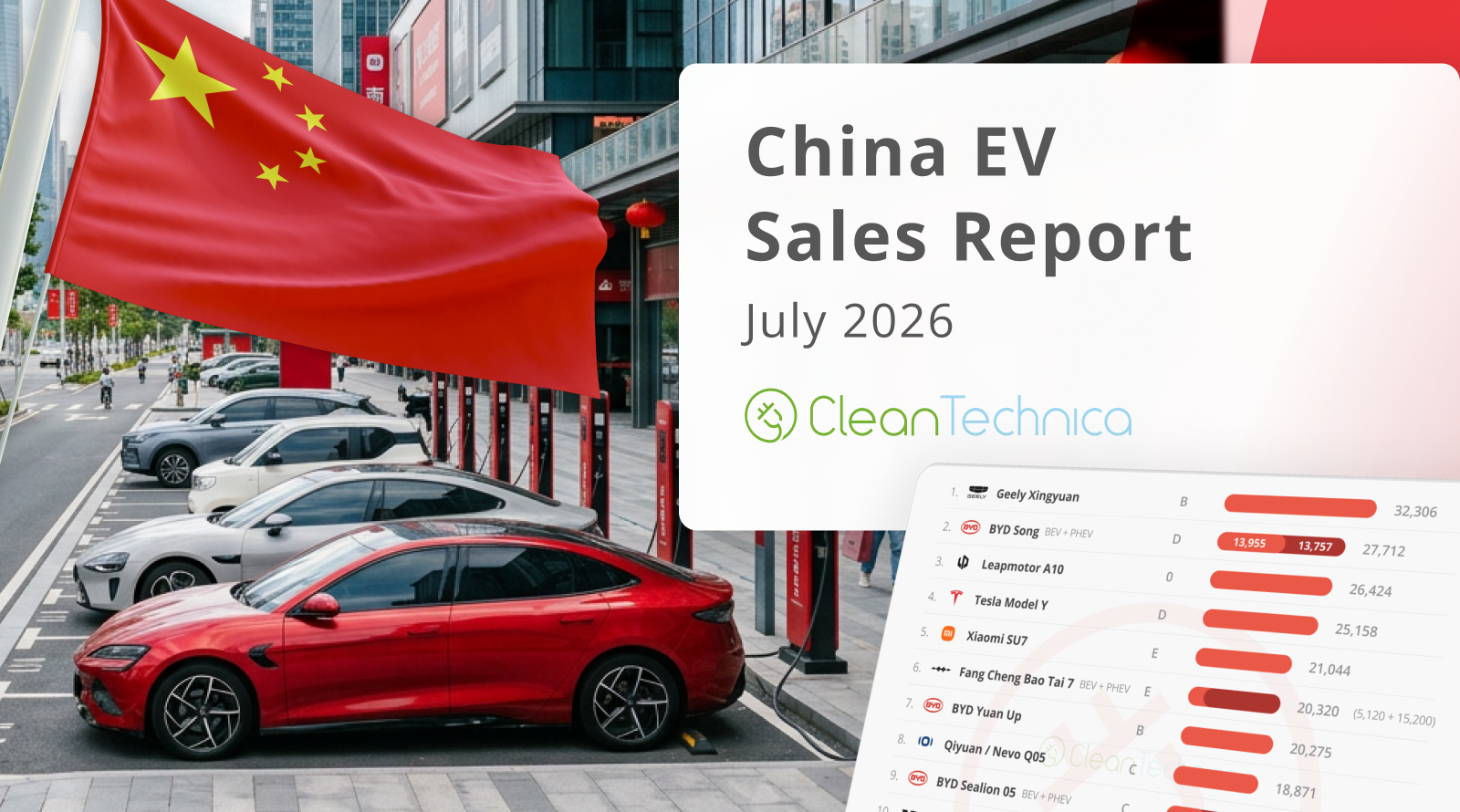
China's internal combustion engine market collapsed in July, with petrol vehicle sales plummeting 44 percent as battery electric vehicles captured record market share. Battery electric vehicles (BEVs) claimed 44 percent of all passenger vehicle sales in the month, while plug-in hybrids (PHEVs) added another 21 percent, bringing the combined new energy vehicle share to 65 percent of the total market.
This represents the first time record EV market penetration arrived through ICE decline rather than pure EV growth. Petrol car sales fell sharply while BEV sales held steady, a structural shift in consumer behavior driven by sustained high fuel prices and an accelerating flood of new electric models entering the Chinese market. The combination compressed traditional automakers' share to historic lows.
China's automotive sector now exhibits traits of genuine market transition. The country sold approximately 2.8 million vehicles in July according to industry trackers. If the 65 percent new energy figure holds, that means roughly 1.8 million electric or plug-in hybrid vehicles moved off dealer lots in a single month. For context, total U.S. monthly EV sales across all manufacturers average around 300,000 to 350,000 units.
Domestic Chinese manufacturers dominate the EV segment. BYD, Geely-Volvo, Li Auto, XPeng, and NIO control the majority of BEV and PHEV sales. Tesla maintains a presence but has lost market share as local competitors expanded model lineups and dropped prices. The Chinese government's purchase incentives ended in late 2022, yet adoption accelerated rather than stalled, suggesting structural preference rather than subsidy-driven demand.
The 44 percent petrol decline signals buyer expectations have shifted fundamentally. Consumer surveys show Chinese buyers increasingly view gas vehicles as legacy technology. Insurance costs, maintenance expenses, and charging infrastructure improvements all favor electrification. Major cities including Beijing, Shanghai, and Guangzhou restrict ICE vehicle registration through lottery systems that make electric vehicles more accessible.
Global automakers face enormous pressure. Volkswagen, BMW, and General Motors have accelerated Chinese EV launches. Ford and General Motors announced plans to shutter combustion engine production in China entirely. European and Japanese manufacturers that delayed electrification now race to recover lost ground. BYD alone sold more vehicles globally in the first half of 2026 than Tesla sold in the same period.
This market dynamic reshapes global supply chains. Battery production capacity decisions that seemed excessive five years ago now appear insufficient. Lithium, cobalt, and nickel mining has expanded across Africa, Indonesia, and South America to feed Chinese and global EV demand. Raw material prices remain volatile but trending downward as production scales.
Energy grid planning in China now prioritizes rapid charging infrastructure expansion. The National Development and Reform Commission upgraded EV charging station targets. Peak demand management increasingly relies on vehicle-to-grid technology and battery storage networks.
China's EV transition also carries carbon implications. The country's electricity grid remains 40 percent coal-powered, though renewable capacity additions exceeded 100 gigawatts in 2025. Every petrol vehicle replaced by a BEV still reduces lifecycle emissions compared to combustion counterparts, even accounting for current grid composition.
The July data confirms electric vehicles have moved from niche adoption to mainstream disruption in the world's largest automotive market.