# Hydrogen Power Fuels Maritime Charging Trial at UK Port
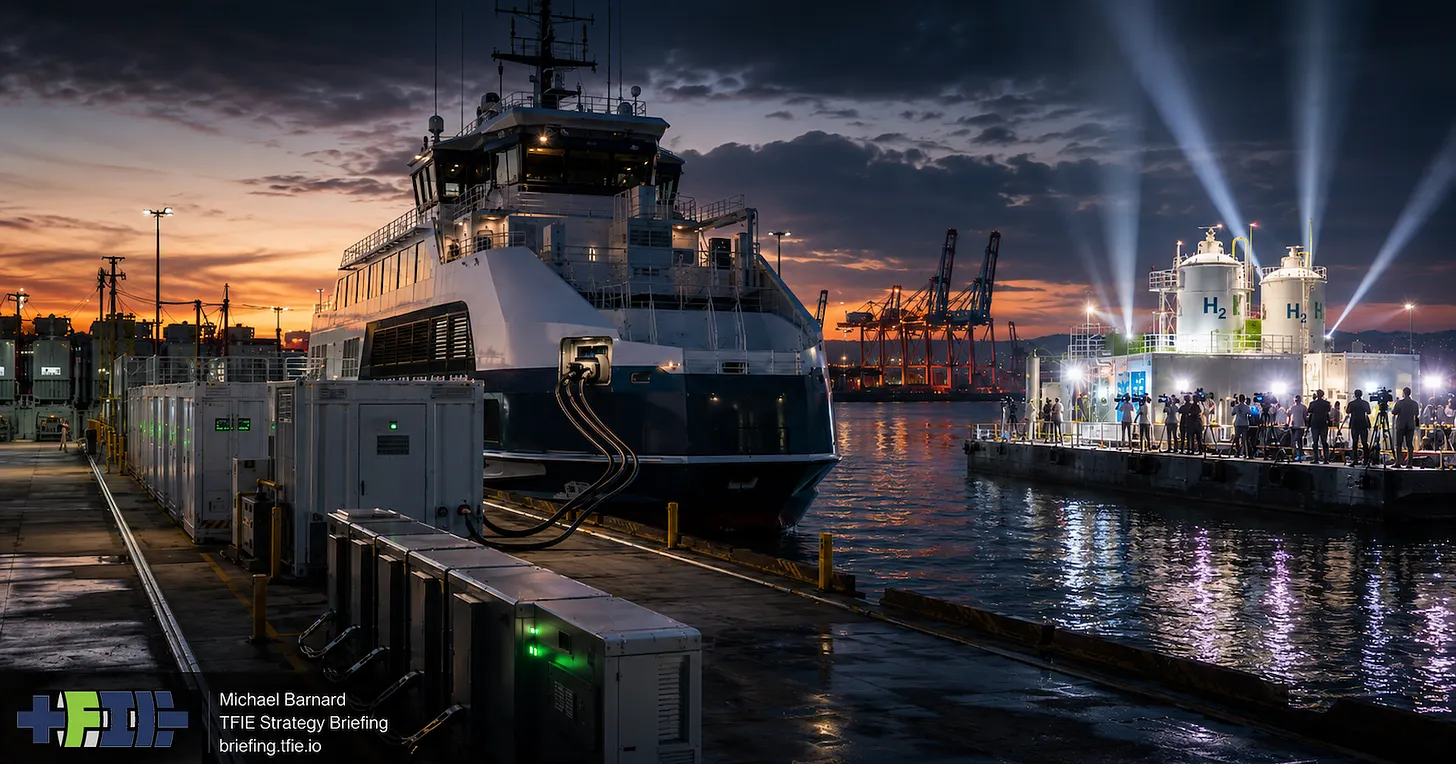
GeoPura deployed a floating hydrogen power unit at the Port of Tilbury on the Thames to charge a commercial electric vessel, marking a test of alternative charging infrastructure for maritime operations. The system generated 300 kilowatts of electricity through five Ballard fuel cells, demonstrating hydrogen's potential as a maritime energy source.
The trial raises a fundamental question about hydrogen's role in decarbonizing shipping. While the demonstration captured attention as a novel charging method, the underlying energy pathway matters enormously for climate outcomes. Hydrogen's emissions profile depends entirely on how it is produced. Grey hydrogen, derived from natural gas through steam methane reforming, generates roughly 10 tons of carbon dioxide per ton of hydrogen produced. Green hydrogen, made through electrolysis powered by renewable electricity, produces zero direct emissions. The source of the hydrogen used in the Tilbury test remains unclear from available details, but this distinction determines whether the charging system actually reduces maritime emissions or simply shifts them elsewhere.
The Port of Tilbury, a major cargo hub handling container ships and bulk carriers, sits at a critical junction for maritime decarbonization strategy. Shipping accounts for approximately 3 percent of global carbon emissions, according to the International Maritime Organization. Port charging infrastructure traditionally relies on grid electricity, which varies in carbon intensity depending on regional energy generation mixes. In the United Kingdom, where the trial occurred, grid electricity sources include nuclear and wind generation alongside natural gas, yielding an average emissions intensity lower than many European countries but still present.
Ballard Power Systems, the fuel cell provider, has positioned hydrogen fuel cells as a bridge technology for maritime electrification where battery-only solutions face weight and range constraints. A fuel cell system requires less weight and volume than battery packs of equivalent energy storage for long-haul vessels, potentially addressing practical limitations for larger commercial ships. However, hydrogen infrastructure for maritime use remains nascent. Bunkering facilities, storage systems, and handling protocols lag behind conventional fuel systems.
The floating platform deployment carries specific operational advantages. A barge-mounted hydrogen generator eliminates need for fixed port infrastructure investment while testing system reliability in maritime conditions. Rough seas and corrosive salt environments present engineering challenges absent in land-based applications. Ballard's cells must withstand these stressors while maintaining output stability.
The cost equation remains unsettled. Hydrogen production, compression, transport, and storage add layers of expense compared to grid charging. If the hydrogen came from grey sources, the economic trade-offs appear even less favorable when accounting for emissions. Renewable electrolysis costs have declined steadily, dropping from approximately 8 dollars per kilogram of hydrogen in 2015 to 4 to 6 dollars per kilogram in 2024 at optimal facilities. These figures assume cheap renewable power and at-scale operations.
Port authorities across Europe are evaluating hydrogen fuel cells, battery electric systems, and shore power as complementary solutions rather than mutually exclusive options. The Port of Rotterdam is building green hydrogen infrastructure. Hamburg Port Authority has launched hydrogen bunkering trials. These parallel efforts suggest maritime decarbonization will require layered approaches suited to vessel types and route profiles.
The Tilbury demonstration provides operational data on fuel cell performance in maritime conditions. Whether hydrogen emerges as a core maritime fuel depends on parallel progress in green hydrogen production capacity, distribution networks, and regulatory frameworks that account for production emissions alongside operational emissions.