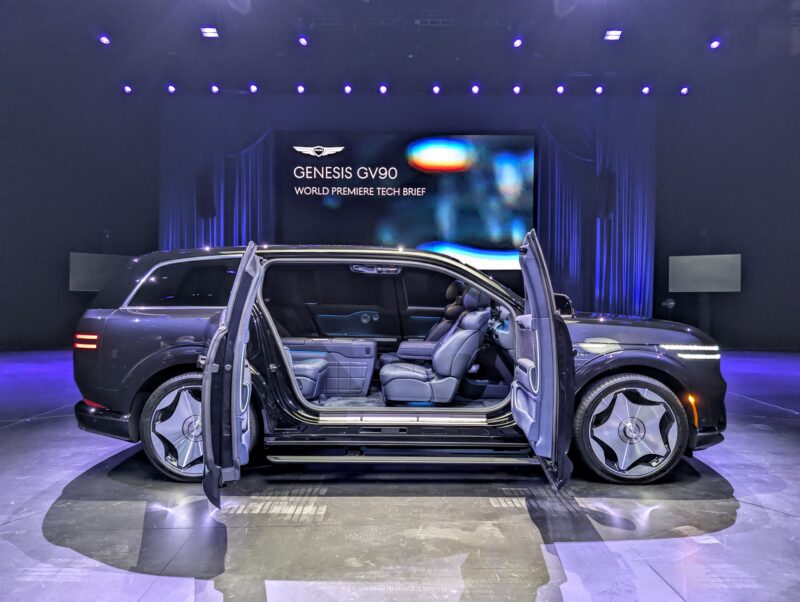
Genesis announced its flagship electric SUV, the GV90, at a San Francisco event, marking the luxury automaker's commitment to the high-end EV segment. The three-row, full-sized vehicle launches with two variants: a standard configuration for active drivers and the GV90 Neolun spec targeting buyers who prefer autonomous or chauffeur-driven experiences.
The GV90 enters a competitive market where Tesla, Lucid, and traditional luxury brands like BMW and Mercedes have already established electric SUV presence. Genesis, Hyundai's premium division, positions the vehicle as a response to shifting consumer preferences toward electrification in the luxury segment. The automaker has invested heavily in EV development over the past three years, with plans to introduce multiple battery-electric models across its lineup by 2030.
Luxury SUVs represent one of the fastest-growing vehicle categories globally. The GV90's dual-spec approach acknowledges divergent buyer preferences within this market. The standard model targets consumers who value driving engagement, while the Neolun emphasizes automation and passive comfort features, reflecting Genesis's confidence in autonomous driving technology becoming mainstream within the next five to seven years.
Battery capacity and range specifications remain partially undisclosed in available information, though Genesis has historically positioned its EVs in the 300-400 mile EPA range class for flagship models. Charging infrastructure compatibility and home charging setup will determine real-world usability for high-net-worth buyers who represent the GV90's target demographic.
The vehicle's launch timing reflects broader industry recognition that electrification in the luxury segment drives overall market transformation. Premium buyers typically adopt new technologies first, validating consumer acceptance before mass-market adoption occurs. EV adoption rates among luxury vehicle purchasers currently exceed 40 percent in major markets like California and Northern Europe, according to industry analysts.
Genesis faces specific challenges in the EV luxury space. Tesla Model X and Model S Plaid owners represent established benchmarks for performance and technology integration. Lucid Air buyers prioritize ultra-premium materials and handcrafted details. Traditional luxury automakers leverage decades of heritage and established dealer networks. Genesis must differentiate through design, software ecosystem, and warranty coverage rather than brand legacy.
The GV90's announcement reflects Genesis's broader strategy to capture affluent buyers transitioning from internal combustion engines. The brand has achieved strong initial EV sales with models like the Electrified GV70, suggesting consumer appetite for premium electric vehicles exists. The GV90 represents a natural progression into flagship territory where profit margins justify the considerable R&D investment required.
Supply chain considerations will determine launch success. Battery sourcing from LG Energy Solution or Samsung SDI, both Korean suppliers aligned with Hyundai Group, offers production efficiency and cost control. Component shortages that plagued the automotive industry through 2023 have largely resolved, providing favorable conditions for new model rollout.
The GV90 underscores a reality that has crystallized in the auto industry over the past eighteen months: electrification is no longer optional for luxury automakers. Brands that fail to establish credible EV portfolios within their core segments risk losing market share to competitors who succeed. Genesis's San Francisco announcement signals that this transition has become non-negotiable, even for manufacturers whose heritage rests on traditional powertrains.