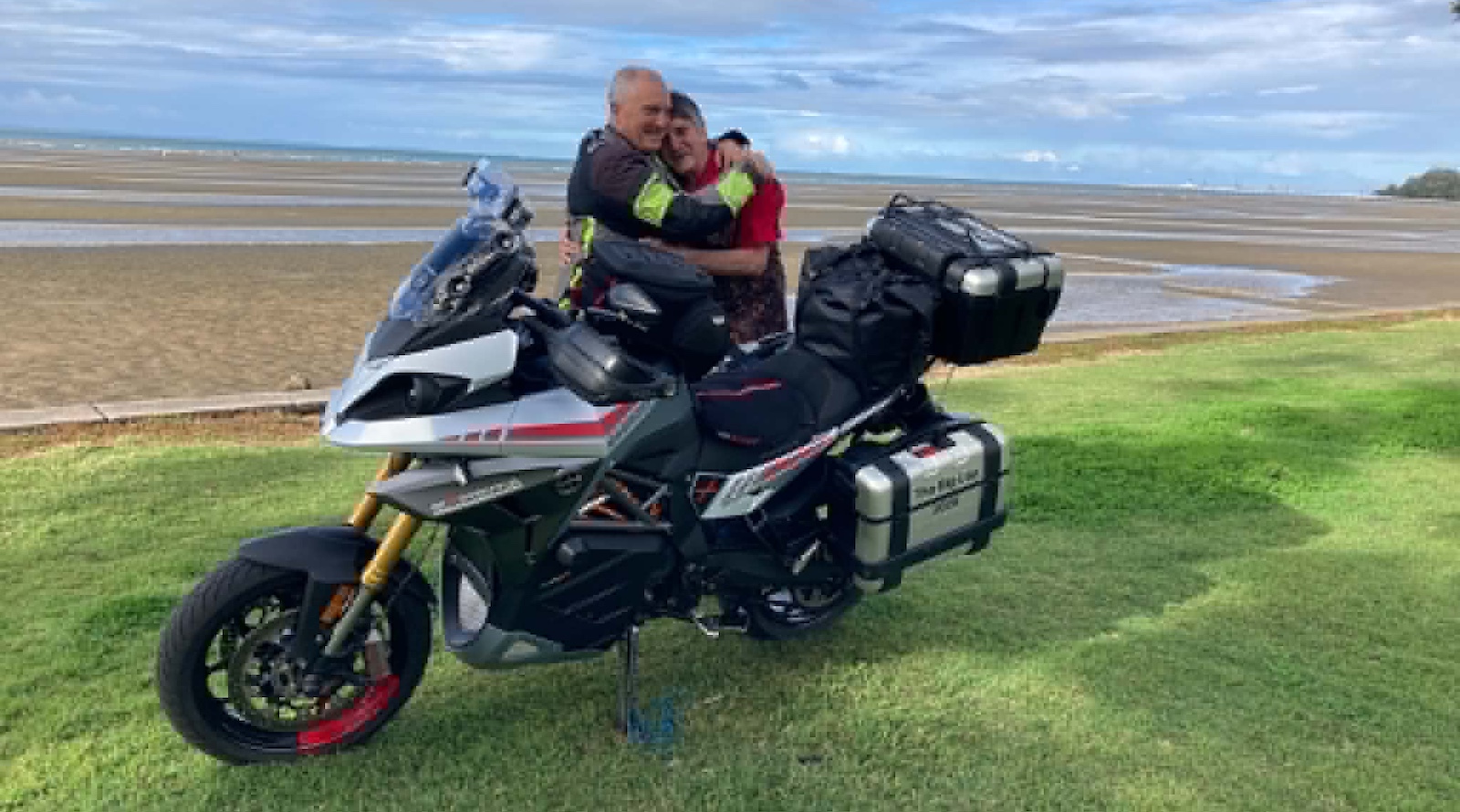
Ed Darmanin completed a 18,000-kilometre circuit of Australia aboard a single electric motorcycle without a support vehicle, departing Sydney on June 24 and traveling anti-clockwise to Broome. The journey represents a practical test of electric vehicle viability across remote Australian terrain where charging infrastructure remains sparse and distances between populated centers stretch hundreds of kilometres.
Darmanin's expedition addresses a persistent question about EV adoption in rural and remote regions. Australia's interior presents one of the world's harshest testing grounds for battery-powered transport. The route from Sydney to Broome traverses coastlines, outback highways, and isolated communities where petrol stations cluster far apart and charging networks barely exist. A solo rider on electric power faces genuine logistical constraints that suburban commuters never encounter.
The ride's completion without external support amplifies its credibility as an endurance test. Unlike supported expeditions where chase vehicles carry spare batteries, fuel, and equipment, Darmanin carried only what his motorcycle could manage. This self-reliance forced direct engagement with real charging limitations, route planning around available power sources, and the psychological weight of depending entirely on battery range.
Electric motorcycles consume less energy than four-wheel vehicles, which provided an advantage. Modern electric bikes deliver 200-400 kilometres per charge depending on riding conditions, speed, and terrain. Australian highways demand sustained speeds that drain batteries faster than urban riding. Desert stretches, coastal winds, and temperature fluctuations all degrade range. Yet Darmanin's completion of 18,000 kilometres suggests the technology performed adequately when properly managed.
The expedition's documentation matters for EV policy and infrastructure planning in Australia. CleanTechnica's coverage reaches energy professionals, policymakers, and technology enthusiasts tracking electrification progress. Lived experience reports from challenging routes generate insights that laboratory testing cannot. Real-world performance data from extreme conditions influence charging network investment decisions by governments and private developers.
Australia's National Transport Commission has prioritized EV adoption targets for 2030 and 2050. Regional charging infrastructure lags urban deployment significantly. The Darmanin expedition illuminates gaps between current infrastructure and the demands of genuine long-distance EV travel. Journeys like this reveal whether existing networks support practical use cases or whether expansion to remote areas requires dedicated investment.
The ride from Sydney anti-clockwise to Broome covers approximately 5,600 kilometres in the first leg, crossing New South Wales, Victoria, South Australia, and Western Australia's remote stretches. Broome sits at the continent's northwestern edge, historically isolated from electrical grid densification. Reaching it on electric power alone demonstrates that modern EVs can traverse Australia's periphery.
Darmanin's approach differs from corporate marketing campaigns. No manufacturer funding, no optimized route planning with charging stations pre-arranged, no team managing logistics. Instead, a solo rider depending on publicly available infrastructure reveals genuine EV practicality. Failures and workarounds receive equal weight to successes, providing balanced assessment of technology maturity.
The journey contributes to the global conversation about EV feasibility in low-density regions. Australia's geography mirrors challenges faced across the American Great Plains, Scandinavia, Canada, and Central Asia. Performance data from Australian outback riding transfers directly to similar climates and infrastructure scenarios. Technology that performs in Australian heat and isolation suggests broader applicability.
Darmanin's expedition bridges the gap between automotive engineering specifications and actual human experience. Charging networks expand incrementally. Range anxiety reflects real constraints, not marketing fiction. By documenting a completed 18,000-kilometre electric journey through Australia's harshest terrain without support, Darmanin provides evidence that electrification reaches beyond urban centers into territories previously reserved for internal combustion engines.