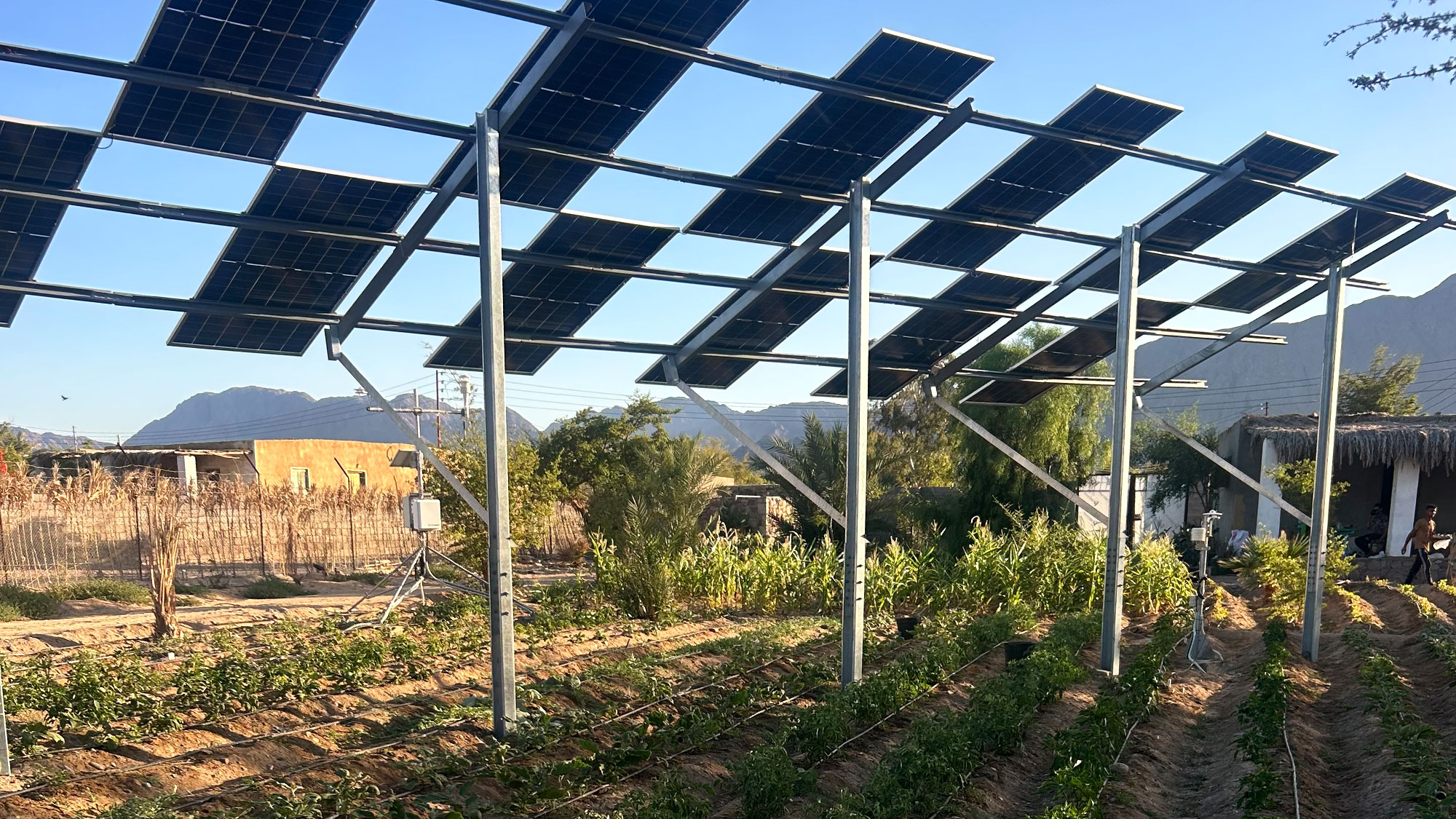
Egyptian farmers are adopting agrivoltaics, growing crops beneath solar panels to cut water loss while producing renewable energy. The shade from panels reduces evaporation and plant stress in a nation facing severe water scarcity and rising temperatures.
Egypt's Nile River supplies 95 percent of the country's freshwater. Climate change and upstream dam construction threaten water availability as demand grows. Agriculture consumes roughly 80 percent of Egypt's water supply, making irrigation efficiency critical to food security. Agrivoltaic systems address both pressures simultaneously.
The shade reduces soil evaporation, lowering irrigation requirements by 20 to 30 percent in some trials. Plants experience less heat stress during scorching summers when temperatures exceed 40 degrees Celsius. Simultaneously, the panels generate electricity without competing for land, a scarce resource in a densely populated nation of 104 million people concentrated along the Nile corridor.
Several Egyptian research institutions and private companies have piloted agrivoltaic farms. Early results show farmers can maintain viable crop yields while cutting water consumption. Lettuce, tomatoes, and leafy greens perform well under panel shade. Root vegetables also adapt successfully to reduced direct sunlight.
The approach carries economic benefits. Farmers earn dual income streams from crops and electricity sales or use. Grid connection allows them to supply power to utilities. Some systems include energy storage, providing electricity after sunset.
Scaling remains challenging. Initial installation costs for solar infrastructure deter smallholder farmers who dominate Egyptian agriculture. Financing mechanisms and government subsidies could accelerate adoption. The Ministry of Agriculture has shown interest in expanding pilot programs nationwide.
International development organizations view agrivoltaics as a climate adaptation tool for arid regions. Projections suggest the Middle East and North Africa region will face a 55 percent reduction in water availability by 2050 without intervention. Egypt's