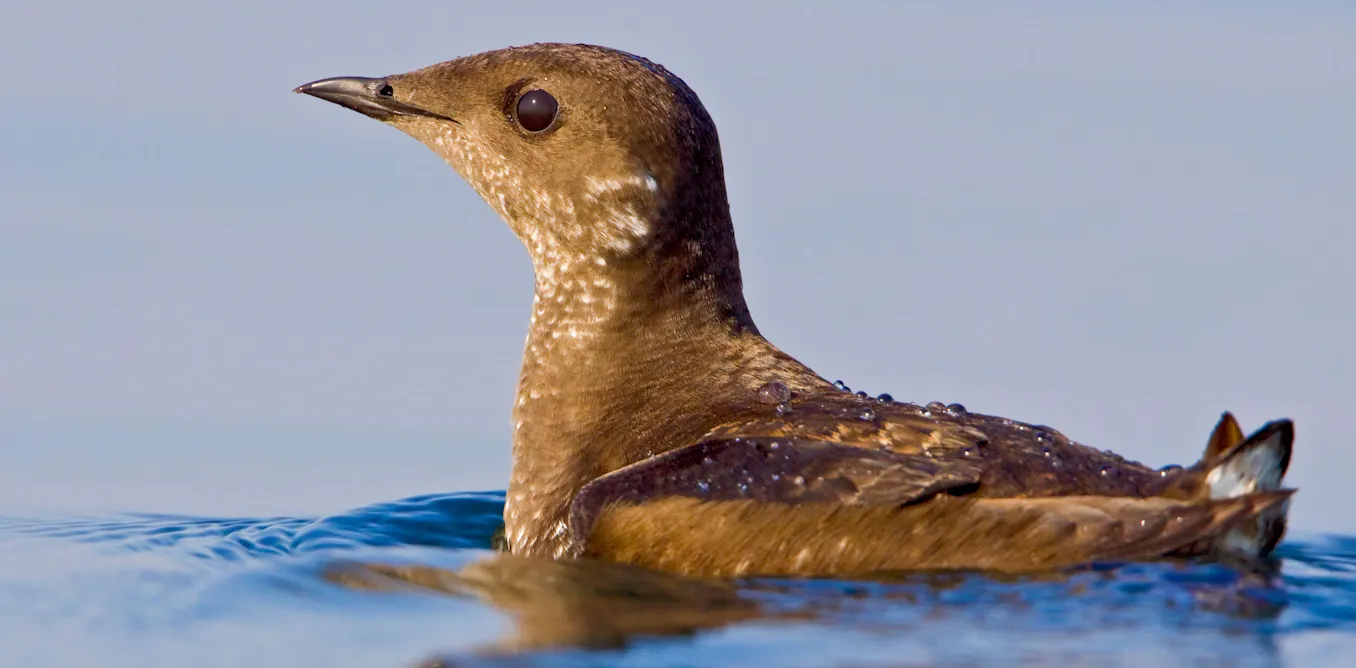
Researchers discovered the first marbled murrelet nest on Haida Gwaii in over three decades, marking a significant finding for a seabird facing dual environmental pressures. The marbled murrelet, listed as threatened under Canada's Species at Risk Act, struggles with habitat loss in both ocean and forest ecosystems.
The bird spends most of its life at sea but requires old-growth forest nesting sites for breeding. On Haida Gwaii, an archipelago off British Columbia's coast, industrial logging and marine degradation have decimated populations. The discovery of an active nest represents proof that breeding populations persist in the region despite widespread habitat destruction.
Marbled murrelets nest alone in old-growth forest canopies, typically on large horizontal branches 20 meters or higher above ground. This nesting behavior makes them difficult to locate and monitor. The birds spend daylight hours hunting small fish in coastal waters before returning to forests at dusk. Their dependence on intact old-growth forests means they cannot adapt to second-growth timber plantations that have replaced much of Haida Gwaii's original forest cover.
The species faces compounding threats. Marine pressures include changing ocean temperatures, declining forage fish populations, and increased bycatch in fishing nets. Terrestrial losses stem from continued logging operations that remove critical nesting habitat. Climate change exacerbates food scarcity as ocean conditions shift.
The nest discovery came through intensive field surveys combining audio recordings of murrelet calls with systematic forest searches. This methodological approach helped researchers locate breeding birds in areas previously considered abandoned by the species.
The finding carries policy implications for both forestry and fisheries management in British Columbia. Current protections under Canada's Species at Risk Act require habitat protection, yet logging continues on some Crown land within the bird's range. Recovery efforts depend on preserving remaining old-growth stands and restoring