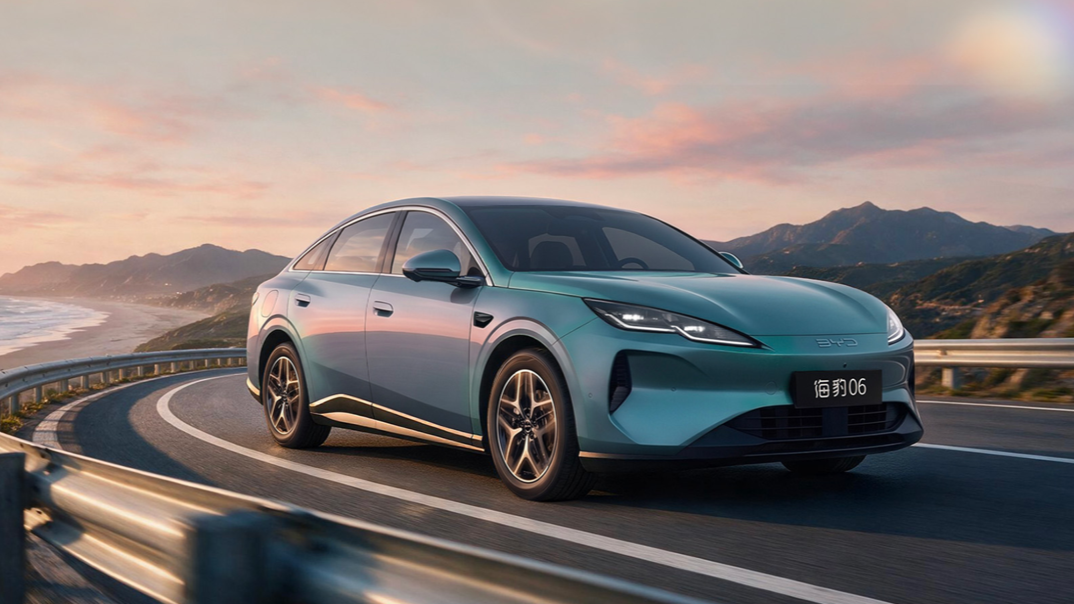
BYD released two new midsized sedans this week, the Seal 06 and Qin MAX, marking the Chinese automaker's latest push into the competitive affordable sedan market. Both vehicles feature improved performance specs, upgraded in-car technology, and fast-charging capabilities designed to appeal to cost-conscious buyers seeking electric or plug-in hybrid options.
The simultaneous launch of these two models raises questions about internal competition within BYD's lineup. The Seal 06 and Qin MAX occupy similar market positions, targeting the same consumer segment with comparable feature sets and price points. BYD's strategy reflects broader industry trends in China, where multiple brand variants under the same parent company often compete directly for market share.
China dominates global electric vehicle production and sales. BYD, the world's largest EV manufacturer by volume, sold over 3 million new energy vehicles in 2024, including battery electric vehicles and plug-in hybrids. The company's success stems partly from its vertically integrated supply chain, which includes battery manufacturing. This integration allows BYD to control costs more effectively than competitors relying on external battery suppliers.
The affordable sedan segment represents critical volume for BYD. Mid-range sedans traditionally appeal to first-time EV buyers and families seeking reliable transportation without premium pricing. Flash charging technology, which reduces charging time significantly compared to standard AC charging, addresses one of the remaining consumer hesitations about electric vehicle adoption. Faster charging times reduce the gap between EV and internal combustion engine refueling convenience.
Both vehicles come equipped with upgraded technology packages. Modern EV sedans now include advanced driver assistance systems, larger touchscreen displays, smartphone integration, and over-the-air software update capability. These features once appeared only in luxury vehicles but have become standard on affordable models as production scales increase and component costs decline.
The launch timing matters in the context of Chinese EV market dynamics. Competition intensifies as traditional automakers including Volkswagen, Toyota, and Geely increase electric vehicle offerings in China. International brands present credibility challenges to BYD, despite the company's dominant market position. Offering multiple competitive models at different price points allows BYD to capture consumers across broader income ranges.
BYD's dual-brand strategy extends beyond sedans. The company operates multiple sub-brands including Qin, Yuan, Song, and Dolphin, each targeting specific market segments. This portfolio approach maximizes market coverage but creates inevitable overlap. When models compete internally, consumers benefit through better pricing and features, but the company risks cannibalizing its own sales.
The Seal 06 and Qin MAX launches underscore China's transformation into the world's leading EV market. Chinese consumers adopt electric vehicles at rates far exceeding most other countries. Government incentives, charging infrastructure development, and consumer acceptance of EV technology have created an environment where affordable electric sedans achieve genuine mainstream status.
Production capacity and supply chain resilience determine whether BYD can effectively manage dual launches. The company's battery manufacturing capabilities provide advantages competitors cannot easily replicate. Access to domestic cobalt, lithium, and other mineral resources strengthens BYD's position further.