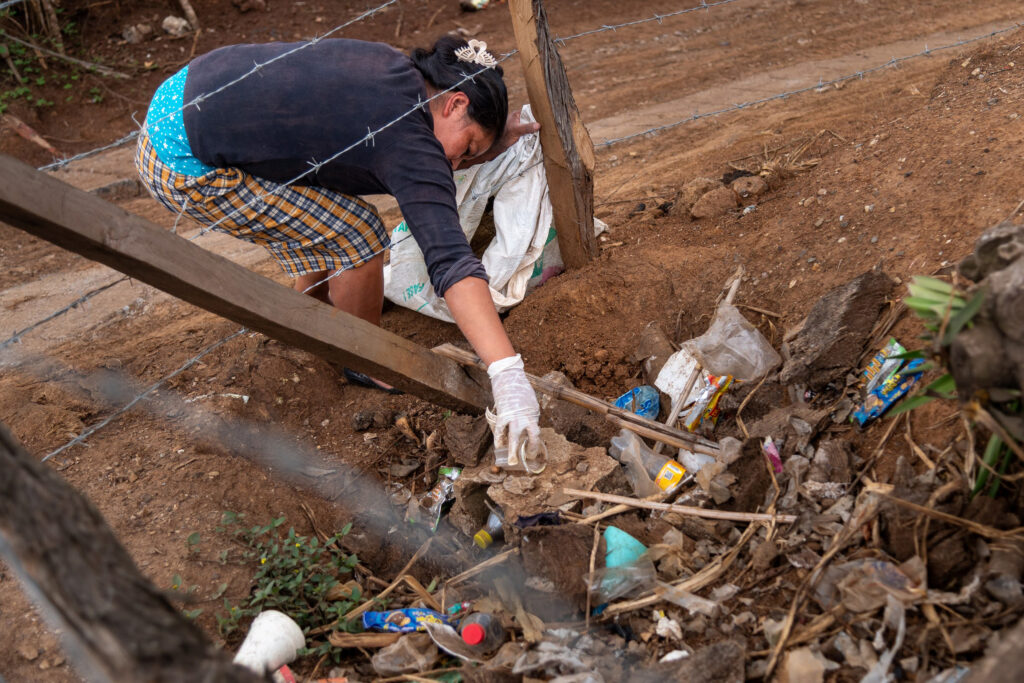
In the mountain village of El Duraznal, Guatemala, residents face a mounting plastic crisis that has prompted community-led cleanup efforts. Soila Elizabeth Cruz and other villagers regularly collect plastic waste from roadsides and natural areas where trucks deposit debris during transport through the region.
The problem reflects Guatemala's broader waste management challenges. The country lacks adequate infrastructure to process plastic refuse, leaving rural communities to manage contamination independently. Plastic accumulates in waterways, agricultural lands, and ecosystems that locals depend on for subsistence.
El Duraznal residents have begun organizing systematic cleanup campaigns every three to five days. These volunteer efforts represent both a practical response to local pollution and an assertion of agency in communities often excluded from national environmental policy discussions. The work carries health risks. Residents handle contaminated materials without protective equipment while trucks continue generating new waste along mountain roads.
The Pulitzer Center supported documentation of this story, elevating visibility for grassroots environmental work in Central America. Guatemala's plastic consumption continues rising despite limited waste collection systems. Most plastic ends up in landfills or natural environments, particularly in rural areas with no municipal services.
This community-driven approach highlights a pattern across developing nations. Where governments fail to regulate waste management or fund infrastructure, residents shoulder the burden of environmental remediation. El Duraznal demonstrates both the resilience of rural communities and the injustice of pollution concentrated in areas with minimal political power.
Climate and environmental advocates point to Guatemala as emblematic of how plastic waste disproportionately harms low-income regions. The village's cleanup efforts, while necessary, should not substitute for systemic solutions. National policy changes addressing producer responsibility, waste reduction at source, and investment in municipal infrastructure remain essential. Without these measures, villagers like Cruz will continue retrieving plastic from fence lines while trucks pass overhead.