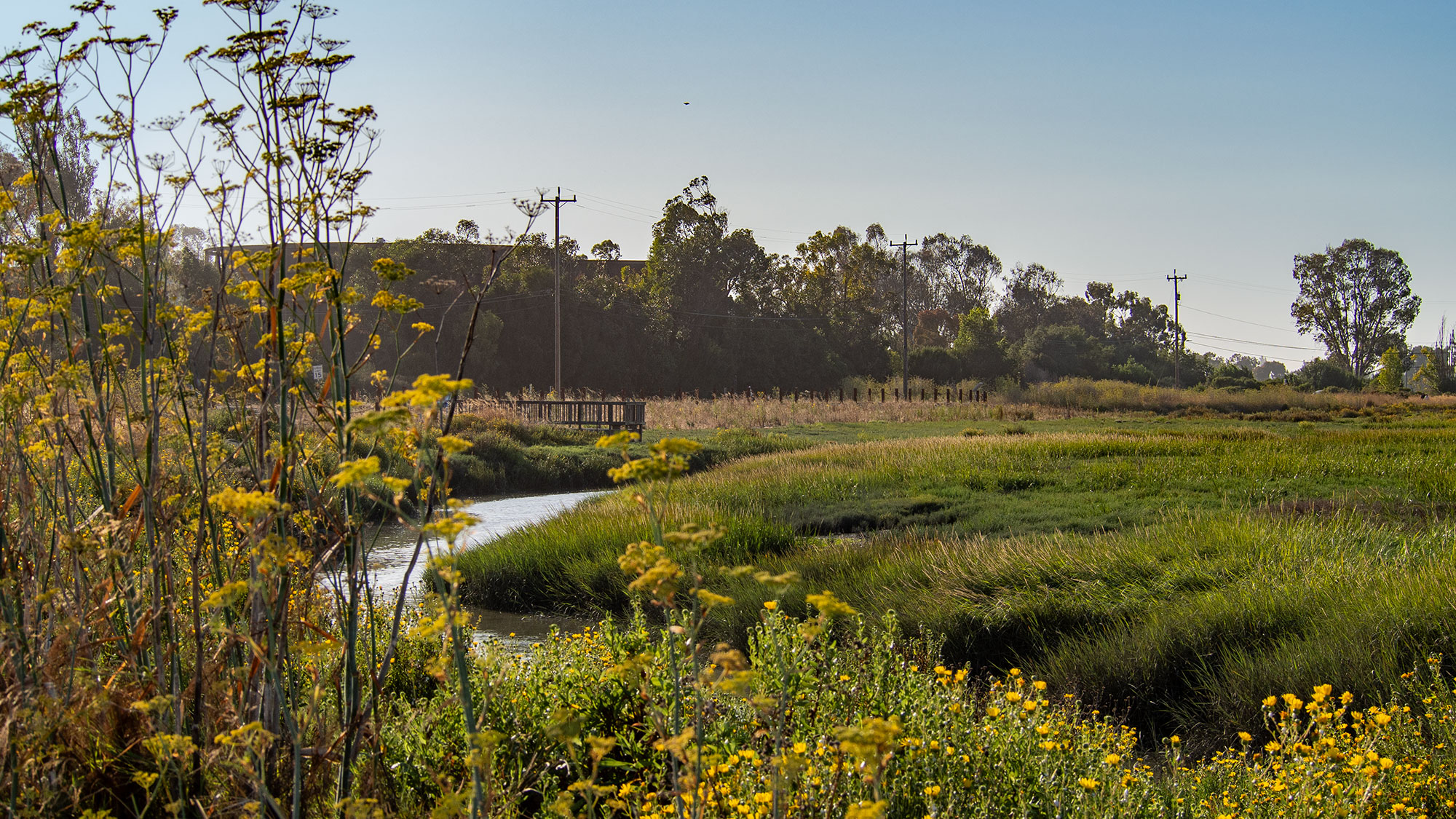
# Northern California Tests "Horizontal Levees" to Merge Flood Protection with Habitat
Northern California is piloting an alternative to traditional flood barriers. Horizontal levees combine flood defense with wetland restoration, offering protection against rising seas while rebuilding habitat lost to development and coastal erosion.
The approach works by allowing water to spread across low-lying areas designed to absorb floodwaters. Unlike conventional vertical levees that block water outright, horizontal levees guide seasonal inundation into restored marshes and tidal flats. This design reduces flood risk for nearby communities while creating conditions for native plants and animals to return.
Projects already underway demonstrate the dual benefit. Restored wetlands filter water, reducing sediment and pollutant loads that reach coastal ecosystems. They also provide crucial breeding grounds for fish, migratory birds, and invertebrates that form the base of marine food webs. The habitat value extends to carbon sequestration, as wetland soils store atmospheric carbon at rates exceeding terrestrial forests.
California's coastal regions face intensifying pressure from both storm surge and chronic "nuisance flooding" driven by sea level rise. The Pacific Institute projects that sea levels along the California coast will rise 0.8 to 1.6 meters by 2100 under moderate emissions scenarios. Traditional concrete levees offer one-dimensional protection and require constant maintenance as materials degrade.
Horizontal levees require more upfront land acquisition and design work than conventional barriers. However, their ability to restore ecosystem services reduces long-term adaptation costs. Water quality improves. Flood absorption capacity increases. Species dependent on coastal wetlands gain nursery habitat.
The model aligns with emerging climate adaptation strategy that treats nature as infrastructure. Rather than engineering solutions that separate human development from natural processes, horizontal levees work with hydrology and ecological succession.
Northern California's experiments will provide data