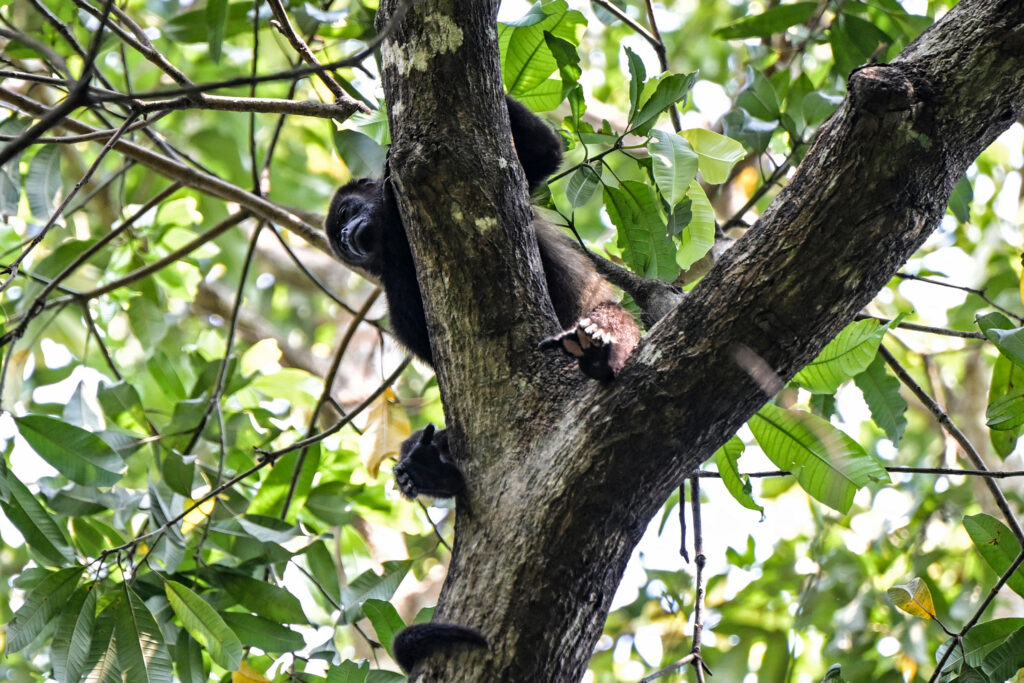
Researchers have discovered microplastics in the digestive systems of Mexican howler monkeys living in Los Tuxtlas, a 155,000-acre UNESCO biosphere reserve in Veracruz, Mexico. The finding extends the reach of plastic pollution into protected rainforest ecosystems and reveals that even animals in remote, supposedly pristine habitats face contamination from human waste.
The study examined howler monkeys at Los Tuxtlas, located 325 miles southeast of Mexico City. Scientists conducting the research found microplastic particles in the animals' tissues and gastrointestinal tracts. These particles likely entered the food chain through contaminated vegetation, insects, or water sources within the reserve.
Microplastics are fragments smaller than 5 millimeters that result from the breakdown of larger plastic items and direct release of microbeads from consumer products. They have become ubiquitous in global ecosystems. Previous studies documented microplastics in ocean-dwelling whales, seabirds, fish, and terrestrial birds. The Los Tuxtlas finding marks one of the first confirmations of microplastic ingestion in primates living in a protected area.
Los Tuxtlas holds particular ecological value. The biosphere reserve serves as a critical habitat for Mexican howler monkeys and numerous other species dependent on tropical rainforest. The reserve also provides ecosystem services including carbon storage and water filtration. The presence of microplastics within its boundaries suggests that plastic pollution penetrates Earth's most protected natural spaces.
The source of these microplastics remains unclear but likely originates from several pathways. Plastic waste from nearby human settlements, agricultural areas, and coastal regions can travel via rivers and atmospheric transport. Decomposition of single-use plastics—bags, bottles, packaging materials—generates microplastics that persist in soil and water indefinitely. The howler monkeys may have ingested microplastics directly by consuming contaminated plant material or indirectly through their prey.
Howler monkeys face multiple threats. Habitat loss from deforestation and agricultural expansion has reduced their range dramatically over recent decades. Los Tuxtlas remains one of their largest continuous populations in Mexico. The animals are largely arboreal, inhabiting the rainforest canopy and rarely descending to the ground. Their diet consists primarily of leaves, fruits, and occasionally insects.
The health implications of microplastic ingestion in primates remain poorly understood. Laboratory studies of other animals suggest microplastics can cause inflammation, block nutrient absorption, and potentially carry toxic chemicals and persistent organic pollutants into tissues. Howler monkeys with chronic microplastic exposure may experience reduced fitness, though long-term population-level effects require further investigation.
This research underscores the pervasiveness of plastic pollution across all ecosystems. Even regions designated as protected areas and managed for biodiversity conservation cannot escape contamination. Mexico generates approximately 5.3 million tons of plastic waste annually, with significant portions entering natural environments. Addressing microplastic pollution requires reducing plastic production and consumption upstream while improving waste management infrastructure in Mexico and globally.
The Los Tuxtlas findings contribute to growing evidence that microplastic contamination represents a systemic environmental challenge requiring coordinated policy responses. Conservation strategies focused solely on habitat protection will prove insufficient if plastic pollution continues unchecked.