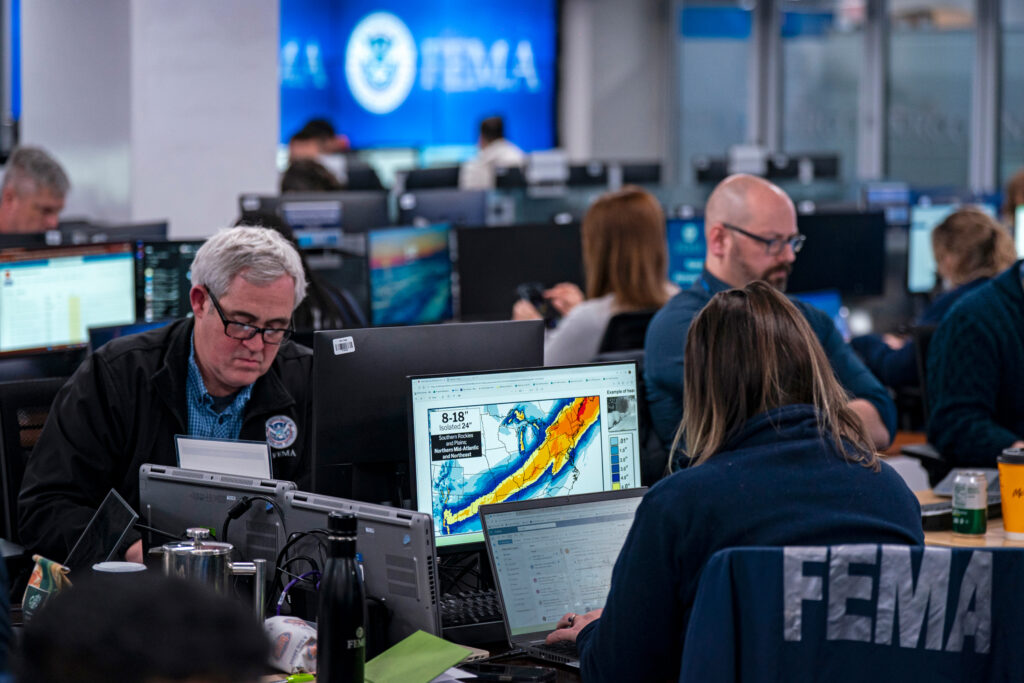
The Federal Emergency Management Agency lost more than 4,300 employees in the last fiscal year, a 17 percent reduction in workforce that a congressional watchdog identifies as threatening disaster response capacity. The exodus combined resignations and terminations during the second Trump administration.
Congress's Government Accountability Office flagged the downsizing as worsening existing staffing problems at FEMA. The agency already faced retention difficulties before the recent cuts. Experienced personnel departures leave critical gaps in emergency management operations at a moment when climate change intensifies disaster frequency and severity across the United States.
FEMA's workforce decline hits during hurricane season and as wildfire seasons lengthen. The agency coordinates federal response to hurricanes, floods, tornadoes, and other emergencies. Staffing shortages directly compromise response speed and effectiveness when disasters strike. The GAO report underscores how workforce instability undermines institutional capacity to handle simultaneous or cascading emergencies.
The timing compounds existing vulnerabilities. FEMA already struggled with training, succession planning, and retaining disaster response specialists. Regional offices dependent on experienced coordinators now face knowledge gaps. New hires require months of training before handling complex emergency operations. Disaster seasons do not pause for organizational restructuring.
The congressional watchdog's warning signals alarm about operational readiness. When hurricanes threaten the Gulf Coast or wildfires sweep Western states, FEMA deploys thousands of temporary workers alongside permanent staff. Reduced permanent staffing means fewer trained coordinators managing those temporary deployments, fewer specialists available for damage assessment, and fewer experienced leaders directing resource allocation.
The GAO report does not specify how the administration selected which positions to eliminate. However, the 17 percent reduction across the agency indicates broad cuts rather than targeted efficiency measures. Disaster response requires sustained expertise that departing workers carry away.
States and municipalities depend on FEMA coordination during declared disasters.