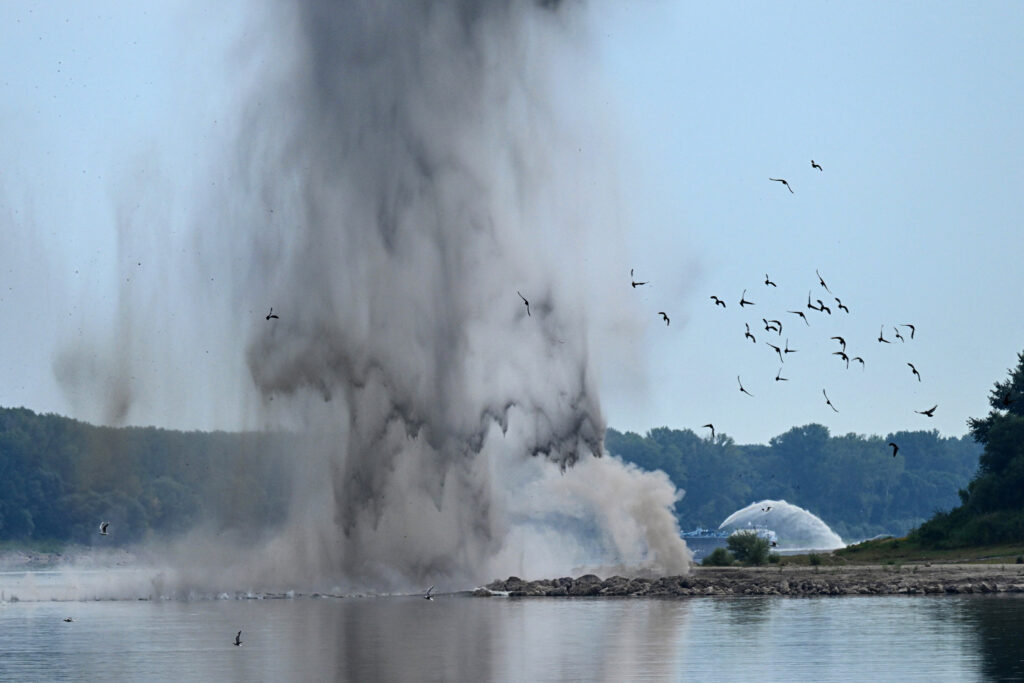
Severe drought across Europe has forced the Romanian Navy to conduct underwater explosions in the Danube River to clear sediment and maintain water flow to the Cernavoda Nuclear Power Plant. The detonations began Monday as part of emergency measures to ensure the facility receives sufficient cooling water during an unprecedented continental dry spell.
The Danube has dropped to critically low levels, threatening hydroelectric power generation, inland navigation, and industrial operations dependent on river water. Romania's nuclear plant requires constant cooling to operate safely. Without adequate water levels, reactor shutdown becomes necessary, reducing Europe's power supply during peak demand periods and energy crises tied to the Ukraine conflict.
The drought extends across the entire continent. The Rhine River in Germany and France has fallen to levels not seen in decades, constraining barge traffic and forcing industrial facilities to reduce production. The Rhone in France, the Po in Italy, and major waterways in Central Europe all show severe depletion. Climate data indicates precipitation across the region fell 50 to 70 percent below normal this summer.
Scientists link the extreme drought to climate change, which intensifies heat waves that accelerate evaporation and reduce snowmelt contributions to rivers. The European Commission warned in August that prolonged water stress threatens agriculture, energy production, and drinking water supplies across member states.
The blasting operation presents its own challenges. Underwater explosions risk damaging river ecosystems and archaeological sites while offering only temporary relief. Water authorities acknowledge the measure addresses immediate crises but cannot solve underlying hydrological deficits.
This situation reflects cascading climate impacts on critical infrastructure. Europe faces competing demands between maintaining nuclear safety, preserving river ecosystems, supporting agriculture facing crop failures, and sustaining transportation networks. Officials in multiple countries have implemented water rationing and emergency protocols rarely deployed outside wartime. The Danube crisis underscores how climate change transforms basic resource availability into geopolitical vulnerability