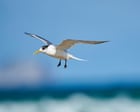
Helicopter surveillance has detected more than 80 dead and dying greater crested terns clustered on rocks off the South Australian coast. The birds show signs of H5N1 infection, marking what authorities believe is Australia's first mass mortality event from the virus, just six weeks after the pathogen arrived in the country.
The H5 virus has rapidly escalated among native Australian bird populations since its detection in early 2024. The outbreak in South Australian waters represents a critical threshold where disease impact shifts from isolated cases to population-level die-offs. Greater crested terns, seabirds that gather in colonies, provide ideal conditions for viral transmission. Their congregating behavior accelerates spread through direct contact and shared feeding grounds.
The Australian Department for Environment and Water initiated aerial reconnaissance after reports of sick birds. The discovery confirms that H5N1 has moved beyond sporadic detections in wild populations and is now causing significant mortality events in native species. Terns are particularly vulnerable due to their dense colonial nesting and feeding patterns.
H5N1 belongs to a family of influenza A viruses known for high mortality rates in infected birds. The virus replicates rapidly in respiratory and gastrointestinal tissues, causing fatal infection in many species. In seabirds, mortality rates can exceed 90 percent once transmission begins in colonies. The South Australian detection indicates the virus has adapted to local avian populations and established transmission chains.
Authorities have increased biosecurity monitoring across coastal regions and inland waterways. Testing of deceased birds will confirm H5N1 presence and identify the specific virus strain circulating in Australia. Results will inform whether the virus matches strains from Southeast Asia or represents a distinct introduction pathway.
The outbreak poses secondary risks to other wildlife. Raptors and scavengers that feed on infected birds face transmission risk. Aquatic ecosystems where seabirds congreg