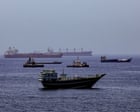
More than 1,500 commercial vessels have remained stranded in the Gulf since the Strait of Hormuz closed on February 28 following the outbreak of the US-Israel war on Iran. An international team of marine biologists warns this creates an extreme biodiversity threat once shipping resumes.
Ships sitting motionless in Gulf waters accumulate invasive species on their hulls. Organisms attach and colonize vessel surfaces during extended idle periods. When these ships resume transit and cross ocean basins, they transport these stowaways to distant ports and ecosystems unprepared for them.
The concern centers on ballast water discharge as well. Ships take on seawater for stability when cargo holds empty. This water contains larvae, plankton, and other organisms. Discharging ballast in foreign ports introduces non-native species directly into local ecosystems. Extended mooring periods intensify this risk by allowing hardy invasive organisms to proliferate in ballast tanks.
Scientists identified hull fouling as the dominant mechanism during the Hormuz closure. Vessels trapped for months accumulate dense biological communities. Some species prove especially destructive when introduced elsewhere. Lionfish, zebra mussels, and toxic dinoflagellates have caused documented ecological damage in invasion events. The trapped ships now carry concentrated populations of such organisms.
The scale amplifies the threat. One thousand vessels crossing multiple ocean routes simultaneously creates unprecedented dispersal capacity. Species entering Mediterranean, Atlantic, Indian, and Pacific ecosystems simultaneously would overwhelm natural resistance mechanisms and overwhelm quarantine capacity at receiving ports.
Trade resumption poses timing risk. Vessels eager to recover lost revenue may rush departure without proper hull cleaning or ballast exchange in coastal waters. Standard biosecurity protocols require ships to exchange ballast in deep ocean before entering ports. Compressed schedules encourage skipping these steps.
Marine biologists call for mandatory hull cleaning before vessels leave the Gulf