Climate sceptics and rightwing commentators have circulated misleading charts on social media claiming Europe is experiencing its quietest year for wildfires. The assertion misrepresents data and contradicts established fire monitoring records.
Carbon Brief investigated the claim and found it fundamentally distorts the picture of European wildfire activity. The charts selectively present incomplete or miscontextualised data to suggest a decline that does not reflect actual conditions on the ground.
European wildfire activity remains elevated compared to historical baselines. The European Forest Fire Information System (EFFIS) and other monitoring bodies track burned area, fire frequency, and intensity across EU member states. These datasets show that recent years, including 2023 and 2024, have experienced significant fire seasons driven partly by heat waves and drought conditions linked to climate change.
The false claims appear designed to undermine the scientific consensus connecting wildfire trends to warming temperatures. Warmer springs accelerate vegetation drying. Extended summer heat waves create conditions where fires ignite more easily and spread faster. These patterns align with climate projections showing increased wildfire risk across Mediterranean and central European regions.
Fact-checkers identified the distortion technique: the misleading charts either excluded recent high-fire-activity months, compared the current year to an exceptionally bad baseline year, or presented data in ways that obscured seasonal patterns. One version compared only partial data from the current year to full-year figures from previous years, creating false equivalence.
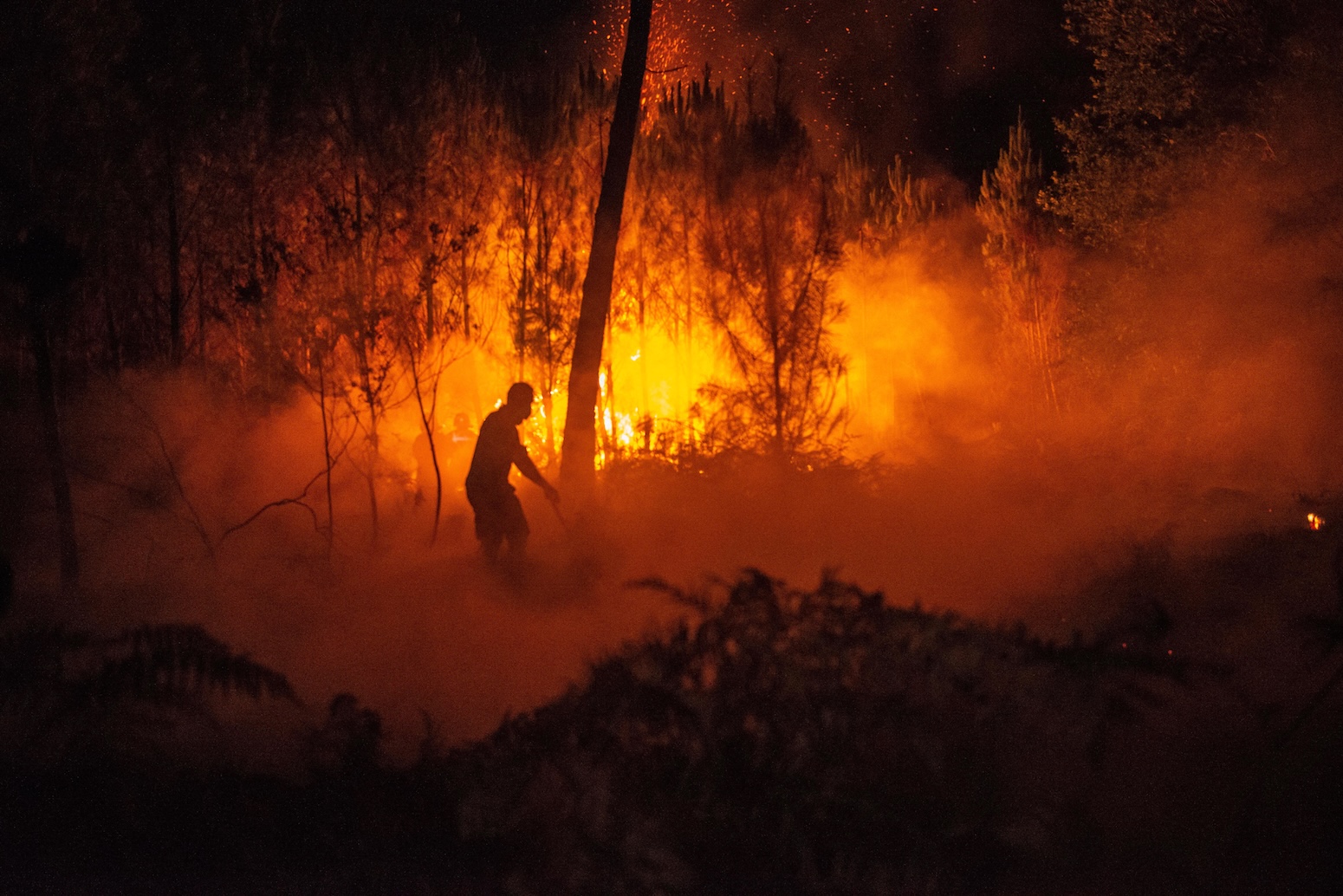
Spain, Greece, and Portugal have recorded particularly severe fire seasons in recent years. The 2023 wildfire season burned record areas in some regions. Portugal experienced devastating fires in September 2023 that killed dozens. These events generated massive carbon emissions and displaced thousands.
The attempt to reframe wildfire trends comes as policymakers debate climate action targets. Accurate wildfire data informs emergency response strategies, forest management planning,