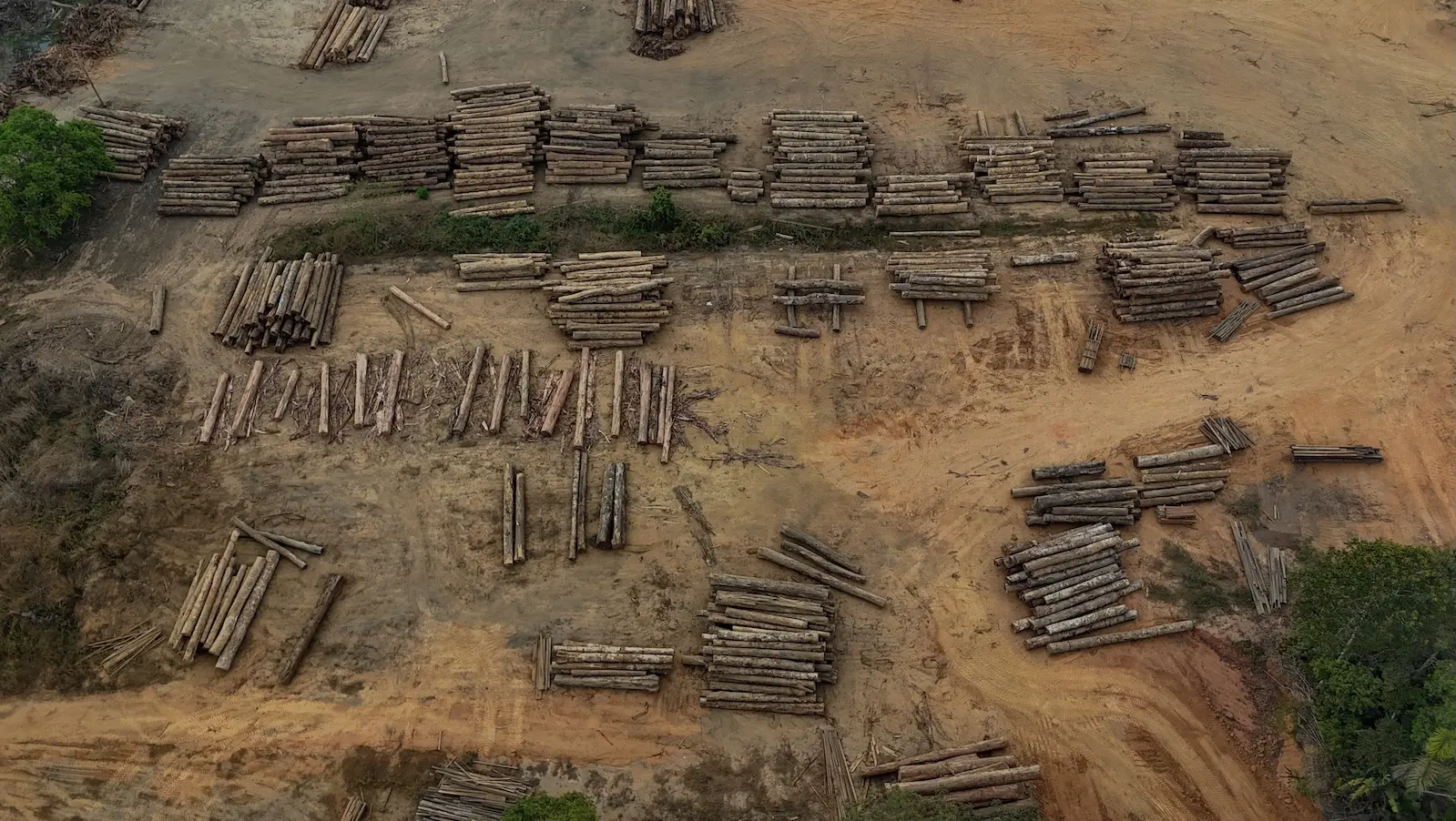
Brazil's Amazon deforestation rates have declined significantly, but researchers warn the gains remain fragile without robust government enforcement. New analysis projects the rainforest could lose territory equivalent to roughly 2 million soccer fields over the next decade if current policy momentum stalls.
Recent years saw deforestation drop as Brazil increased federal monitoring and prosecution of illegal logging operations. The Integrated Center for Agribusiness Intelligence reported deforestation fell to its lowest level in over a decade in 2023. However, scientists caution this progress reflects temporary policy shifts rather than structural protections for the forest.
The Amazon absorbs roughly 150 to 200 billion metric tons of carbon annually. Continued forest loss threatens both global climate targets and regional rainfall patterns that support Brazilian agriculture. Researchers emphasize that deforestation remains driven by cattle ranching, illegal logging, and land speculation. These economic pressures persist regardless of enforcement cycles.
Policy instability poses the greatest risk. Brazil's deforestation rates have historically surged and plummeted with changes in government priorities and budget allocations for environmental agencies. Without permanent legal frameworks that survive political transitions, illegal operators can quickly resume activities when enforcement weakens.
Experts point to the need for stronger penalties against land seizure in protected areas, expanded protected territories, and mechanisms that make deforestation economically uncompetitive compared to sustainable land use. Indigenous land management has proven effective at reducing forest loss in territories where communities hold legal rights.
The window for action narrows. Scientists warn the Amazon approaches a critical tipping point where cumulative deforestation could trigger ecosystem collapse, transforming the forest into savanna. That threshold, estimated around 20 to 25 percent total forest loss, grows closer each year deforestation continues. Current rates keep Brazil on a trajectory toward irreversible changes unless political commitment to conservation hardens into permanent institutional practice.